Mainland Brazil · Volume 42, The Court and the Clay Pot
Sonho
Rio de Janeiro
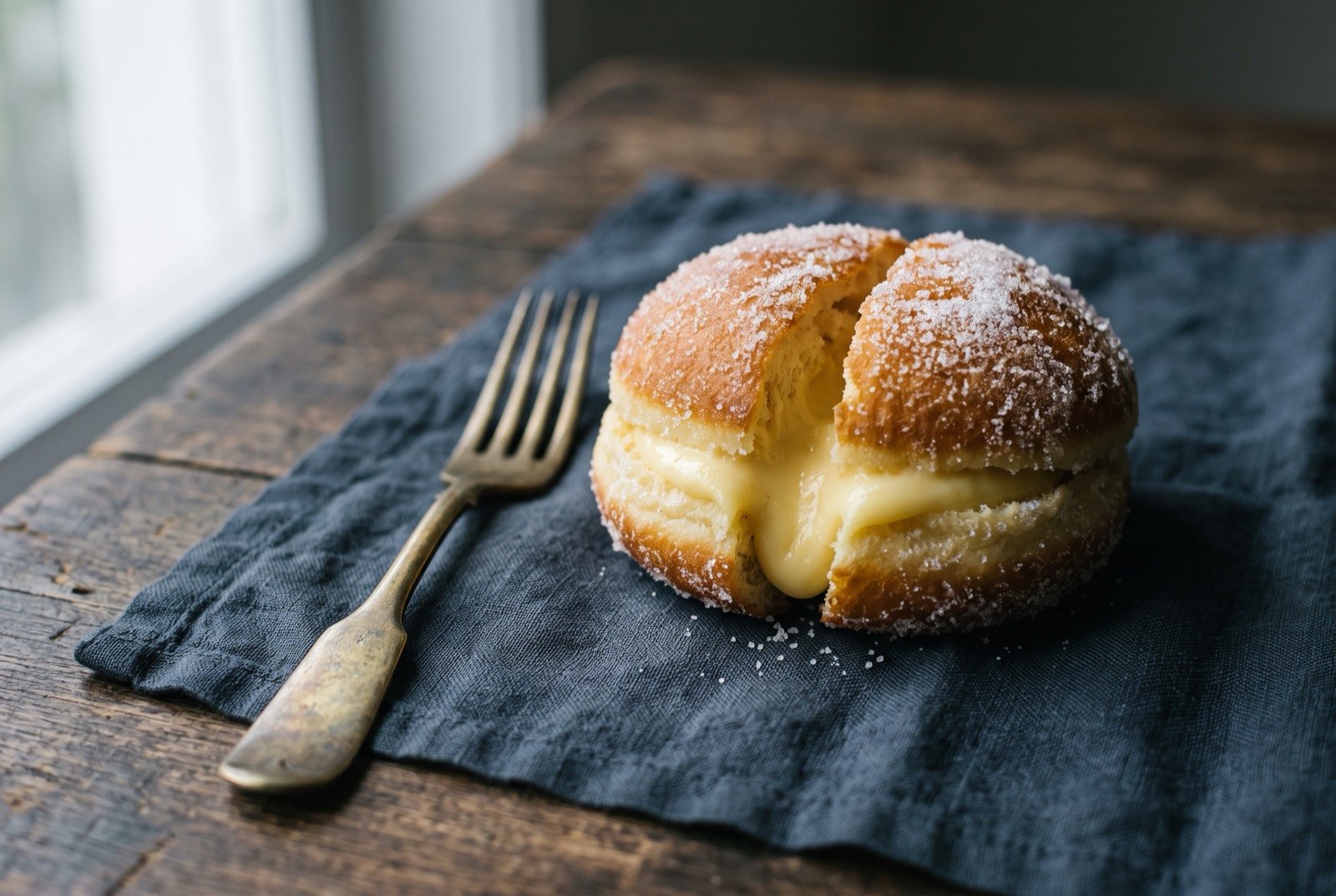
An illustration of the dish, not a photograph of it cooked.
- Time
- 1 hour 30
- Researched
- 6 sources cited
- Reviewed
- Not yet reviewed from inside the tradition
- Cooked
- Not yet cooked and reported
A fixture of every carioca padaria, and a direct descendant of the doces conventuais, convent sweets, the Portuguese court brought with it in 1808: heavy on egg yolk, sugar and butter, a technique the Rio convents were once remarked on for specifically, a period saying held that at the Convento da Ajuda only the sweets were any good.
As tradition built it
Makes about 16. About 1½ hours, including proving; 3 minutes a side to fry.
Ingredients
For the dough
- 500 g strong white flour
- 7 g fast-action yeast
- 50 g sugar
- 2 eggs
- 50 g butter, softened
- 250 ml warm milk, roughly
- a pinch a pinch of salt
- as needed caster sugar, for rolling
- as needed oil, for deep frying
For the confectioner's custard
- 3 egg yolks
- 50g sugar
- 1½ tbsp cornflour
- 250ml milk
Method
- Mix to a soft, slightly sticky dough, knead until smooth and elastic, and prove until doubled, about 1 hour.
- Knock back, divide into small balls, and prove again 30 minutes.
- Fry at 170 to 180°C, turning once, until deep golden on both sides, roughly 3 minutes a side, then roll immediately in caster sugar while still warm.
- Cook the egg yolks, sugar, cornflour and milk together to a thick, glossy custard and cool before piping.
- Split the sonhos and fill with the cooled custard.
What a modern chef changes
A slower, colder prove, and a citrus sugar echoing the same convent tradition
Method
- Enrich the dough further with an extra egg yolk and a spoonful of trimoline for a softer, longer-keeping crumb, and prove it slower and colder overnight in the fridge for a deeper, more developed flavour than a fast same-day prove gives.
- Blitz the pastry cream in a high-power blender immediately after cooking for a genuinely silkier set than hand-whisking achieves.
- Finish with a dehydrated citrus sugar, orange or lemon zest dried and ground fine into the coating sugar, a nod to the same convent tradition's own liberal use of citrus, rather than plain caster sugar alone.