West Africa · Volume 06, The Atlantic Islands
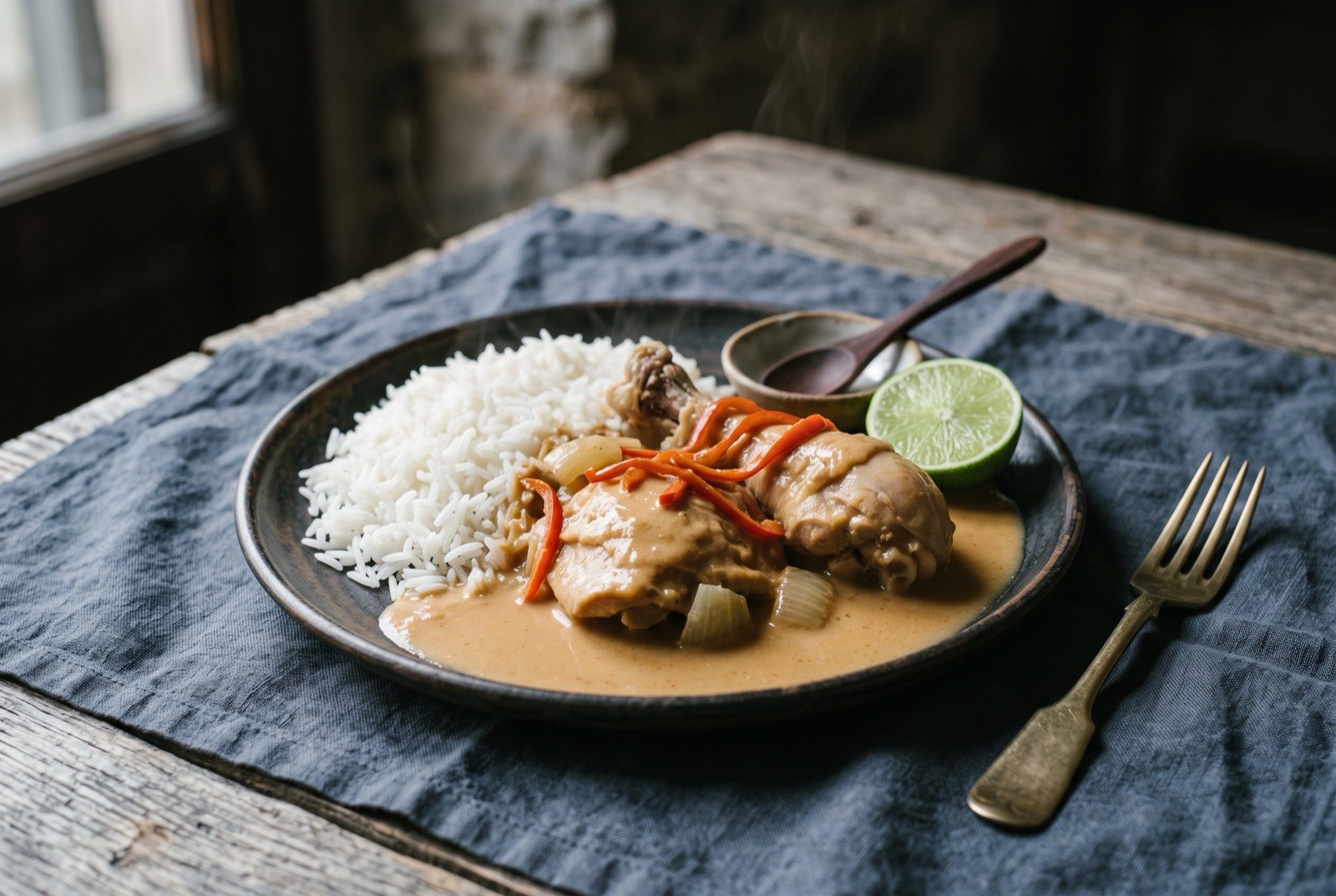
Caldo de mancarra
Guinea-Bissau, the national stew
Illustration
- Time
- 50 minutes
- Researched
- Researched from 115 sources in the brief
Why it works, and why most versions fail. Groundnut sauce is an oil-in-water emulsion held by peanut protein. Boil it hard and the protein denatures, the emulsion breaks, and you get a gritty stew with a slick of orange oil on top. Some households want that separation and most treat it as a fault, but either way it should be a decision. The Guinean method controls it twice: the chicken is cooked to near dryness first, so the peanut liquid meets a concentrated base rather than diluting into a wet pot, and the peanut liquid is strained, so only the fine fraction enters.
As tradition built it
Serves 4. About 50 minutes.
Ingredients
- 1 chicken, jointed. Frango da terra, free range, is correct and needs longer
- 250 g mancarra (raw peanuts)
- 1 onion, sliced
- 3 tomatoes, diced
- 1 lime or lemon
- 100 ml water, for the initial chicken cook
- to taste salt, piri piri, and white rice to serve
Method
- Season the jointed chicken with salt, piri piri and the sliced onion.
- Cook it with the 100 ml of water over low heat until nearly dry.
- Pound the peanuts to a powder in a mortar.
- Work the powder with the diced tomato into a paste.
- Let it down with water and blend.
- Strain through a sieve to remove the coarse particles.
- Add the strained liquid to the chicken and simmer to develop.
- Off the heat, squeeze the lime over.
- Serve with plain white rice and thin red pepper strips.
Notes
After Ruralea.
The ratio is roughly 250 g of peanut per bird, and the lime is not garnish: it is the acid that cuts a very fatty sauce.
What a modern chef changes
Your own paste, a tempered slurry, and a held temperature
Rungs 3, 4 and 2
Method
- Roast and grind your own peanuts. Raw peanuts at 160°C for 15 minutes, then blitzed in a high-powered blender for about four minutes until they liquefy. Commercial peanut butter contains sugar and stabiliser palm oil, and the sugar caramelises and turns this into satay in one step.
- Temper the paste before it enters the pot. Whisk hot stock into it a ladle at a time to a smooth slurry. Cold protein hitting hot liquid sets in lumps and never fully disperses.
- Hold the stew at 85 to 90°C and never let it boil. Use a probe. This is the whole dish, and it is not a judgement you can make by eye: the visual difference between a bare simmer and a broken emulsion is about eight degrees and thirty seconds.
- Use smoked fish stock rather than water, and squeeze the lime at the pass. Rung 3 puts inosinate under the peanut's glutamate; Rung 4 keeps the lime on the plate, because half of what makes it worth adding is volatile and gone within a minute of hitting a hot sauce.