West Africa · Volume 06, The Atlantic Islands
Cachupa refogada
Cape Verde
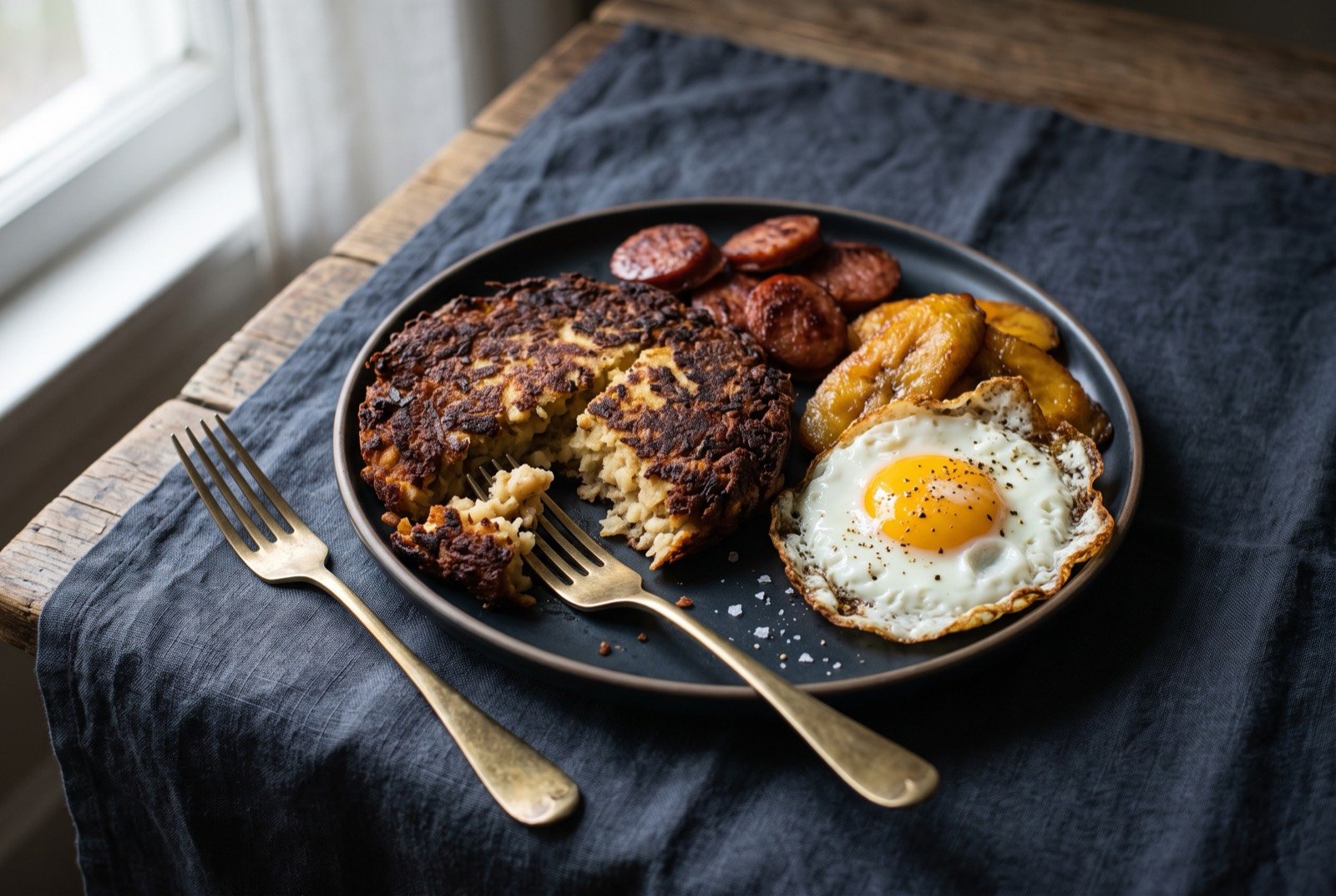
Illustration
- Time
- 20 minutes
- Researched
- Researched from 115 sources in the brief
- Reviewed
- Awaiting a reader from inside the tradition
- Cooked
- Awaiting a cook report
A second cooking built into the cuisine, and the reason cachupa is made in eight to twelve portion quantities in the first place. Diaspora cooks freeze cachupa specifically to make the refogada later, which tells you which of the two dishes people actually want. Why it works. Overnight the starches retrograde and the mass firms. Draining is mandatory: residual liquid steams rather than fries and gives you porridge with brown edges. This is a Maillard operation on a dish that has none.
As tradition built it
Serves 2. 20 minutes.
Ingredients
- 900 g cold cachupa, about 4 cups
- 2 to 3 tbsp olive oil, Portuguese
- 1 small onion, diced
- 2 eggs
- to serve linguiça, sliced; fried sweet plantain and Portuguese rolls, to serve
Method
- Drain the cold cachupa through a mesh sieve and discard the liquid. Give it five minutes to stop dripping.
- Heat the oil in a 10-inch non-stick pan and soften the onion.
- Add the cachupa and work it like a hash over medium-high heat for 10 to 15 minutes, pressing it down, letting it sit long enough to catch, then turning. You want browned edges and crusted faces, not uniform warm mush.
- Fry the eggs and the linguiça separately. Serve with the plantain and bread.
What a modern chef changes
A dried crumb, a controlled crust, and an acid finish
Rungs 5, 2 and 4
Method
- Split the batch and dehydrate half. Spread 300 g of drained cachupa on a tray and dry at 60°C for 3 to 4 hours until it is hard and rattles, then deep fry at 180°C for 60 to 90 seconds and break it into a coarse crumb. Scatter it over the soft cachupa. Rung 5, closed loop: a portion of the stew becomes the texture contrast for the stew.
- Press the pan version properly. Use a smaller, heavier pan than you think, press the cachupa into a cake, and leave it undisturbed 4 minutes before the first turn. Repeated stirring is why most versions are beige. You are making a rösti, not a scramble.
- Finish with unheated palm oil or a chilli vinegar, not more olive oil. Rungs 2 and 4: the plate is fat and starch, and it needs a top note and an acid, not more of what it already has.