West Africa · Volume 06, The Atlantic Islands
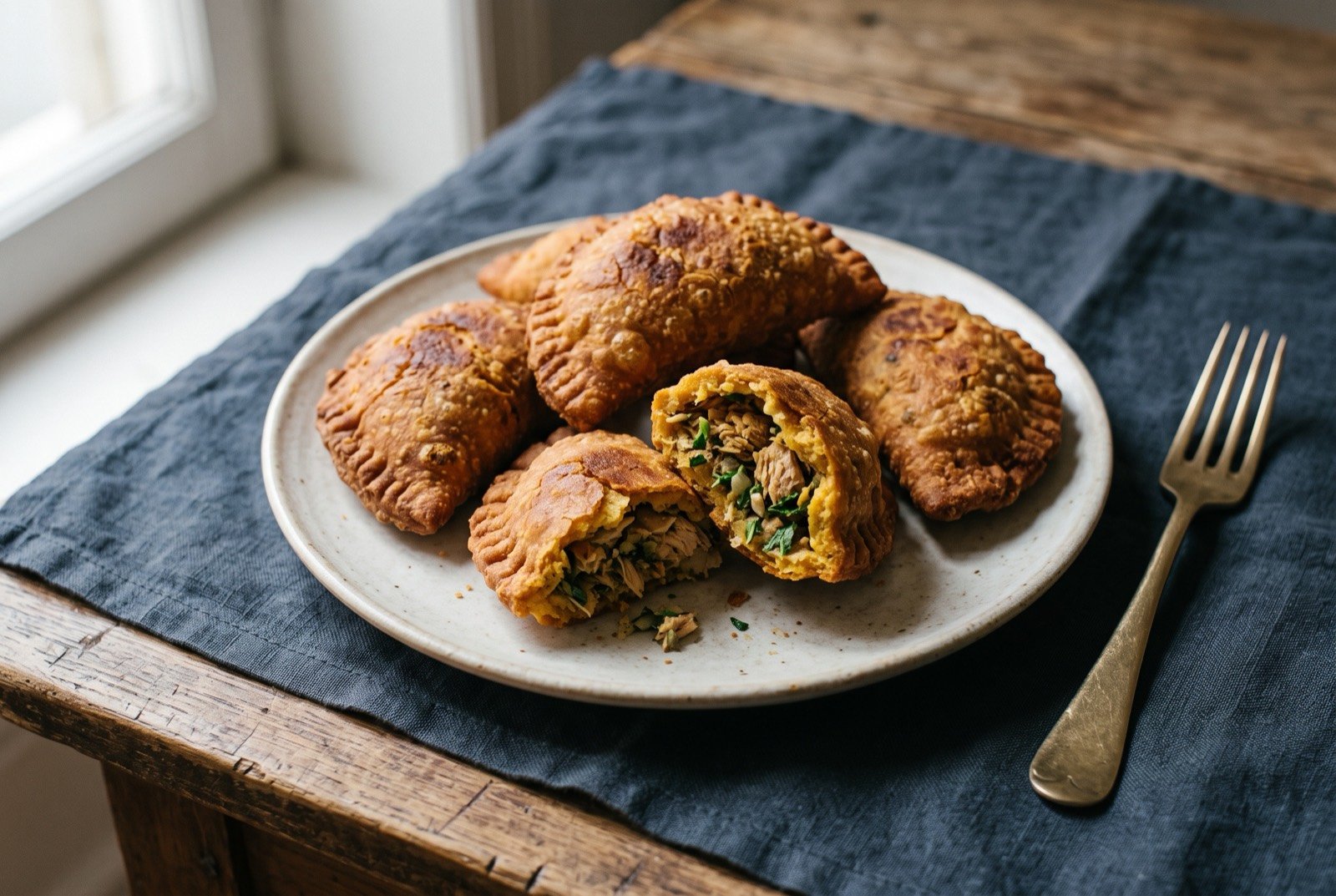
Pastel com o diabo dentro
Cape Verde
Illustration
- Time
- 1 hour 15
- Researched
- Researched from 115 sources in the brief
- Reviewed
- Awaiting a reader from inside the tradition
- Cooked
- Awaiting a cook report
Also, plainly, pastel de milho. The famous name means the pastry with the devil inside, usually glossed as the devil being the chilli in the filling. No Cape Verdean source consulted explains it. See the final section. Why the dough works. Maize flour alone will not hold a seam: there is no gluten network, so nothing stretches and nothing holds a fold. Boiled sweet potato brings gelatinised starch, which is a continuous cohesive matrix in place of gluten; moisture held rather than free; and sugar, which drives the colour and the shatter in the fry. The dough is shaped on a damp cloth because it will tear if rolled.
As tradition built it
Makes about 20. About 1 hour 15.
Ingredients
- 500 g fine maize flour (farinha de milho)
- 500 g sweet potato, boiled in its skin, peeled and mashed
- a little at a time warm water, added a little at a time
- 500 g cooked flaked fish, tuna is the diaspora default
- 1 onion and 2 garlic cloves, minced
- to taste olive oil, black pepper, parsley, malagueta, salt
- for deep frying oil for deep frying
Method
- Mash the sweet potato while hot and work it into the maize flour at a 1 to 1 ratio by weight, adding warm water gradually to a firm, consistent dough.
- Soften the onion and garlic in olive oil, add the flaked fish, pepper, parsley and malagueta, and cook out until dry enough to hold together in a spoon.
- Shape small discs on a damp cloth or a plastic bag, fill, fold and press the seam closed.
- Deep fry in abundant oil to golden.
Notes
After Balai, a Cape Verdean title.
Meat, vegetables and seafood are all explicitly sanctioned by the Cape Verdean source; the tuna default is a diaspora convention.
What a modern chef changes
Drier starch, warm dough, and a two-stage fry
Rungs 5 and 4
Method
- Roast the sweet potato rather than boiling it. Boiling waterlogs the flesh and you compensate with more flour, which makes the dough short and crumbly. Roast whole at 200°C for 45 to 60 minutes, then scoop. More gelatinised starch and more concentrated sugar per gram means a better seal and a better colour.
- Work the dough warm and rest it 20 minutes under a damp cloth. Warm gelatinised starch is pliable; cold gelatinised starch has begun to retrograde and it cracks at the fold. This is the commonest failure and it is a temperature problem, not a skill problem.
- Two-stage fry. 160°C for 3 minutes to cook the dough through, out and rested 5 minutes, then 190°C for 45 seconds to blister and colour. One stage gives you either a pale soft shell or a dark one with a raw seam.
- Put the acid in the filling and the heat on the table. Finish the filling off the heat with lime juice and coriander, and serve a malagueta vinegar alongside. Rung 4: the devil should be adjustable.