West Africa · Volume 06, The Atlantic Islands
Soo de matabala
São Tomé
Illustration
- Time
- 1 hour
- Researched
- Researched from 115 sources in the brief
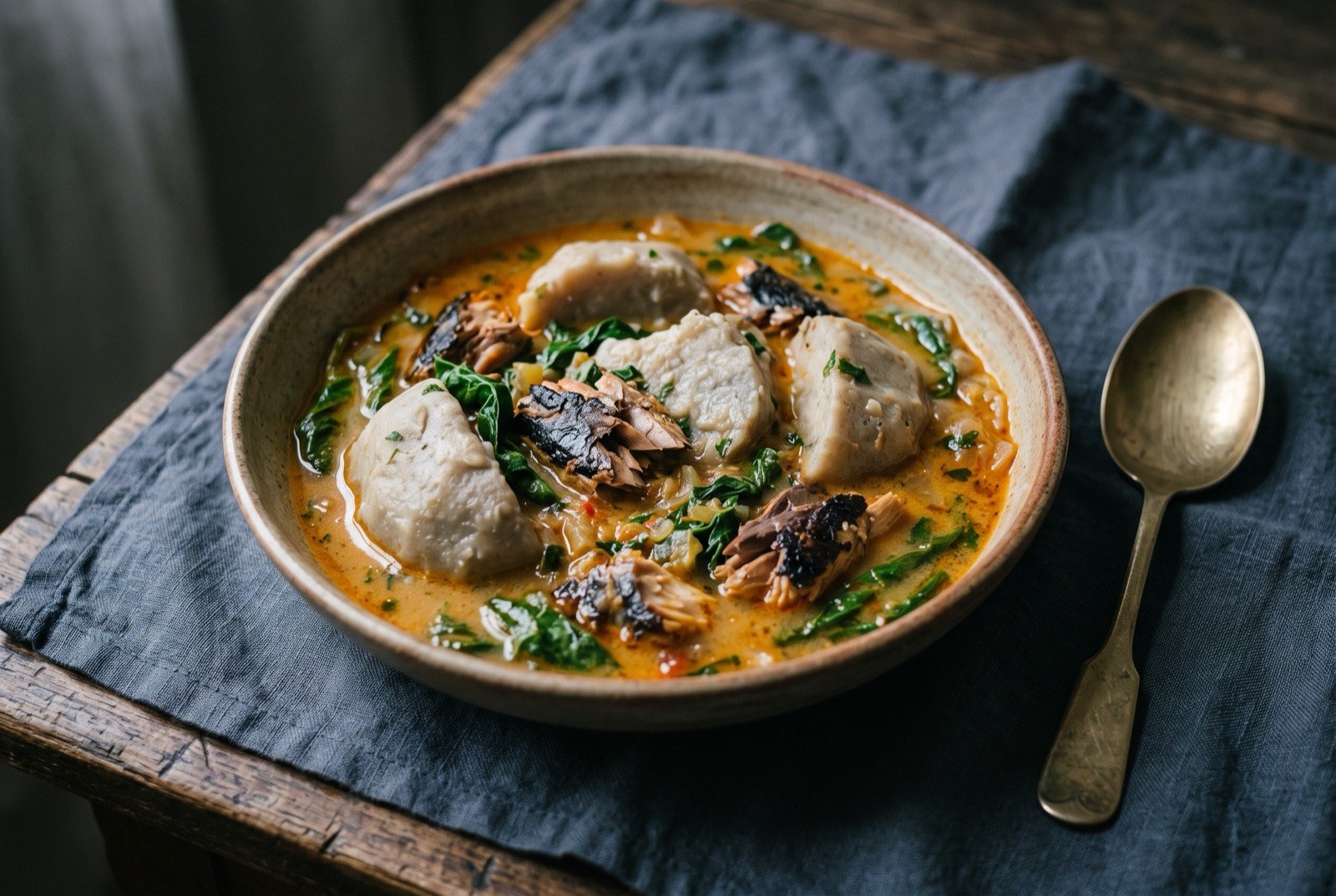
A quieter dish than calulu and a more useful one for understanding the island, because there is nothing else in it: matabala, smoked fish, palm oil, two leaves and time. Matabala is cocoyam, and its starch granules are small enough that it goes creamy rather than floury, which is why the broth thickens slightly on its own without anything being added.
As tradition built it
Serves 4. About 1 hour.
Ingredients
The method as the tradition gives it, with the ingredients named. Quantities follow as we verify them, lead dishes first.
- 600 g smoked fish
- 800 g matabala (cocoyam), peeled, in large pieces
- 2 large tomatoes, chopped
- 1 medium onion, sliced
- 0.5 dl red palm oil
- mussua and micoco leaves
- 1 bay leaf, malagueta, salt
Method
- Sweat the onion and tomato in the palm oil with the bay leaf.
- Add water and bring up.
- Add the matabala and cook until tender.
- Add the smoked fish, soaked and picked over, and the leaves. Correct for salt and malagueta.
Notes
After the pituxomania compilation of Santomean cookery.
A safety note. Cocoyam contains calcium oxalate raphides, must be cooked thoroughly, and irritates the skin of some people during peeling. Wear gloves, and never taste it raw.
What a modern chef changes
The fish extracted rather than boiled, the tuber cooked to a target, and a crisp from the same root
Rungs 3, 5 and 2
Method
- Do not boil the smoked fish in the broth. Make the broth from it first. 200 g steeped at 70°C for 40 minutes, never boiling, strained through muslin, chilled, the fat lifted off, reduced by a third. Use that as the cooking liquid and put the remaining fish in whole and late so it stays in pieces. Rung 3, and the difference between depth and mud.
- Cook the matabala to a probe, not to a poke, taking it off when a probe meets slight resistance at the centre. Cocoyam goes from firm to disintegrating across about four minutes, and once it has gone it has taken your broth with it.
- Fry a handful of it into pala-pala. Slice paper thin, rinse off the surface starch, dry, and fry at 170°C until it stops bubbling. Scatter over at the pass. Rung 5, using the island's own crisp.
- Finish with the palm oil, do not start with it. Sweat the aromatics in a neutral oil or a little reserved smoked fish fat, and add the 0.5 dl of palm oil in the last two minutes off the heat. Rung 2. There is so little else in this dish that the oil is most of the aroma.