Melanesia, Micronesia and Polynesia · Volume 14, The Stone Garden, the Earth Oven and the Company Fence
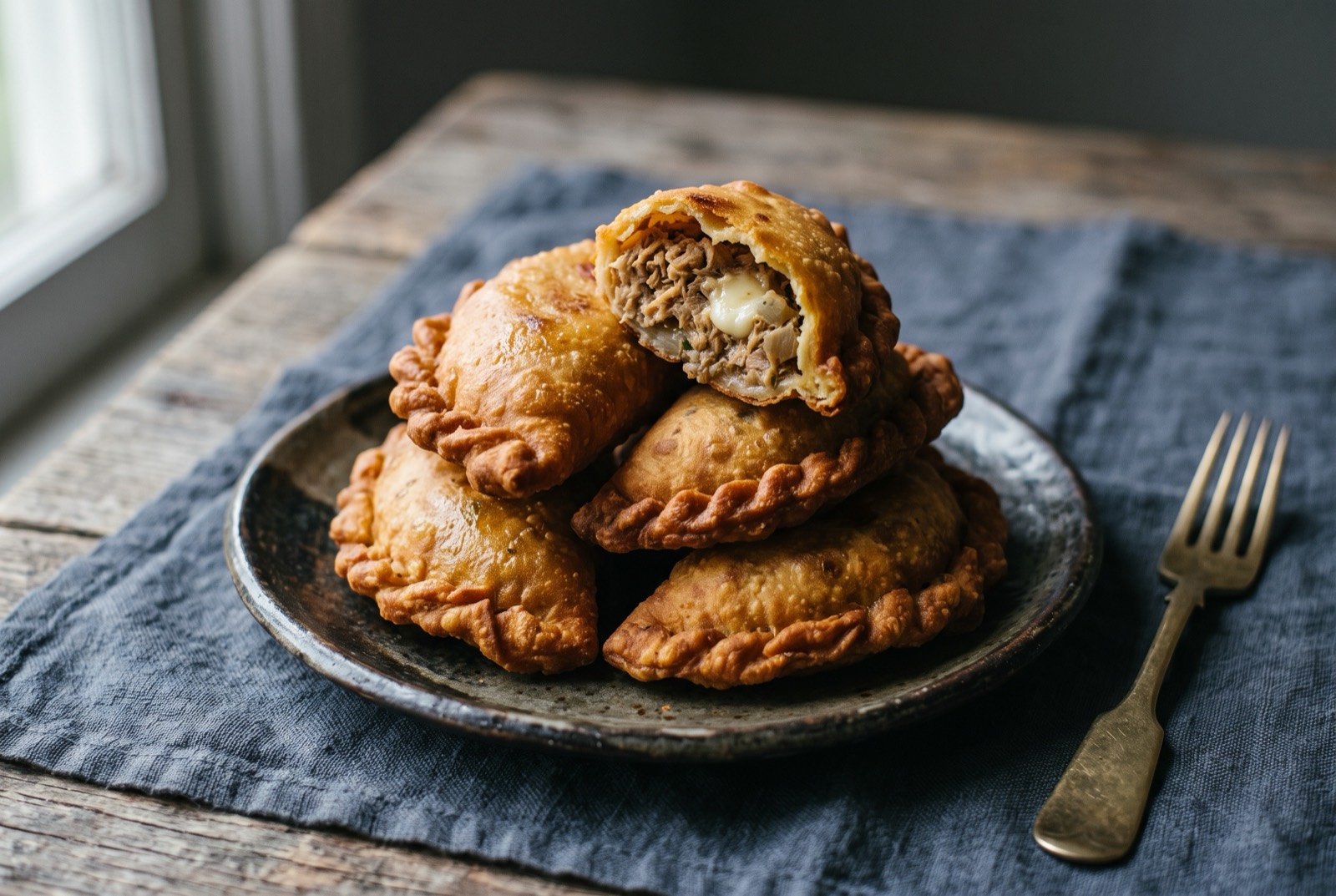
Empanada de atún
Rapa Nui
Illustration
- Time
- Hands on 1 hour · Waiting 30 minutes
- Researched
- Researched from 75 sources in the brief
This is the clearest documented example of a genuine two-way hybrid dish this research found: the Chilean empanada format, a fried pastry turnover, carrying a Rapa Nui filling, fresh island tuna, in place of the mainland's beef, onion, olive and egg pino. It is sold across the island today by named local vendors rather than existing only in theory, and reported variants include tuna with cheese, the most popular, tuna with tomato, and tuna with prawn.
As tradition built it
Makes 12. About 1 hour, plus 30 minutes resting.
Ingredients
For the dough
- 500g plain flour
- 1 tsp salt
- 75g cold lard or butter, cubed
- about 200ml warm water
For the filling
- 300g cooked or good-quality tinned tuna, flaked
- 150g grated mozzarella or a similar melting cheese
- 1 a spring onion, finely diced
- a squeeze a squeeze of lime
For frying
- as needed oil, for deep-frying
Method
- For the dough, work the flour, salt and cold lard or butter, cubed, until it resembles coarse crumbs, then bring together with the warm water into a smooth, firm dough.
- Rest, covered, for 30 minutes.
- For the filling, flake the tuna and combine with the grated cheese, spring onion and a squeeze of lime.
- Roll the dough to 3mm and cut into 12cm rounds.
- Place a spoonful of filling on each round, then fold and crimp firmly to seal.
- Deep-fry in oil at 180°C for 3 to 4 minutes per side, until deep golden, and drain well before serving hot.
What a modern chef changes
A seared filling, and a precisely held fry
Method
- Lightly sear the tuna in hot oil for 30 seconds a side before flaking it into the filling, rather than using it raw or tinned, so the empanada carries a whisper of char alongside the melted cheese.
- Hold the oil at exactly 180°C with a probe thermometer rather than by eye, and rest the fried empanadas on a wire rack rather than paper, so the pastry stays properly crisp rather than steaming itself soft as it cools, a small, unglamorous discipline that separates a good fried pastry from an average one.