Melanesia, Micronesia and Polynesia · Volume 14, The Stone Garden, the Earth Oven and the Company Fence
Umu pae
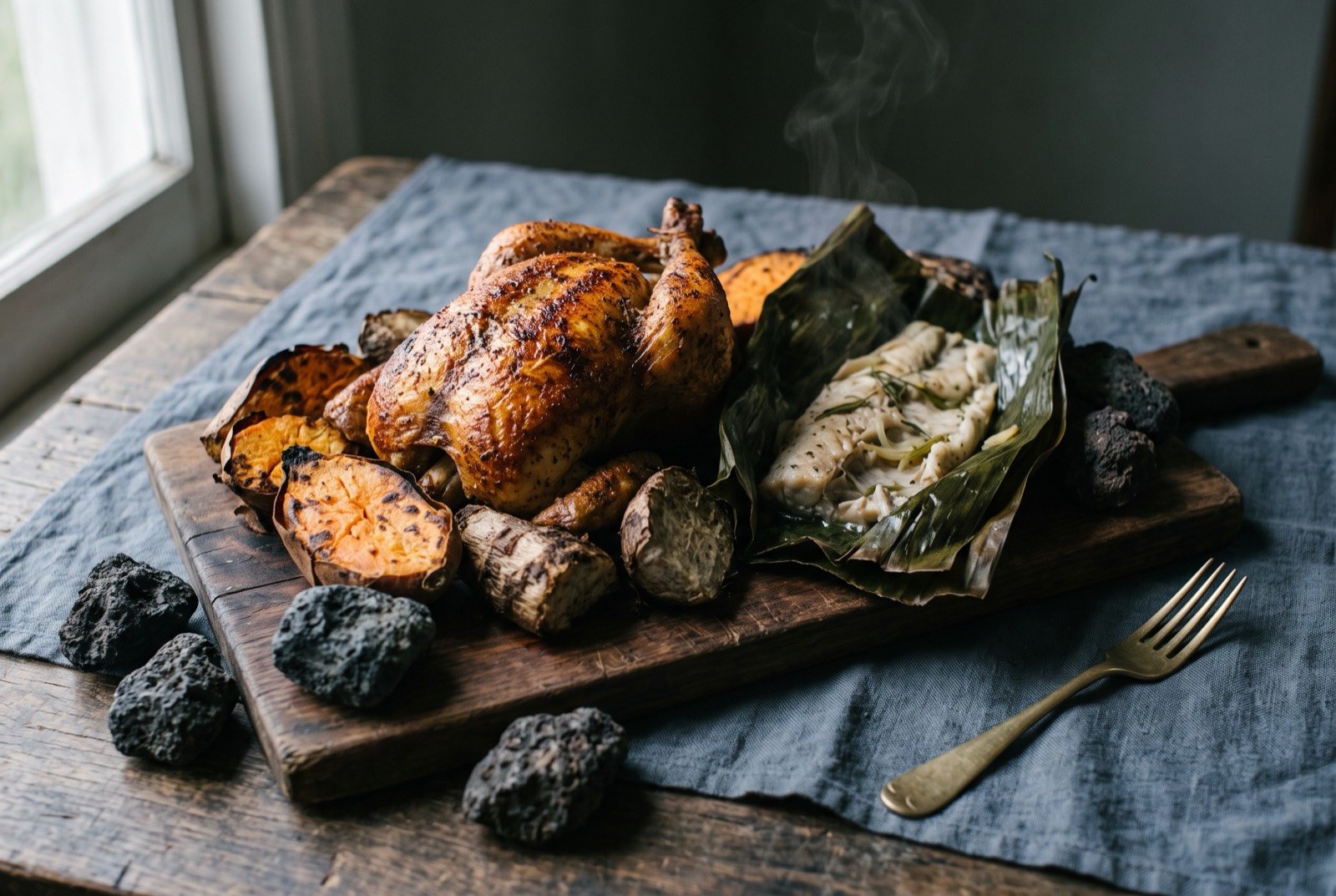
Illustration
- Time
- 2 hours
- Researched
- Researched from 75 sources in the brief
Umu pae is not one dish so much as a cooking method that produces a whole feast at once, and it was, before any outside influence, the island's only way of cooking. Dig a pit and set a large flat base stone in it, then half-bury five or six worked, roughly rectangular stones around it to form a broadly circular cavity, with a further ring of stones outside that to protect the fire and retain heat. Build a wood fire inside the stone-lined pit, traditionally including dried sweet-potato vine as kindling, and pile more stones on top of the burning wood until they are heated through, using a two-stick wooden tool (uru) to move them once hot. Layer the pit from the base: a bed of hot stones; root vegetables, kumara, yam, dryland taro, whole or halved; a further layer of hot stones; whole chicken (moa) and reef fish wrapped in banana leaf parcels; the remaining hot stones on top; then a thick sealing layer of grass and banana leaf packed down to trap the steam. Left alone for two to three hours, the pit cooks everything by trapped steam and radiant stone heat rather than direct fire, and is opened as a single shared meal.
As tradition built it
Serves 6. About 2 hours at 180°C.
Ingredients
- 1kg mixed kumara and taro, scrubbed and halved
- to taste sea salt and a little chicken fat or oil, for the vegetables
- 1.6 to 1.8kg whole chicken
- to taste salt, to season the chicken inside and out
- 4 fish fillets or small whole reef fish (sea bass or bream are good substitutes)
- 4 sheets banana leaf, for wrapping the fish parcels
- to taste a little salt and a squeeze of citrus, for the fish
Method
- Preheat a Big Green Egg to 180°C with a water pan set directly over the coals for humidity, convEGGtor or equivalent in place for indirect heat.
- Toss the kumara and taro, scrubbed and halved, with sea salt and a little chicken fat or oil, and set them directly on the grate.
- Season the whole chicken inside and out with salt and place it on the grate alongside the vegetables.
- Wrap the fish fillets or small whole reef fish in banana leaf parcels with a little salt and a squeeze of citrus.
- Close the lid and hold at 180°C for about 2 hours for the chicken and vegetables, adding the fish parcels to the grate for the final 45 minutes only, since fish cooks far faster than chicken and root vegetables under this indirect heat.
- Check the chicken reaches 74°C at the thickest part of the thigh before serving everything together, unwrapped at the table, the way it comes out of the ground.
What a modern chef changes
Sourced kumara, flavoured steam, and a hot-blast finish for crackling
Rungs 1 and 2, plus a dry-brine finish
Method
- Source kumara properly rather than generically: choose a well-grown, dense-fleshed variety rather than the wateriest supermarket option, since the island's own stone-garden agriculture was built entirely around getting more out of the same starch. Rung 1.
- Replace the water pan with a controlled humidity setup: a tray of stock or dashi rather than plain water, so the steam itself carries flavour into the meat and vegetables as they cook, a modern reading of what the leaf-and-grass seal was already doing. Rung 2.
- Dry-brine the chicken 24 hours ahead and, once rested, finish it with a fast blast at 250°C for eight to ten minutes to crisp the skin the slow indirect cook alone will not deliver, a two-stage cook, low then hot, that respects the umu's long gentle roast while adding the one thing an open pit cannot: real, shattering crackling.