Melanesia, Micronesia and Polynesia · Volume 05, The Highlands, the Sepik and the Reef
Fish wrapped in banana leaf, grilled
The coast
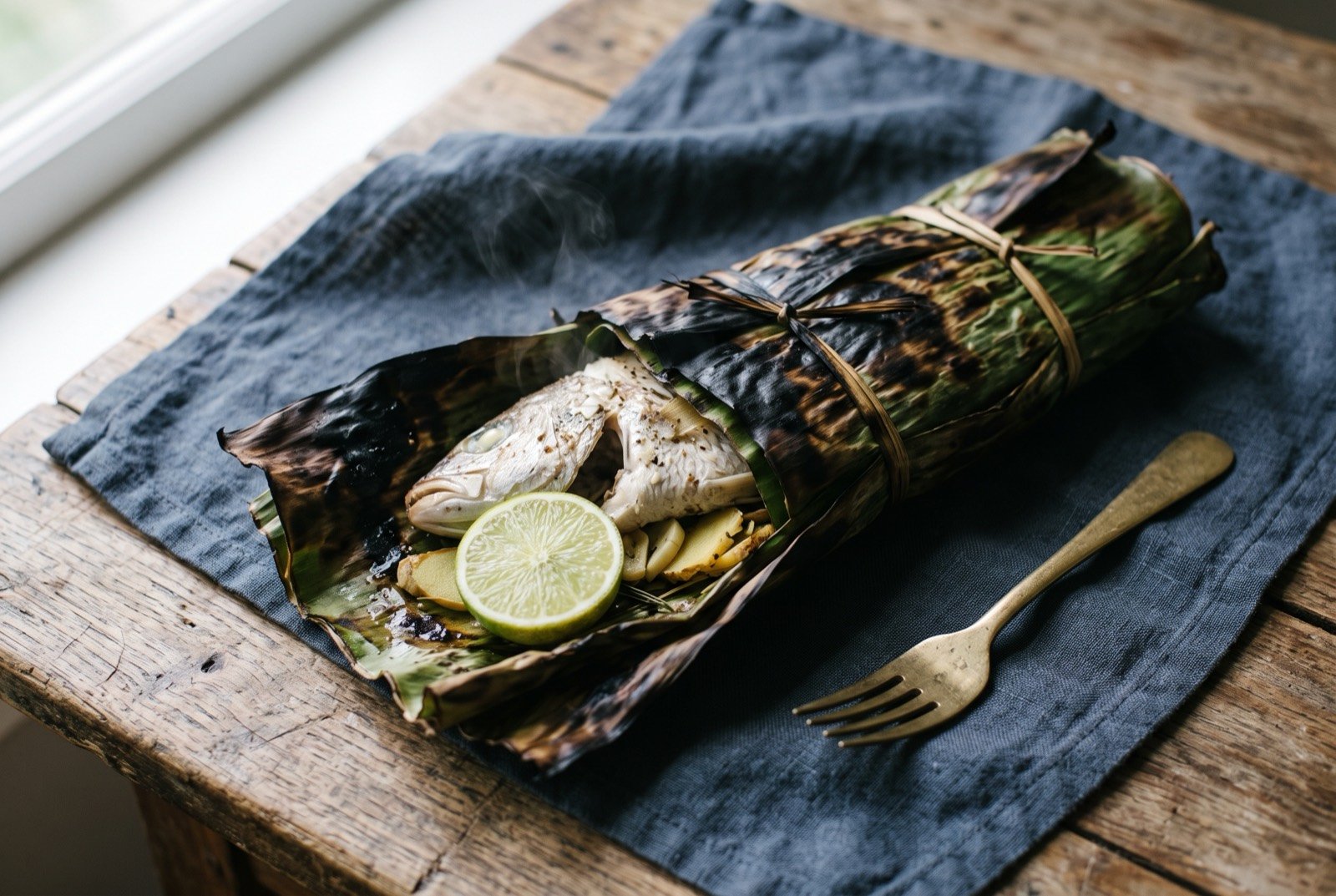
An illustration of the dish, not a photograph of it cooked.
- Time
- 20 minutes
- Researched
- 1 source cited
- Reviewed
- Not yet reviewed from inside the tradition
- Cooked
- Not yet cooked and reported
This is the coast's dry-heat answer to the earth oven above: a single leaf parcel rather than a shared pit, cooked in minutes over an open fire rather than hours underground.
As tradition built it
Serves 4. About 20 minutes.
Ingredients
- 4 whole small reef fish, or 4 fillets of a firm white fish, cleaned
- 1 lime, sliced
- thumb-sized piece ginger, sliced
- to taste salt
- as available banana leaves, enough to wrap each portion
Method
- Season the fish inside and out with salt, and tuck the lime and ginger slices into the cavity or against the fillet.
- Wrap each portion tightly in banana leaf, securing with a skewer or a strip of the leaf itself.
- Grill directly over hot coals, turning once, roughly 6 to 8 minutes per side depending on thickness, until the fish is just cooked through and the outer leaf is charred and fragrant.
- Unwrap at the table, so the aroma the leaf has trapped is released in front of whoever is eating it.
What a modern chef changes
The leaf's steam-and-char effect controlled precisely rather than left to an open fire
Rung 3
Method
- Cook the wrapped parcel directly on the deflector-plate side of a Big Green Egg at a steady 200°C, rather than over open flame, which chars the leaf's surface at a controlled, repeatable rate instead of the more variable scorch an open fire produces, while still trapping the same internal steam.
- Brush the outside of the leaf lightly with oil before it goes over heat, since a dry leaf can catch and flare before the fish inside is cooked, where a lightly oiled one chars evenly instead.
- Rest the unopened parcel for 2 minutes off the heat before serving, giving the trapped steam a moment to finish carrying its last heat through the fish gently, rather than cutting straight into it and losing that residual cooking.