Melanesia, Micronesia and Polynesia · Volume 05, The Highlands, the Sepik and the Reef
Mumu
The Highlands
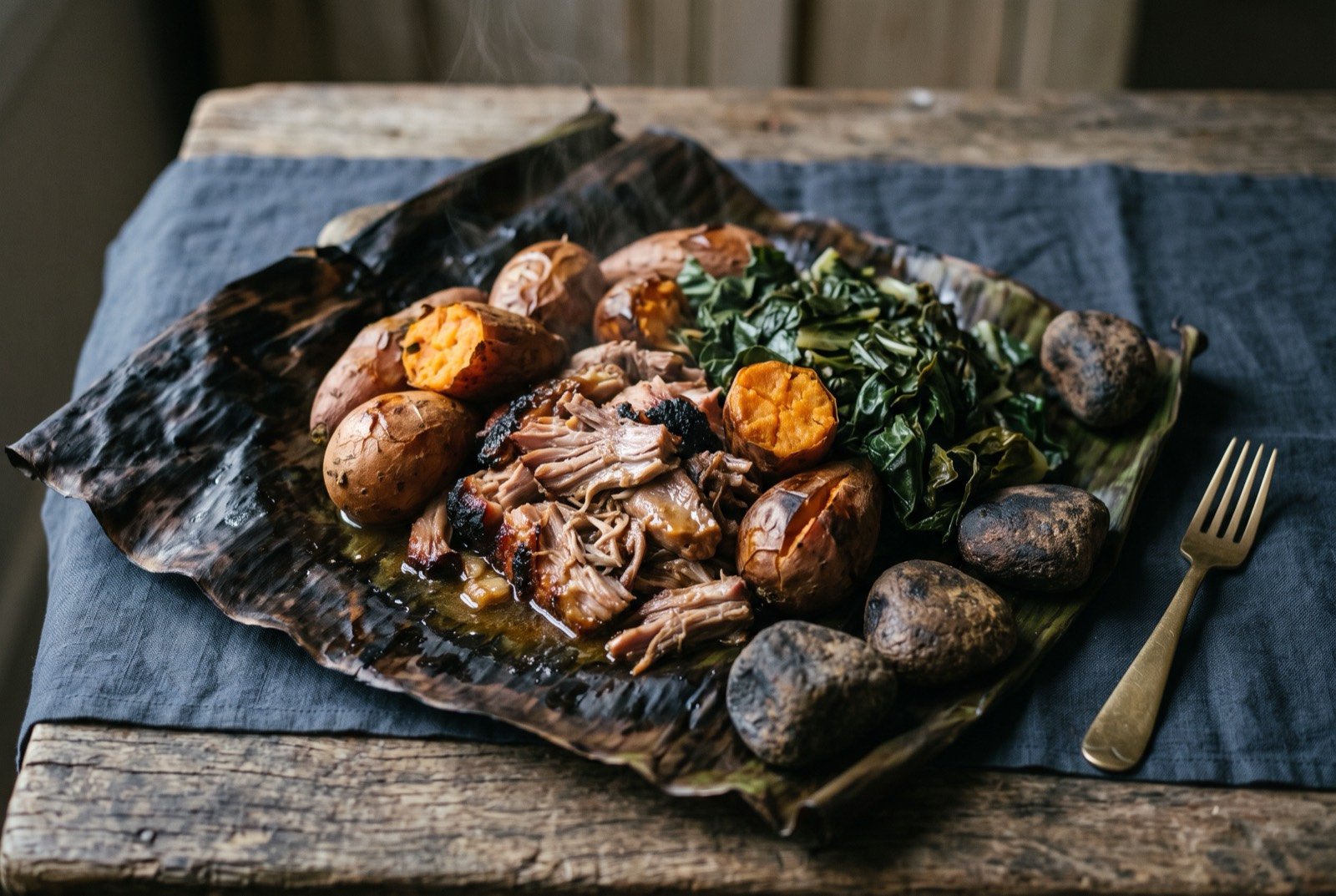
An illustration of the dish, not a photograph of it cooked.
- Time
- 4 hours
- Researched
- 1 source cited
- Reviewed
- Not yet reviewed from inside the tradition
- Cooked
- Not yet cooked and reported
Mumu is reached for specifically at bride price payments, compensation settlements, mortuary feasts and singsing festivals, because a single pit can cook enough pork, kaukau and greens to feed a gathering that a domestic fire simply cannot. No source this chapter could find gives a home-cook quantity or a verified stone temperature; specific figures circulating online (typically "400 to 500 degrees Celsius" and "six to ten hours") trace only to uncredited food blogs with no PNG sourcing behind them and are not repeated here as fact. The one PNG-published account behind this chapter, from Business Advantage PNG, describes the method as "hot stones, banana leaves and hours of slow steaming" without a number attached, and this chapter's own timing below is calibrated against the wider Pacific earth-oven family cooking a comparable quantity of pork and root vegetables, not against a PNG-specific source.
As tradition built it
Serves 4 to 6. Roughly 4 hours, most of it unattended.
Ingredients
- 1.5 kg pork shoulder or belly, in large pieces
- 1 kg kaukau (sweet potato), scrubbed, left whole if small
- 500 g taro, peeled, in large chunks
- 2 firm cooking bananas, unpeeled
- 300 g aibika or other kumu greens (see Flavour Arsenal for substitutes), roughly torn
- as available river stones or other stones that will not shatter under heat, enough to fill the base of the pit and layer through it
- as available banana leaves, enough to line the pit twice over and seal it
Method
- Dig a pit roughly 60cm across and 40cm deep. Build a large open fire nearby and heat the stones in it until glowing.
- Line the base of the pit with a layer of the hottest stones, then a layer of banana leaf.
- Lay the kaukau, taro and bananas directly onto the leaf, closest to the stones, since these take the longest to cook through.
- Lay the pork above the root vegetables, and interleave a few more hot stones between layers if the quantity of food is large.
- Lay the kumu on top, furthest from the direct heat, so it steams rather than scorches.
- Cover the whole pit thickly with banana leaf, then seal with a layer of earth, packed down to trap the steam completely.
- Leave to cook for roughly 3 to 4 hours, undisturbed, until the pork pulls apart easily and the kaukau is tender through.
- Open the pit, lift the food out by layer, and share it out, which is the entire social point of cooking this way rather than in a pot.
What a modern chef changes
The same sealed, humid heat, produced with a kamado grill instead of an earth pit
Rung 1
Method
- Set a Big Green Egg up for indirect heat with a water pan beneath the grate, and hold it at a steady 130 to 140°C: this replicates the sealed pit's combination of moderate, even heat and trapped humidity far more reliably than an open fire and buried stones ever could, since the temperature is now something you can actually control rather than estimate by eye.
- Wrap the pork, kaukau, taro and banana in individual banana-leaf parcels rather than one shared pit, tied closed, so each component cooks in its own trapped steam and can be checked and removed independently once it is done, rather than everything sharing one all-or-nothing cooking time.
- Sous vide the pork shoulder separately at 82°C for 10 to 12 hours if guaranteed doneness matters more than the pit's theatre, then finish it briefly on the Egg's direct-heat side for colour and smoke before serving alongside the leaf-parcelled vegetables, an honest admission that a water bath will cook pork shoulder more reliably than any earth oven, even if it cannot replicate the smoke a real pit imparts.