West Africa · Volume 03, The Gulf of Guinea
Pepper Soup
Pan-Nigerian, with a Ghanaian cousin
Illustration
- Time
- 2 hours
- Researched
- 11 sources cited
- Reviewed
- Awaiting a reader from inside the tradition
- Cooked
- Awaiting a cook report
Pepper soup is where the aromatics have nowhere to hide. There is no palm oil, no tomato and no thickener: just stock, chilli and the spice blend. Which makes it the fastest way to find out whether your uda, ehuru and uziza are alive or whether you have been cooking with dust.
Make the blend yourself. Ozoz Sokoh's method is the one to follow: toast each spice separately over low-medium heat for five to six minutes, cool completely, then grind to a crumbly texture rather than a powder. A workable starting blend is 3 tablespoons ehuru : 2 tablespoons uziza seed : 1 tablespoon alligator pepper : 2 uda pods.
As tradition built it
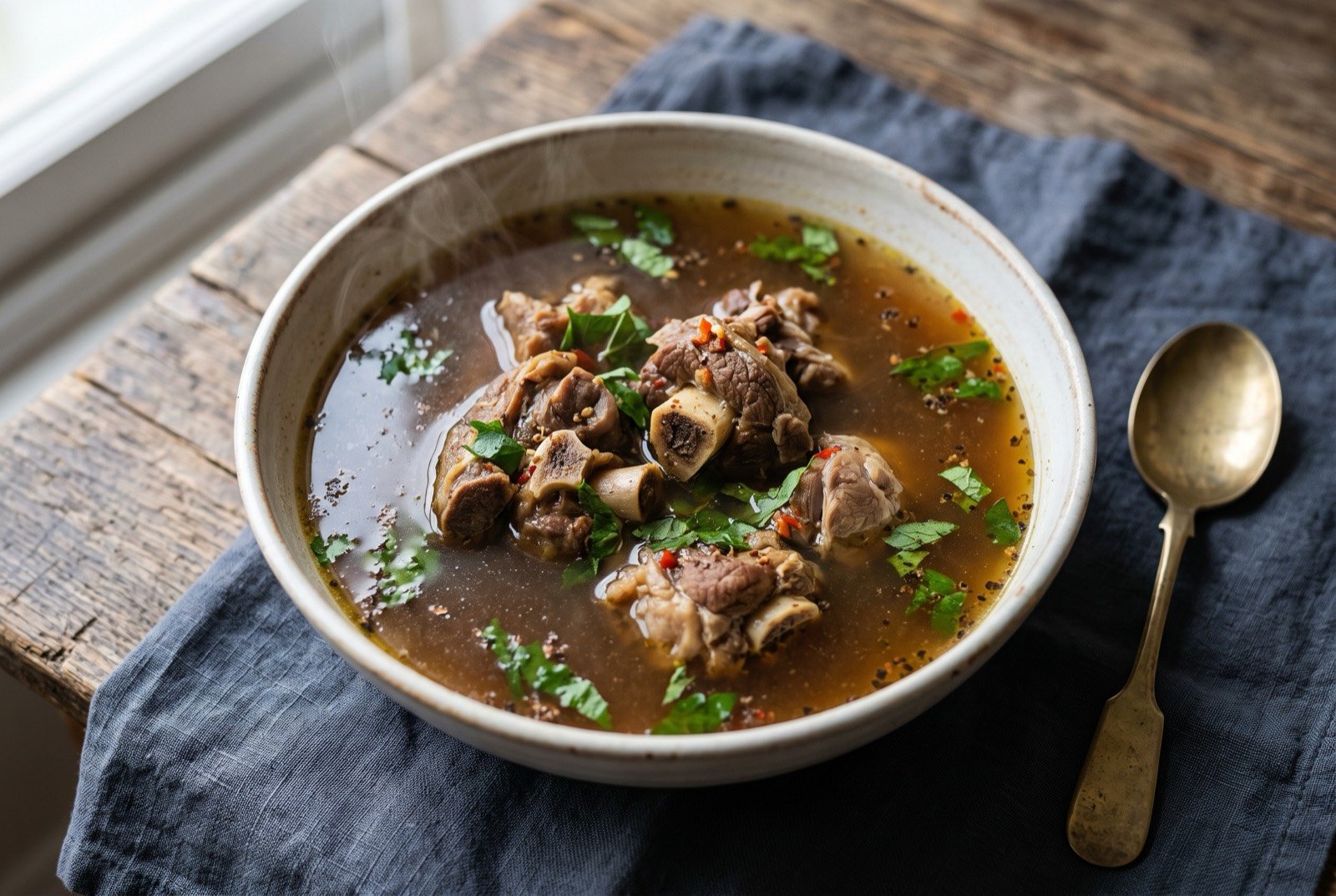
Goat pepper soup
Serves 4 · 2 hours
Ingredients
- 1kg goat on the bone, cut small
- 2 tbsp pepper soup blend (above)
- 1 onion, roughly chopped
- 2 scotch bonnets, blended, or to taste
- 1 prekese pod, lightly roasted
- 1 tbsp ground crayfish
- 1.2L water or light stock
- 1 large handful Large handful scent leaf, torn
- to taste, wedges to serve Salt, and lime to serve
Method
- Put the goat in a pot with the onion and just enough water to cover. Bring to a simmer and skim carefully. Skimming is most of the difference between a clean broth and a muddy one.
- Simmer, partly covered, 90 minutes to 2 hours, until the meat pulls easily but has not collapsed.
- Add the pepper soup blend, blended chilli, crayfish and the roasted prekese pod. Simmer 20 minutes more. Fish the prekese out.
- Season with salt. Off the heat, scatter the scent leaf in and put the lid on for three minutes. Serve with lime wedges and, if you like, a small bowl of plain white rice or boiled yam.
What a modern chef changes
Three-stock pepper soup, torched mackerel
Rungs 01, 02, 10, 11 · Serves 4
Method
- Three stocks, made separately and kept separate. Roasted chicken wings for sweetness and gelatin. Roasted beef bones and shin for depth and colour. Fish frames, gently simmered 20 minutes only, for the marine note. Boiling fish bones hard is how you get glue and bitterness.
- Blend them by taste, not by rule. A good starting point is 4 parts chicken, 2 parts beef, 1 part fish. Reduce the combined stock by a third.
- Clarify. Chill, lift off the fat, then pass through a double layer of muslin. It should be as clear as consommé and taste like the inside of a Lagos kitchen.
- Split the aromatics across two extractions. Half the pepper soup blend goes into the hot stock and simmers 15 minutes, for body. The other half goes into a cold overnight infusion with the prekese and a bruised uda pod, strained and stirred in at the very end. You get the roasted bass notes and the volatile top notes in one bowl, which a single hot extraction cannot give you.
- The fish. Fillet a mackerel, salt it for 15 minutes, pat dry, then torch the skin until it blisters and blackens in patches. Slice on the diagonal and lay it into the bowl raw-centred; the hot broth poured over finishes it.
- Finish in the bowl. Broth poured at the table. A drop of chilli oil. Scent leaf and shredded utazi. A wedge of lime. Serve it in a warmed bowl with nothing else on the table, as the first course of the meal, and watch what it does to people.
Notes
Chishuru's pepper soup is built on layered chicken, beef and fish bone stock, spiced with uziza and finished with torched line-caught mackerel. Three-animal stock is the single clearest restaurant-versus-takeaway marker there is, and once you have tasted it you will not go back.