West Africa · Volume 05, The Sahel Interior
Fakoye
Northern Mali, Gao and Timbuktu
Illustration
- Time
- 2 hours
- Researched
- Researched from 106 sources in the brief
- Reviewed
- Awaiting a reader from inside the tradition
- Cooked
- Awaiting a cook report
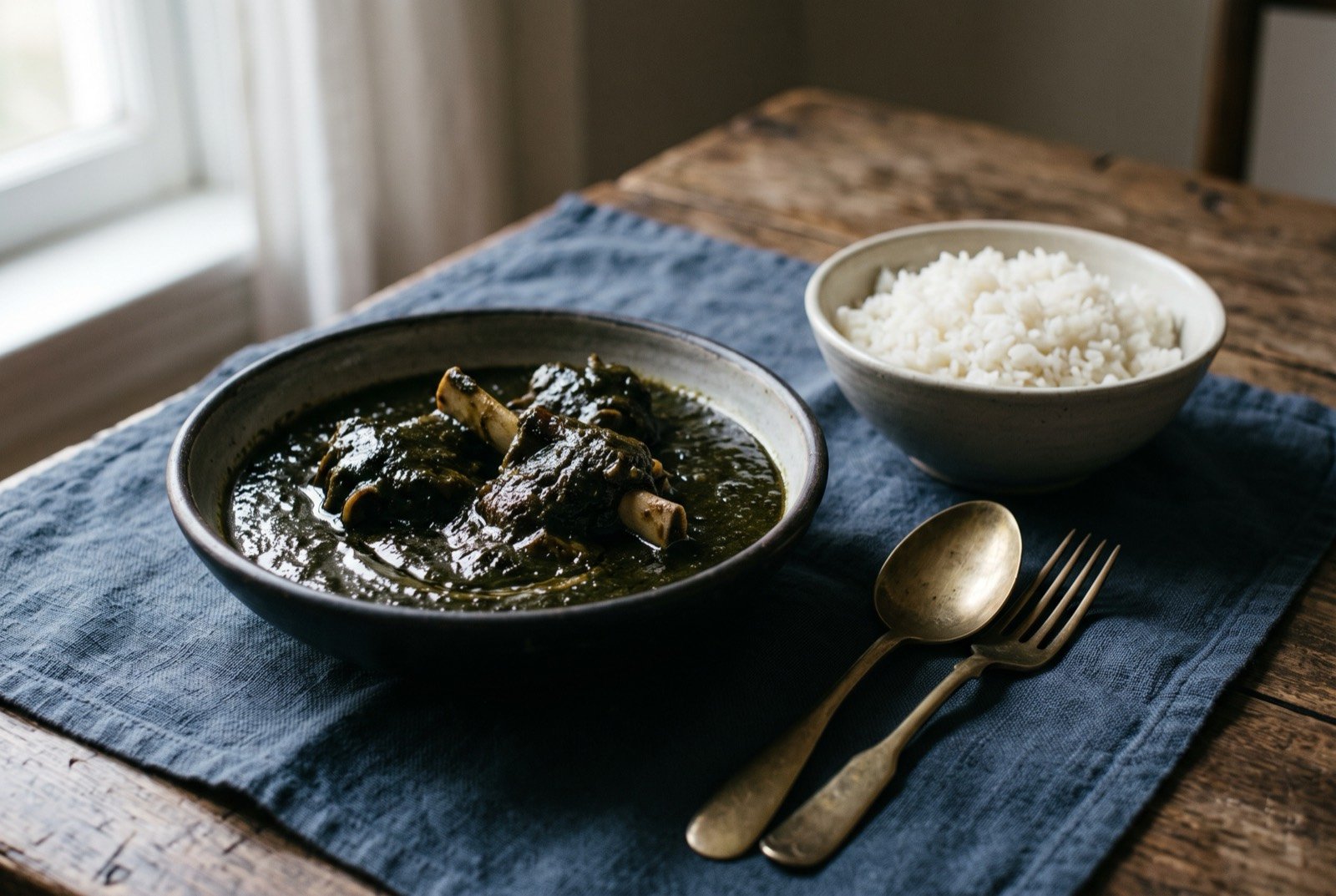
Fakoye is the northern Malian sauce of dried jute leaf, the same Corchorus olitorius Volume Four met as adémè. The northern treatment differs from every other version in this atlas: the leaf is dried, pounded, sifted to a fine powder and worked with shea butter before it is cooked, then simmered long with mutton or beef. The method comes from chef Samba Sangaré at Le Bafing in Bamako, whose timings are unusually specific and unusually long. Note what that implies. This is a draw sauce deliberately cooked far past the point where Volume Four insisted a draw sauce must be served. Dried, powdered jute behaves differently from fresh: there is no leaf structure left to destroy, the mucilage is already liberated, and the long simmer is extraction and reduction rather than damage.
As tradition built it
Serves 4. About 2 hours.
Ingredients
- 60 g dried jute leaf powder (fakoye), vividly green
- 40 g shea butter, food grade, or clarified butter
- 800 g mutton or beef on the bone
- 250 g onion, sliced
- 40 g soumbala
- 30 g dried fish, pounded
- 2 dried chillies
- 60 ml groundnut oil
- 1 tsp solid potash, or 15 g liquid
- to taste salt
Method
- Brown the meat properly in the oil, in batches, with the onion. This is the step Sangaré emphasises and it is not a formality.
- Work the fakoye powder together with the shea butter to a smooth dark paste. This distinguishes fakoye from every other jute sauce in this atlas.
- Add the paste with the pounded fish, soumbala and chilli. Cook 30 minutes, stirring, keeping it moving so nothing catches.
- Add water to cover, the potash and salt.
- Simmer 1 hour to 1 hour 30, uncovered, until dark, glossy and thick enough to hold a trail behind a spoon.
- Serve with white rice or tô.
What a modern chef changes
The leaf powder made rather than bought, the fat used as intended, the alkali held back
Rungs 6, 5 and 3
Method
- Make your own leaf powder. Bought fakoye is usually khaki, and khaki is oxidised chlorophyll that tastes of hay. Dry fresh or frozen molokhia leaves at 40°C until brittle, then grind and sift. The one dish where a dehydrator earns its shelf space outright.
- Work the powder into the fat and treat that paste as the dish. The shea is the carrier: the leaf's volatile aromatics are fat-soluble, the shea takes them up during the 30 minute cook, and releases them as it melts at body temperature.
- Add the potash for the last twenty minutes. Ninety minutes of alkaline heat is a long time to be degrading thiamine in a sauce that is already dark; late, it does its mucilage job and less of its damage.
- Reduce onto a stock rather than water. The ninety minutes is a reduction step, so what you reduce matters more here than anywhere else in the chapter.