The Indian subcontinent · Volume 22, The Coconut Coast, the Stone Grinder and the Chettiar’s Spice Road
Chettinad pepper chicken (milagu kozhi)
Tamil Nadu (Chettiar)
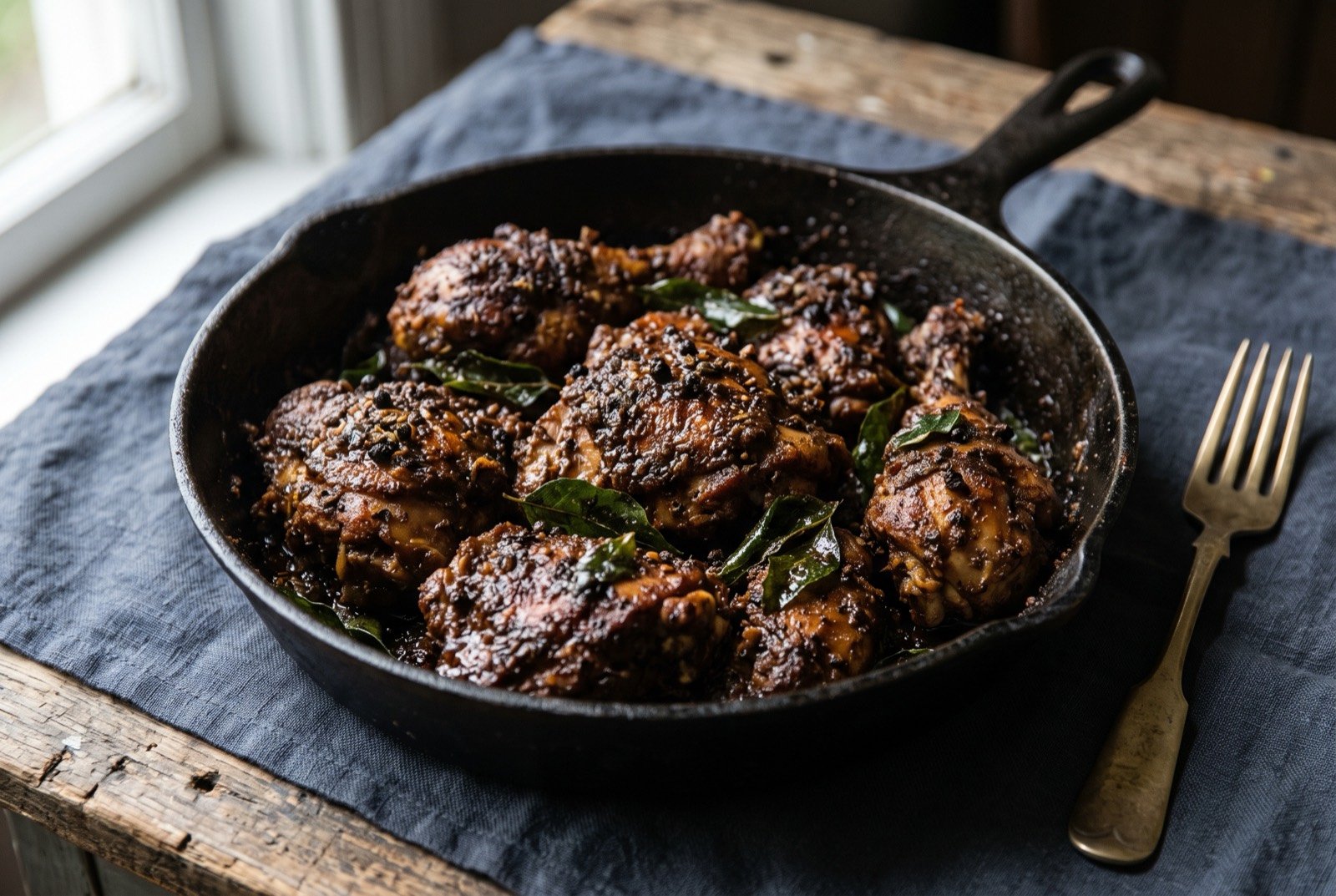
An illustration of the dish, not a photograph of it cooked.
- Time
- 40 minutes
- Researched
- No outside sources linked
- Reviewed
- Not yet reviewed from inside the tradition
- Cooked
- Not yet cooked and reported
A dry, paste-like Chettiar fry where black pepper, not chilli, carries the heat, distinct from the wider-masala kozhi varuval known internationally as Chicken Chettinad.
As tradition built it
Serves 4. About 40 minutes.
Ingredients
- 800g chicken, jointed
- 2 tbsp black peppercorns, dry-roasted
- 1 tbsp coriander seeds, dry-roasted
- 1 tsp fennel seeds, dry-roasted
- 1 onion, finely sliced
- 1 thumb ginger, crushed
- 6 garlic cloves, crushed
- A sprig curry leaves
- 2 tbsp gingelly oil
- to taste salt
Method
- Grind the roasted pepper, coriander and fennel on stone to a coarse powder.
- Fry the onion, ginger, garlic and curry leaf in gingelly oil until well browned, not merely softened.
- Add the chicken, the ground spice and salt, tossing to coat, and cook uncovered over a moderate flame, stirring frequently, until the chicken is cooked through and the masala has reduced to a dry, clinging coating rather than a sauce, about 25 minutes.
- The finished dish should have almost no liquid left in the pan.
Notes
Tamil food writers describe the authentic ratio as roughly half the chilli powder of a standard non-Chettinad preparation, pepper making up the difference; this chapter has not found a settled quantity for milagu kozhi's own history beyond "a Chettinad classic," and states that plainly rather than inventing an origin date.
What a modern chef changes
A pepper roasted and ground the same morning, and a dry reduction taken further than instinct suggests is safe
Rung 3
Method
- Roast the peppercorns separately from the coriander and fennel, each to its own point of colour, and grind together only at the end, following Rung 3's per-spice roasting discipline.
- Push the final reduction further than feels comfortable, until the masala genuinely clings to the chicken with no pooled liquid at all, the defining texture of a properly dry Chettinad fry, most home versions stop short of it.
- Finish with a last scatter of raw, uncooked curry leaf, fried briefly in a separate small pan of hot gingelly oil and poured over just before serving, for a top note the long cooking of the dish itself has otherwise cooked away.