The Indian subcontinent · Volume 22, The Coconut Coast, the Stone Grinder and the Chettiar’s Spice Road
Idli
Pan-Dravidian (Kerala and Tamil Nadu)
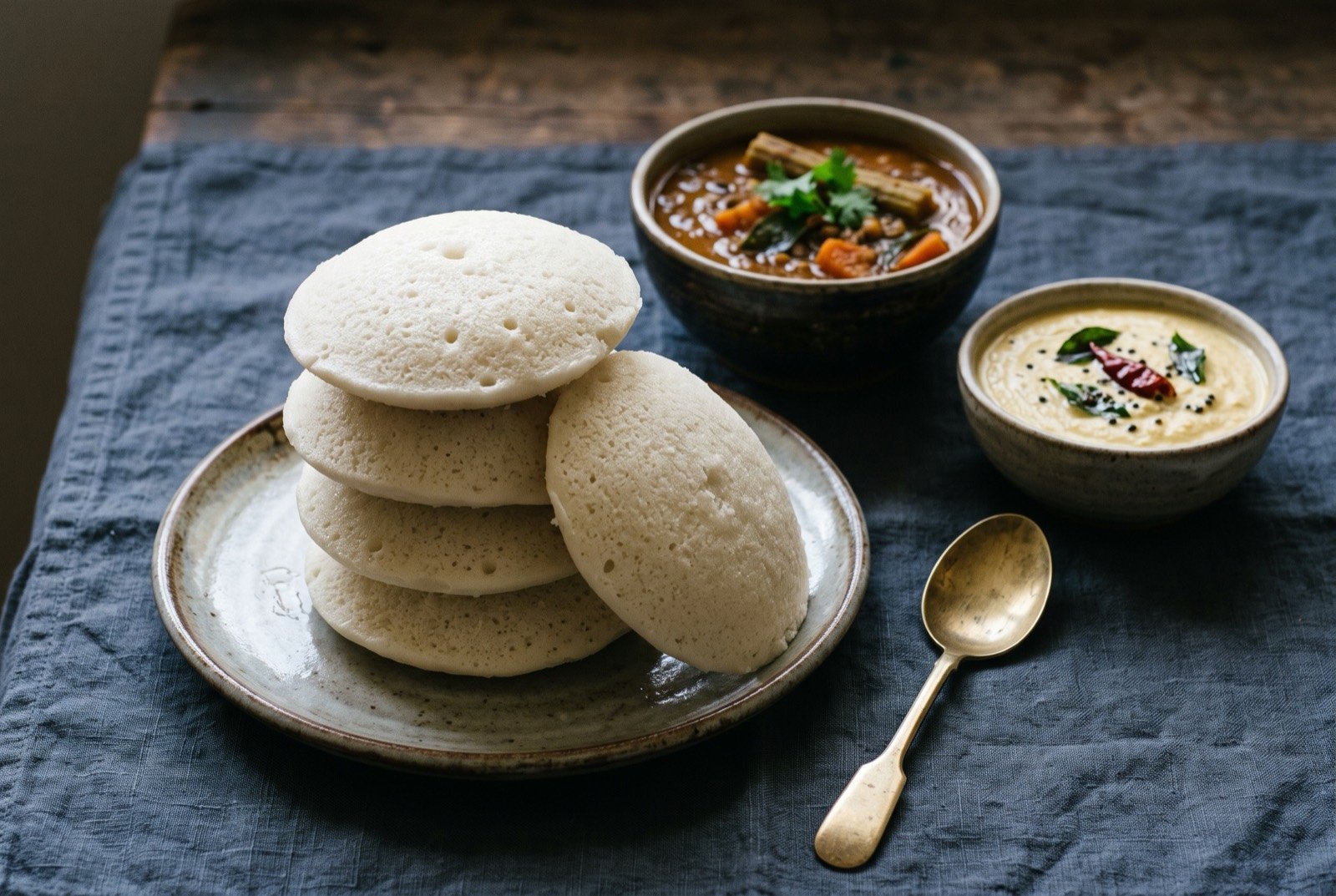
An illustration of the dish, not a photograph of it cooked.
- Time
- 14 hours
- Researched
- No outside sources linked
- Reviewed
- Not yet reviewed from inside the tradition
- Cooked
- Not yet cooked and reported
Pan-Dravidian, claimed by Kerala and Tamil Nadu alike, and the clearest possible demonstration that fermentation, not chilli, is the south's real technical signature.
As tradition built it
Makes about 20 idli. Batter ferments 12 to 14 hours; 8 to 10 minutes to steam.
Ingredients
- 4 cups idli rice (parboiled), rinsed and soaked 4 to 6 hours
- 1 cup whole urad dal (skinned), rinsed and soaked 4 to 6 hours
- 1 tsp fenugreek seeds, soaked with the dal
- to taste salt, added after fermentation
- for greasing oil, for the idli plates
Method
- Drain the rice and grind to a slightly coarse, grainy batter with a little water. Drain the dal and fenugreek and grind separately to a smooth, well-aerated, fluffy paste, using the grinding water sparingly so the batter stays thick.
- Fold the two batters together by hand, working air into the mixture rather than stirring flat.
- Cover and leave somewhere warm for 12 to 14 hours, or overnight, until visibly risen and faintly sour-smelling.
- Stir in salt to taste only now, gently, so as not to knock all the air out of the batter.
- Ladle into oiled idli plates and steam for 8 to 10 minutes, until a skewer comes out clean.
Notes
No source consulted for this chapter gave a single fixed rice-to-dal ratio as settled fact; the 4:1 given here sits within the commonly cited 3:1 to 4:1 range, and the fermentation time should be judged by rise and smell as much as by the clock.
What a modern chef changes
A stone-ground dal batter, and a controlled, warm ferment that compensates for a British kitchen's clean, cool air
Rung 2
Method
- Grind the dal on a granite mortar and pestle in short bursts rather than a continuous blend, keeping the paste cooler and more aerated than a food processor manages.
- Stir a small spoonful of live natural yogurt into the finished batter before fermenting, giving the bacteria a head start a sealed, filtered UK kitchen's air will not provide on its own.
- Ferment in the switched-off oven with just the interior light on, a genuinely warm, still, draught-free environment that gets closer to a traditional Indian kitchen's ambient warmth than a British worktop does.