North Africa · Volume 15, Harissa and the Ottoman Line
Brik à l'oeuf
Tunisia
Illustration
- Time
- 1 hour
- Researched
- Researched from 123 sources in the brief
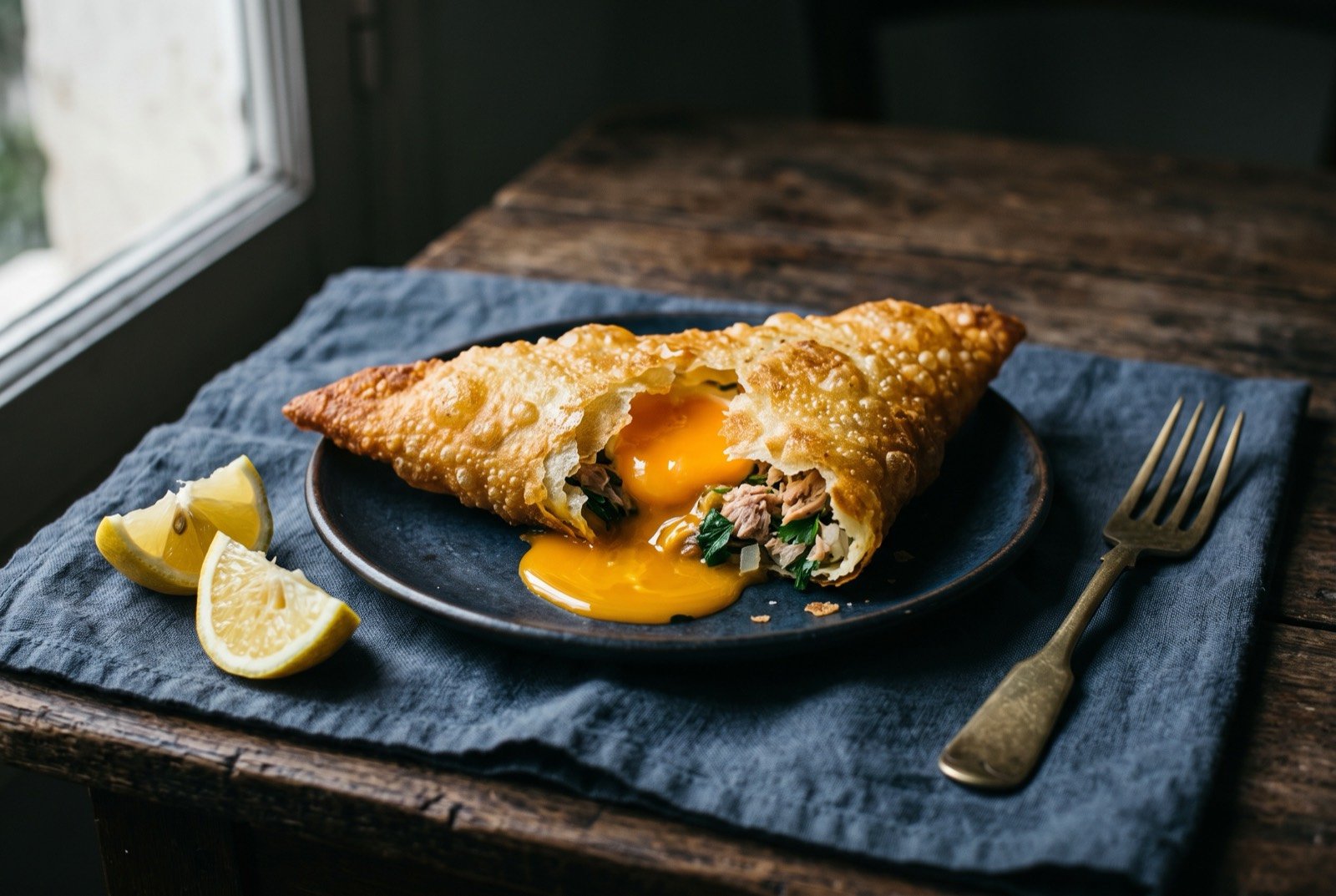
Brik dates back at least five hundred years and belongs to the börek family: Ottoman inheritance that Tunisia did something unique with. The classic is a whole egg in a triangular pocket with onion, tuna, harissa and parsley. The whole point is the intact yolk at the first bite, and everything technical serves that moment.
As tradition built it
Makes 8 sheets, serves 4. About 1 hour.
Ingredients
- 150 g plain flour
- 1.5 tbsp cornflour
- 1.5 tbsp oil
- 150 ml water, and a pinch of salt
- 4 eggs
- 1 small onion, chopped fine
- 1 tin tuna in oil, drained and flaked
- 1 tsp harissa
- oil to a depth of 3 cm; parsley and lemon wedges to serve, no fixed amount parsley; lemon wedges; oil for frying, 3 cm deep
Method
- Blend the flour, cornflour, oil, water and salt to a completely smooth batter. Rest 20 minutes.
- Set a non-stick pan over a pan of boiling water, as a bain-marie, on medium heat. Brush a thin layer of batter across the whole surface and cook a few seconds, until the edges dry and the sheet lifts of its own accord. Stack the sheets between clean cloths.
- Mix the onion, tuna, harissa and parsley. It must be cool and dry before it goes near pastry.
- Lay a sheet flat, put the filling slightly off centre, press a shallow well into it, and crack a whole egg into the well. Work fast from here.
- Fold to a triangle, press the edges closed, and fry in oil 3 cm deep until deep gold, two to three minutes a side. Serve at once with lemon.
Notes
The sheet first, then the parcel.
The bain-marie caps the pan at roughly 100°C, so the batter sets by dehydration rather than browning, which is what keeps the sheet pale and shatteringly crisp after frying.
One honesty note. No in-tradition source gave a frying temperature and every English-language number traces to Western blogs. The temperature below is derived from egg-protein physics, not quoted as tradition.
What a modern chef changes
A probe in the oil, a dry filling, and a reinforced base
Rungs 5, 6 and 3
Method
- Put a thermometer in the oil and hold 180 to 190°C. Rung 5. At 180°C the surface water flashes to steam and pushes outward, the white passes 65°C and sets, and the yolk stays under 68°C and runs. At 150°C the pastry absorbs oil, goes leathery, and by the time it browns the yolk is chalky. Fry two at a time and let the oil recover between batches.
- Fry to order and accept that this dish cannot be held. Steam re-softens the shell within minutes and residual heat finishes the yolk. Cooking for eight means cooking eight in sequence and letting people eat standing up.
- Reinforce the base and dry the filling. The Annaba bourek trick works here: a half-sheet under the filling doubles the pastry exactly where the yolk sits. Free liquid steams through and blows the parcel open, so cool the filling, drain the tuna, and keep the acid outside on the plate.