Iberia · Volume 05, The Rías, the Feira and the Road to Santiago
Tarta de Santiago
Compostela
Illustration
- Time
- 40 minutes
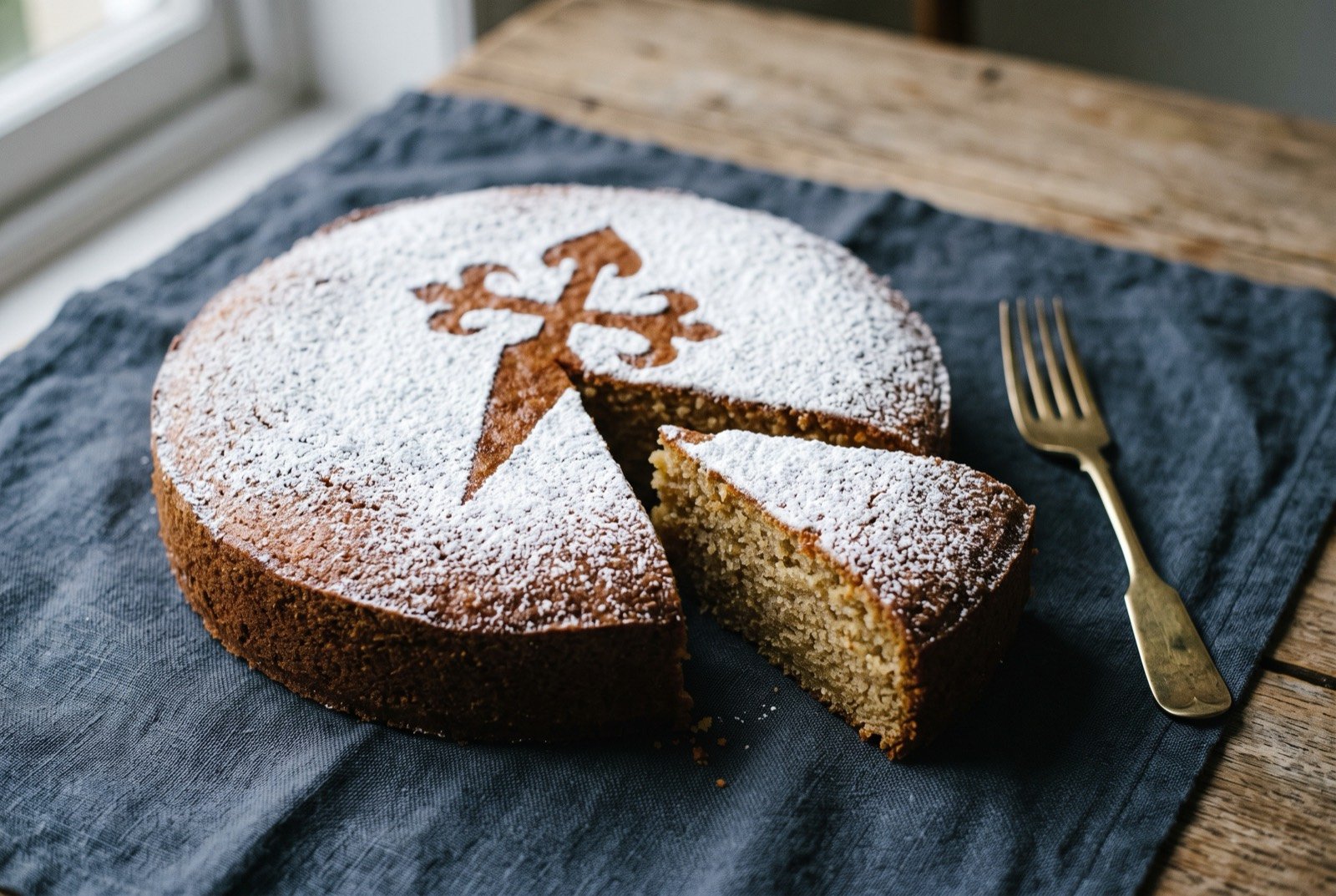
The cake's documented history is genuinely more modest than the story usually told about it: the Denominación de Origen's own regulatory body dates its creation broadly to the sixteenth to eighteenth centuries, in wealthy households, with the earliest documented recipe traced specifically to a confectioner's notebook from around 1838, not any earlier medieval source. Almonds were an imported luxury out of most households' reach until the second half of the nineteenth century. The cross of Santiago stencilled on top in icing sugar, now the cake's single most recognisable feature, is a twentieth-century commercial addition, introduced in 1924 by a Compostela confectioner.
As tradition built it
For a 24cm cake. About 40 minutes.
Ingredients
- 5 eggs
- 250g caster sugar
- 250g finely ground almonds
- 1 lemon, finely grated zest only
- to finish icing sugar, to finish
Method
- Beat the eggs with the caster sugar until pale and doubled in volume.
- Fold in the ground almonds and the lemon zest.
- Pour into a greased 24cm tin and bake at 180°C for 30 to 35 minutes until just set and golden, taking care not to overbake since the almond crumb dries quickly past the point of doneness.
- Cool completely, then lay a stencil of the cross of Santiago over the top and dust generously with icing sugar before lifting the stencil away.
What a modern chef changes
Freshly ground almonds, individual rings, and a Ribeiro wine glaze
Method
- Toast the whole almonds lightly before grinding them fresh in a spice grinder just before use, rather than using shop-bought ground almonds, which lose aromatic oil quickly once ground and stored.
- Bake in individual rings rather than one large tin for a more even crumb and a cleaner rise.
- Reduce lemon and Ribeiro wine to a thin, barely set glaze and brush over the warm cake before the traditional icing sugar and stencil go on, adding a fine, glossy layer of acidity under the sweetness.