Iberia · Volume 05, The Rías, the Feira and the Road to Santiago
Percebes
Coastal Galicia
Illustration
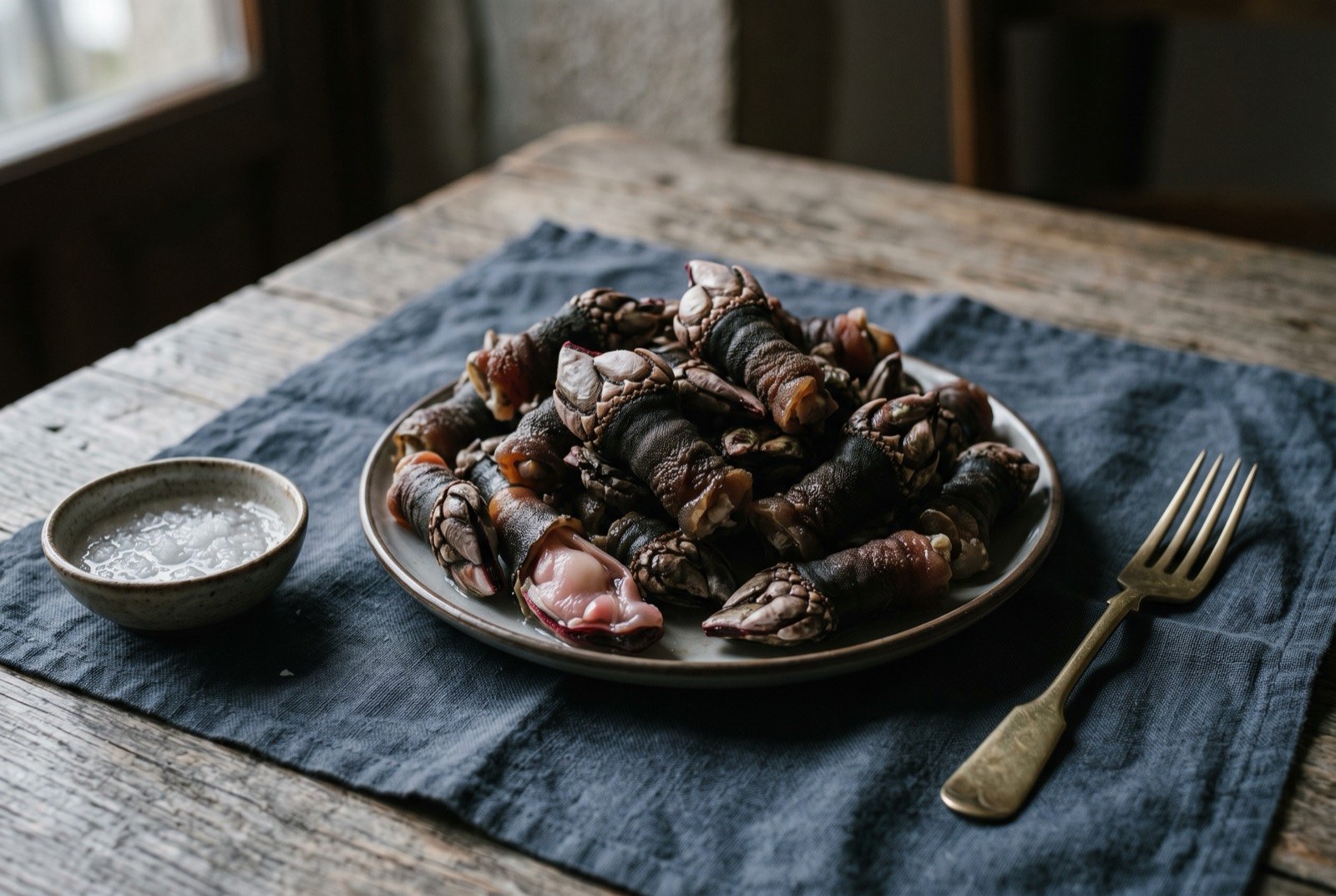
Hand-harvested by percebeiros and percebeiras working a narrow window either side of low tide on wave-battered rock, a trade a fifty-year veteran describes simply as one where "el mar no puedes perderlo nunca de vista," you can never take your eyes off the sea. Prices reach around 200 euros a kilogram at Christmas.
As tradition built it
30 seconds to 1 minute, once the water returns to the boil.
Ingredients
- roughly 250 to 300g per person percebes (goose barnacles)
- 70g per litre coarse salt, dissolved in water at a full rolling boil, deliberately simulating seawater
Method
- Bring water to a full rolling boil with coarse salt at roughly 70g per litre, deliberately simulating seawater.
- Drop the percebes in and, once the water returns to a full boil, cook for no more than 30 seconds to one minute.
- Drain immediately and serve at once, warm, never reheated and never served cold, eaten by hand, snapping the fleshy peduncle from its cuticle sheath.
What a modern chef changes
Discipline, not invention: a confirmed rolling boil and a timed thirty seconds
Rung 4
Method
- Confirm a genuine rolling boil with a thermometer before the percebes go in, rather than relying on judgement (Rung 4).
- Use a timer rather than judgement to call the thirty-second mark.
- Serve directly from the pot at the table in a warmed vessel rather than plated, so no time is lost to transfer, the single variable that most reliably separates a Galician table's percebes from a tourist kitchen's rubbery version of the same shellfish.
Notes
There is very little to elevate here, and this chapter says so honestly rather than inventing complexity: the entire modernist contribution is discipline, not invention.