North Africa · Volume 15, Harissa and the Ottoman Line
Harissa arbi
Tunisia, Cap Bon and Nabeul
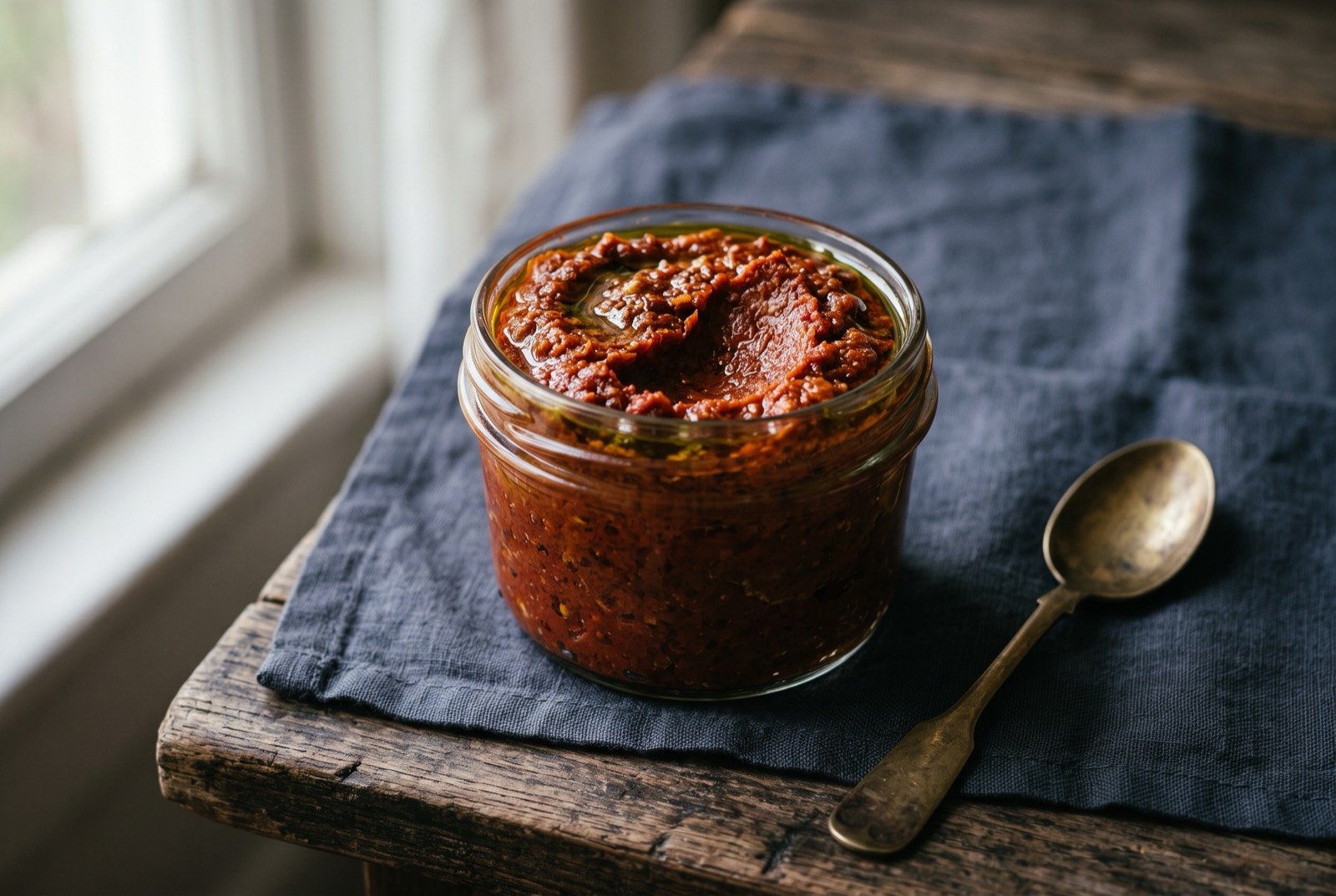
An illustration of the dish, not a photograph of it cooked.
- Time
- Hands on 1 hour · Waiting 30 minutes
- Reviewed
- Not yet reviewed from inside the tradition
- Cooked
- Not yet cooked and reported
Inscribed by UNESCO on the Representative List on 1 December 2022, as Tunisian. Read the inscription carefully, because press coverage embroiders it: the official text names no governorates and no pepper varieties, and specifies only salt, garlic and coriander as the seasonings. What it does describe is chillies sun-dried, split, destalked, deseeded, washed, ground in a mortar or a manual mincer, and stored in glass or pottery, prepared usually by women in a family or neighbourhood setting. Three grades are named and are not interchangeable: harissa berbère, more heavily spiced; harissa arbi or diari, the coarser household grade; and harissa m'dacha, mortar-ground and most rustic. Deseeding is not squeamishness. Capsaicin lives in the placental tissue that holds the seeds, so removing it turns a punishment condiment into one you can use by the tablespoon, and the warm soak that follows does not leach what heat remains, because capsaicin is oil-soluble. The garlic load, at 35 per cent of the chilli weight, is far higher than any Western recipe: it is the paste's sulphurous backbone.
As tradition built it
Makes about 500 ml. 1 hour, plus 30 minutes soaking.
Ingredients
- 250 g dried red chillies, destalked and deseeded (baklouti if you can get it)
- 88 g garlic, peeled
- 7.5 g ground caraway
- 7.5 g ground coriander
- 1 tsp fennel seed
- ½ tsp salt
- to cover olive oil
Method
- Destalk, deseed and wash the chillies.
- Soak in warm water 30 minutes, then drain thoroughly. Wet chillies make a thin paste that will not keep.
- Grind the garlic and fennel to a smooth paste before anything else touches the mortar.
- Add the salt, then the chillies, then the caraway and coriander, and grind to a thick, coarse paste.
- Work in olive oil until it is glossy and holds its shape.
- Jar it, level the surface, pour a film of oil over the top, refrigerate. Re-oil after every use and never introduce a wet spoon: mould from a broken seal is how most good harissa dies in a British fridge.
Notes
The kilo ratio comes from two independent Tunisian sources in agreement; the table is that ratio at a quarter scale.
What a modern chef changes
Smoked chillies, seeds toasted to order, and a mortar rather than a blender
Rungs 2, 3 and 6
Method
- Smoke the chillies before you soak them. The restaurant step UNESCO does not describe, documented by Sam Lamiri: 48 hours over olive and eucalyptus wood, depositing guaiacol and syringol phenols that read as depth and cover the raw green note of any under-dried pepper. On a Big Green Egg, as cold as you can hold it, chillies far from the fire. Even four hours changes the paste.
- Toast the caraway and coriander whole, grind, then weigh. Rung 3. In a paste that will sit in a jar for a month, a stale spice does not improve with keeping.
- Use a mortar. Pounding tears cell walls progressively and releases the oils into the paste as it forms. A blade cuts and aerates, oxidising the volatiles it has just liberated, and it cannot make harissa thick without added liquid, which is what shortens its life.