Persia and the Caucasus · Volume 11, The Walnut and the Vine
Khinkali
Mtiuleti, Pshavi and Khevsureti (mountain Georgia)
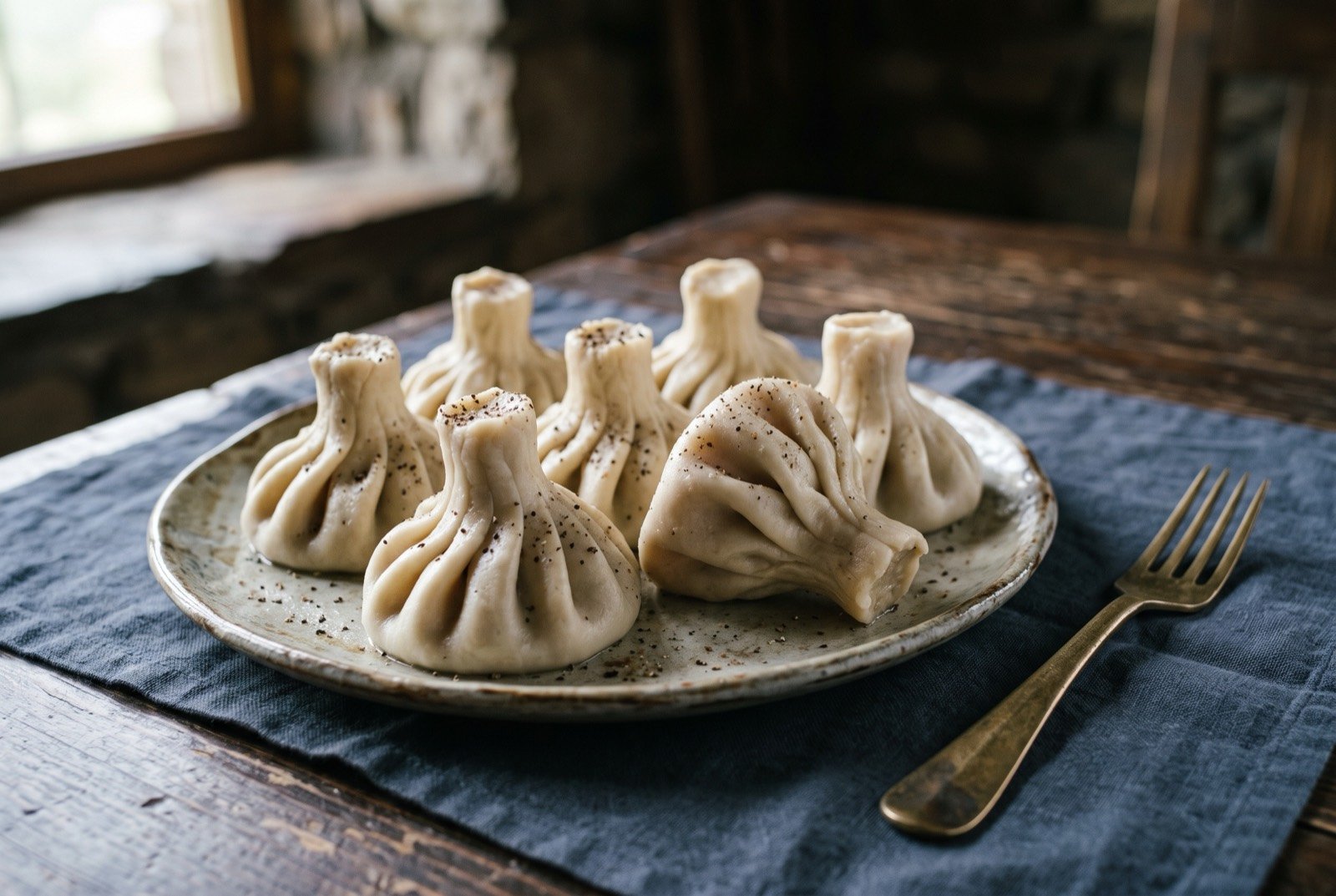
An illustration of the dish, not a photograph of it cooked.
- Time
- 1 hour
- Researched
- 8 sources cited
- Reviewed
- Not yet reviewed from inside the tradition
- Cooked
- Not yet cooked and reported
Georgian sources credit Mtiuleti, Pshavi and Khevsureti, three mountain communities, each with a real claim to khinkali's invention, and regional differences survive between them: Mtiuluri khinkali uses hand-chopped rather than ground meat; Pshavian khinkali traditionally uses onion, black pepper and a dried herb called khondari; Khevsurian khinkali adds caraway and, per the sourcing behind this chapter, never fresh herbs, and can be filled with curd cheese or potato rather than only meat. Tbilisi's own departure from the mountain original is cheese, added to the filling, a documented urban adaptation.
As tradition built it
Makes about 20. 30 minutes' rest, then 30 minutes.
Ingredients
- 500 g strong flour
- as needed, to a stiff dough warm salted water
- 250 g minced beef
- 250 g minced pork, fattier cut preferred
- 1 onion, very finely chopped
- to taste, kept minimal garlic, minimal
- to taste black pepper, cumin, salt
- as needed, added gradually boiled water, or cold water, see below
Method
- Make a stiff dough with the flour and warm salted water, knead well, rest covered at least 30 minutes.
- Combine the beef and pork with the onion, a small amount of garlic, pepper, cumin and salt.
- Loosen the filling with water, added gradually, until it holds together but is genuinely wet. Kakhetian home cooks disagree sharply on whether this water should be boiled or cold, boiled water is argued by some to break the filling apart; this chapter does not settle that dispute, and suggests trying both.
- Roll the dough thin, 2 to 3mm, in rounds.
- Place a spoonful of filling in the centre, gather the edges up around it and pleat, twisting to seal into a topknot. Pleat count varies by region and by cook; do not chase a specific number.
- Boil in plenty of salted water until they float and the dough is cooked through, about 8 to 10 minutes.
- Eat by hand, never with cutlery, lifting by the knot, biting an edge and drinking the broth before it spills. The knot itself is traditionally left uneaten.
What a modern chef changes
The dough's rest and roll respected as the real technique, not the pleat count.
Rung 1
Method
- Give the dough its full hour's rest, not the bare minimum thirty. A properly relaxed dough rolls thinner without tearing and holds more filling water, which is most of what separates a dry, disappointing khinkali from a properly juicy one.
- Roll thinner than feels safe, checking with the windowpane test rather than a ruler, since dough condition, not a fixed millimetre figure, is what actually determines how thin is too thin.
- Do not force a specific pleat count. Pleat by feel until the dumpling is sealed; a well-rested dough naturally takes more pleats than an under-rested one, so the count is a symptom of good technique, not a target in itself.