Persia and the Caucasus · Volume 11, The Walnut and the Vine
Elarji
Samegrelo
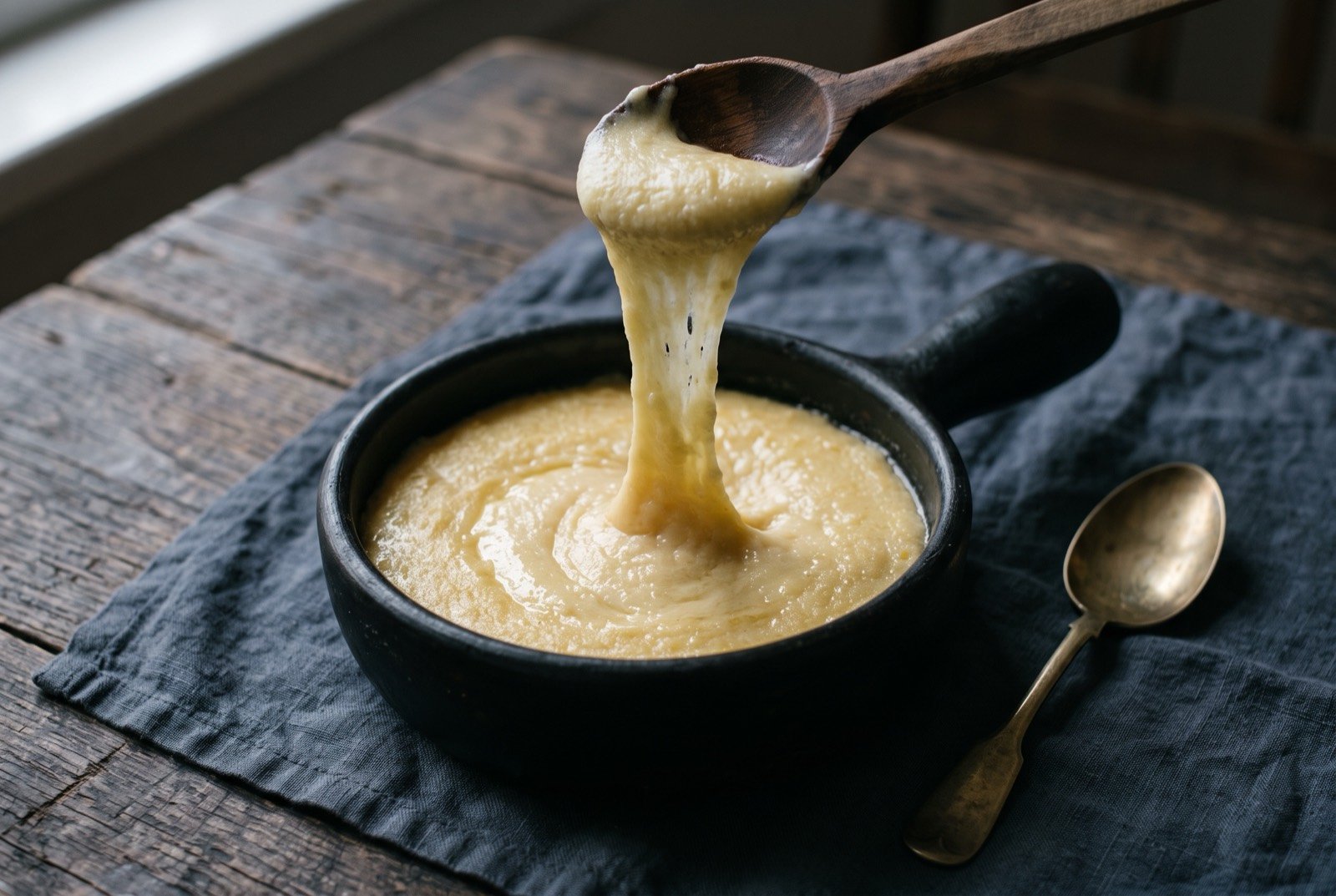
An illustration of the dish, not a photograph of it cooked.
- Time
- 30 minutes
- Researched
- 8 sources cited
- Reviewed
- Not yet reviewed from inside the tradition
- Cooked
- Not yet cooked and reported
As tradition built it
Serves 4. About 30 minutes, mostly continuous stirring.
Ingredients
- 70 g fine cornmeal
- 350 g coarse corn grits
- 600 g sulguni, or the mozzarella and feta blend
- 1.1 litres water
Method
- Bring the water to a simmer in a thick-walled, ideally cast-iron pot.
- Add the corn grits and meal gradually, stirring constantly to prevent scorching, until it forms a thick porridge.
- Slice or grate the cheese, work it into the hot porridge gradually.
- Beat continuously until the cheese fully melts and the mass becomes elastic, pulling into long strings when lifted, the dish's defining texture.
What a modern chef changes
The stretch respected as the whole point, and the cheese substitution named honestly.
Rung 2's discipline of controlled working, applied to cheese rather than walnut fat
Method
- Do not stop stirring once the cheese goes in. The elastic, string-pulling texture is built entirely by continuous mechanical working while the cheese is molten; a rested or interrupted mixture sets up short and grainy instead.
- Use the mozzarella and feta blend if genuine sulguni cannot be sourced, and say so on the plate rather than pretending otherwise; this chapter treats that substitution as an honest compromise, not a secret.
- Serve immediately, directly from the pot. Elarji's texture is at its best in the first minute off the heat and firms rapidly as it cools, the fastest-closing window of any dish in this chapter.