Persia and the Caucasus · Volume 11, The Walnut and the Vine
Chakhokhbili
East Georgia
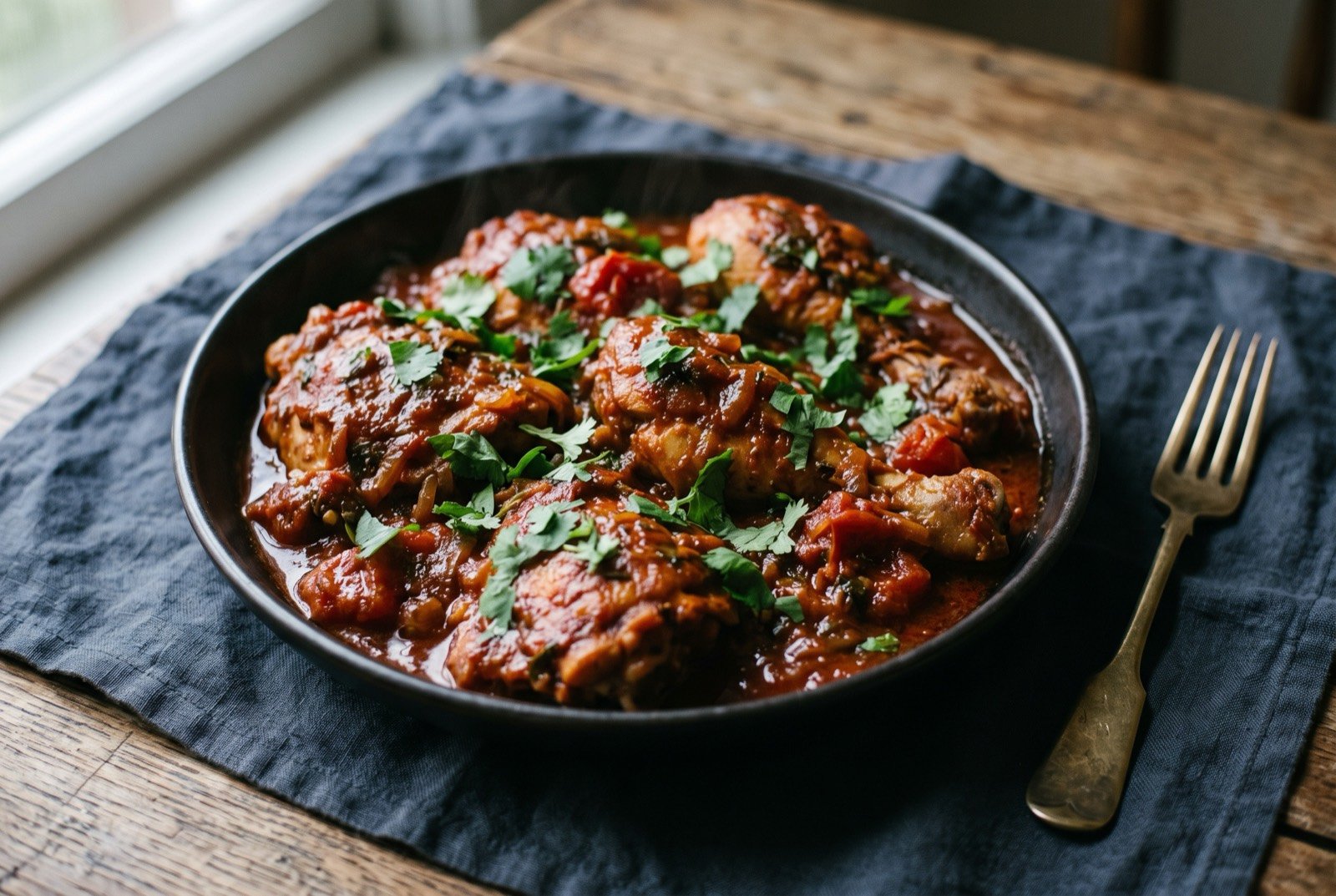
An illustration of the dish, not a photograph of it cooked.
- Time
- 1 hour
- Researched
- 8 sources cited
- Reviewed
- Not yet reviewed from inside the tradition
- Cooked
- Not yet cooked and reported
The name derives from khokhobi, pheasant, the dish's original protein before chicken became the everyday version. One source states the older form predates tomato altogether, using vinegar, herbs and egg instead, a richer dish; this chapter treats that as a single-sourced claim worth naming rather than a settled fact.
As tradition built it
Serves 4 to 6. About 1 hour.
Ingredients
- 1 whole chicken, jointed
- 1 kg tomatoes, chopped
- 2 onions, sliced
- to taste garlic, coriander, basil
- to taste salt, pepper
Method
- Brown the chicken pieces lightly, then remove.
- Sauté the onion until soft.
- Add the tomato, garlic and chicken back in, season with salt and pepper, cover and simmer gently until the chicken is cooked through and the sauce has reduced and thickened.
- Finish with fresh coriander and basil.
What a modern chef changes
The dish's own contrast with satsivi made deliberate rather than incidental.
No rung, a plating discipline rather than a technique change
Method
- Serve chakhokhbili and satsivi side by side where the menu allows it, precisely because the two dishes make the same protein taste completely different from the same regional larder, walnut against tomato, cooked-in richness against bright acidity, and that contrast is worth showing rather than hiding.
- Reduce the sauce further than instinct suggests, since a properly reduced chakhokhbili should cling to the chicken rather than pool around it.
- Add the fresh herbs only at the very end, off the heat, to keep their aromatic top note distinct from the cooked base.