The Andes · Volume 19, The Freeze, the Mine and the Valley Maize
Chairo paceño
La Paz, Bolivia
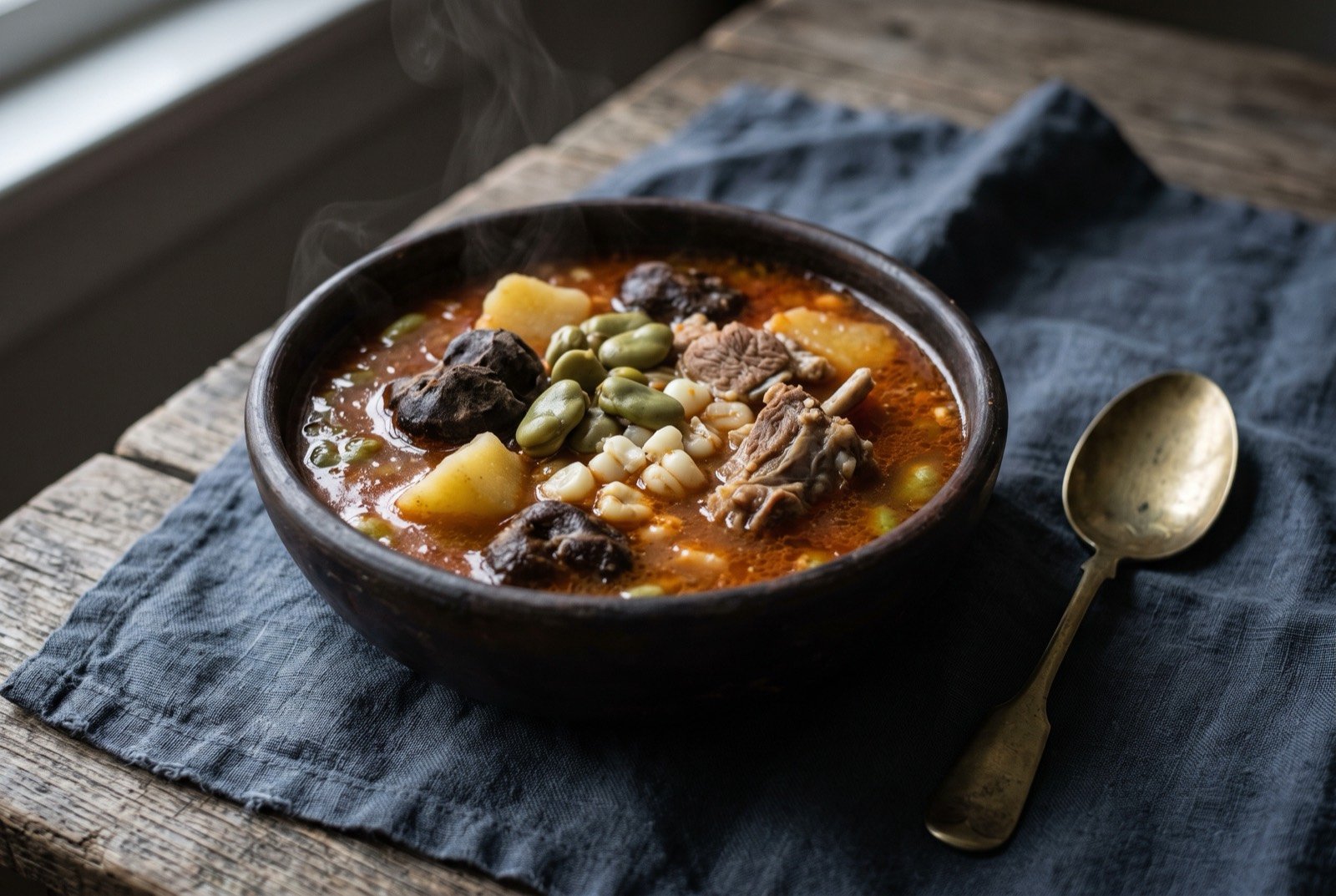
An illustration of the dish, not a photograph of it cooked.
- Time
- Not statedNo source states a time and the atlas has too few comparable dishes to estimate one.
- Researched
- No outside sources linked
- Reviewed
- Not yet reviewed from inside the tradition
- Cooked
- Not yet cooked and reported
As tradition built it
Chairo paceño
One documented version, with real quantities
Ingredients
- 8 cups water
- ¼ kg beef
- ¼ kg lamb
- 1 tbsp salt
- ½ cup peeled fresh habas
- ½ cup peeled fresh peas
- ½ cup peeled carrot
- 4 cups peeled and diced potato
- 1 cup chuño, soaked, peeled and pounded
- 1 cup cooked, peeled white maize
- 1 cup cooked, peeled wheat
- 2 tbsp oil
- 1 cup finely chopped white onion
- 2 tbsp ground red ají
- ½ tsp ground cumin
- ½ tsp crumbled oregano
- ¼ tsp ground pepper
Method
- The night before, prepare the chuño: soak overnight, peel, pound on a batán stone and rinse repeatedly.
- Boil the habas, peas, carrot and potato together around 15 minutes.
- Add the prepared chuño and boil a further 5 minutes.
- Stir through the cooked white maize and wheat last, off the heat.
Notes
The source recipe gives the full ingredient list with real quantities, including the beef, lamb, water, salt, onion, oil, ají and spices, but only fully describes the method for the vegetable, chuño and grain stages; it does not state at which point the meat, water, salt, onion, oil and spice mix is brought together with them.
What a modern chef changes
Water-bath chuño, twin sous vide meats, clarified base
Method
- Rehydrate the chuño in the dehydrator's own low-temperature water bath rather than by a simple overnight soak, for a more even, controllable texture across the whole batch than a bucket on the counter gives.
- Cook the beef and lamb separately, sous vide, to a precise doneness for each, then fold both meats through the finished broth only at the point of serving, rather than boiling them alongside the vegetables for the full cooking time.
- Pass a portion of the finished broth through the chinois for a cleaner base beneath the whole, chunky texture the traditional bowl is built to carry, the two textures served together rather than one replacing the other.