The Andes · Volume 19, The Freeze, the Mine and the Valley Maize
Silpancho
Cochabamba, Bolivia
Illustration
As tradition built it
Silpancho
Created 1946 by Celia la Fuente Peredo, corner of Lanza and Ecuador streets, Cochabamba
Ingredients
- 500g beef fillet, fat and tendon trimmed away
- to taste seasoning
- ½ cup breadcrumbs, plus fresh crumbs to work in while pounding
- 4 pre-cooked potatoes, sliced
- 4 eggs
- 1 cup cooked rice
- 2 tomato, diced
- 1 onion, diced
- 1 locoto, diced
- to taste vinegar
Method
- Season the beef fillet, fat and tendon trimmed away, and coat in breadcrumbs.
- Pound the beef thin, working fresh crumbs in continuously through the pounding so the meat does not tear, until it spreads into a large, delicate escalope.
- Fry the escalope, alongside the sliced pre-cooked potatoes and the eggs.
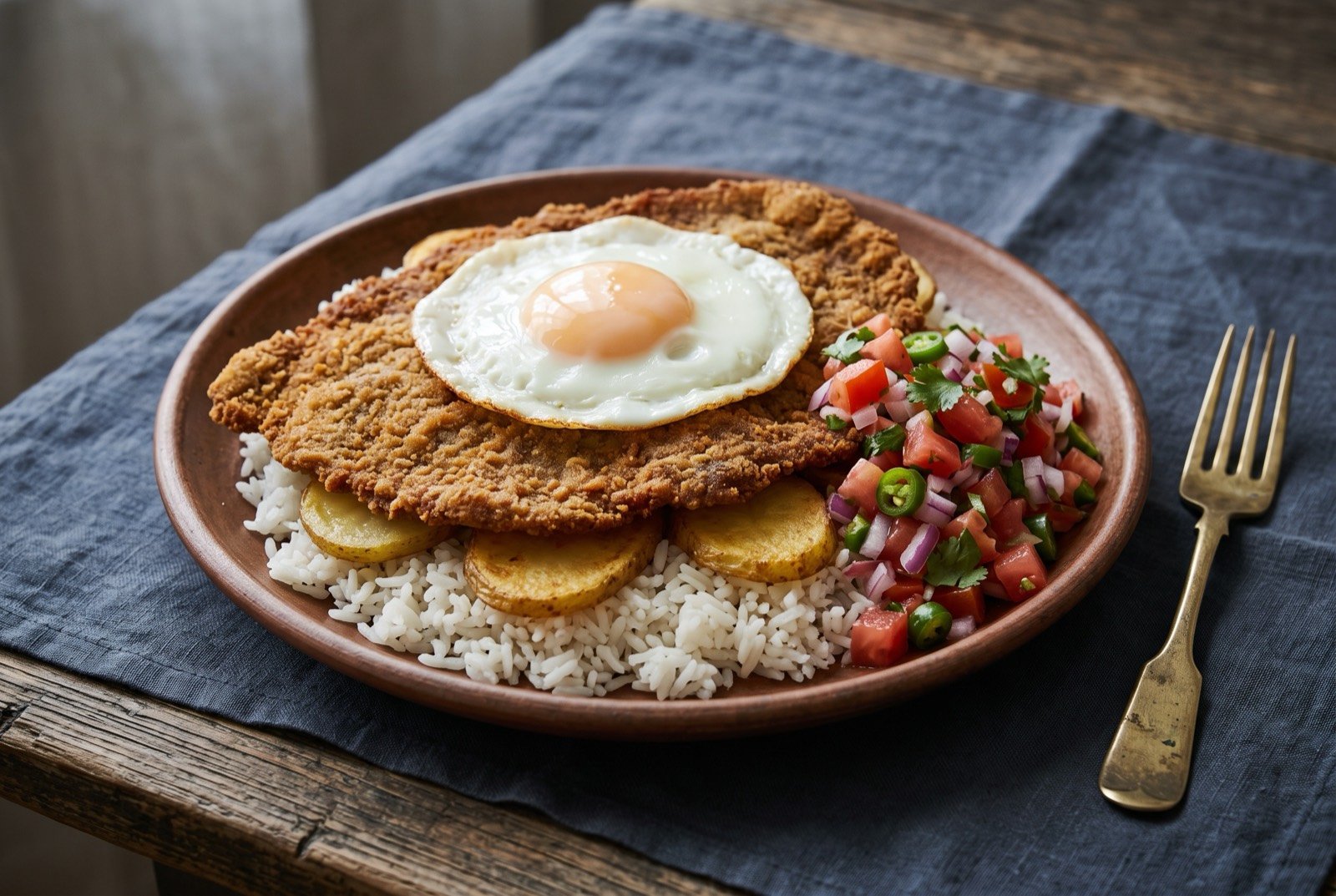
- Layer the cooked rice, the fried potato, the beef escalope and a fried egg on the plate in that order.
- Finish with a raw, vinegar-dressed salsa of diced tomato, onion and locoto.
Notes
Its name comes from Quechua sillp'a, flattened or thin, said to have been coined by a regular customer who combined it with a nickname, Pancho, into sillp'anchu.
What a modern chef changes
Sous vide yolk, concentrated salsa
Rung 05
Method
- Hold the continuous-crumb pounding exactly as Celia la Fuente Peredo's own technique performs it, since it is already precise, named mechanical skill rather than a step this atlas needs to improve on.
- Cook the egg sous vide to a soft, still-liquid yolk before its final quick fry, for a richer result over the escalope than a straight pan-fried egg gives.
- Dehydrate the raw salsa's tomato briefly before dicing, concentrating its flavour so the salsa reads brighter against the dish's fried, starchy base rather than diluting it.