The Andes · Volume 19, The Freeze, the Mine and the Valley Maize
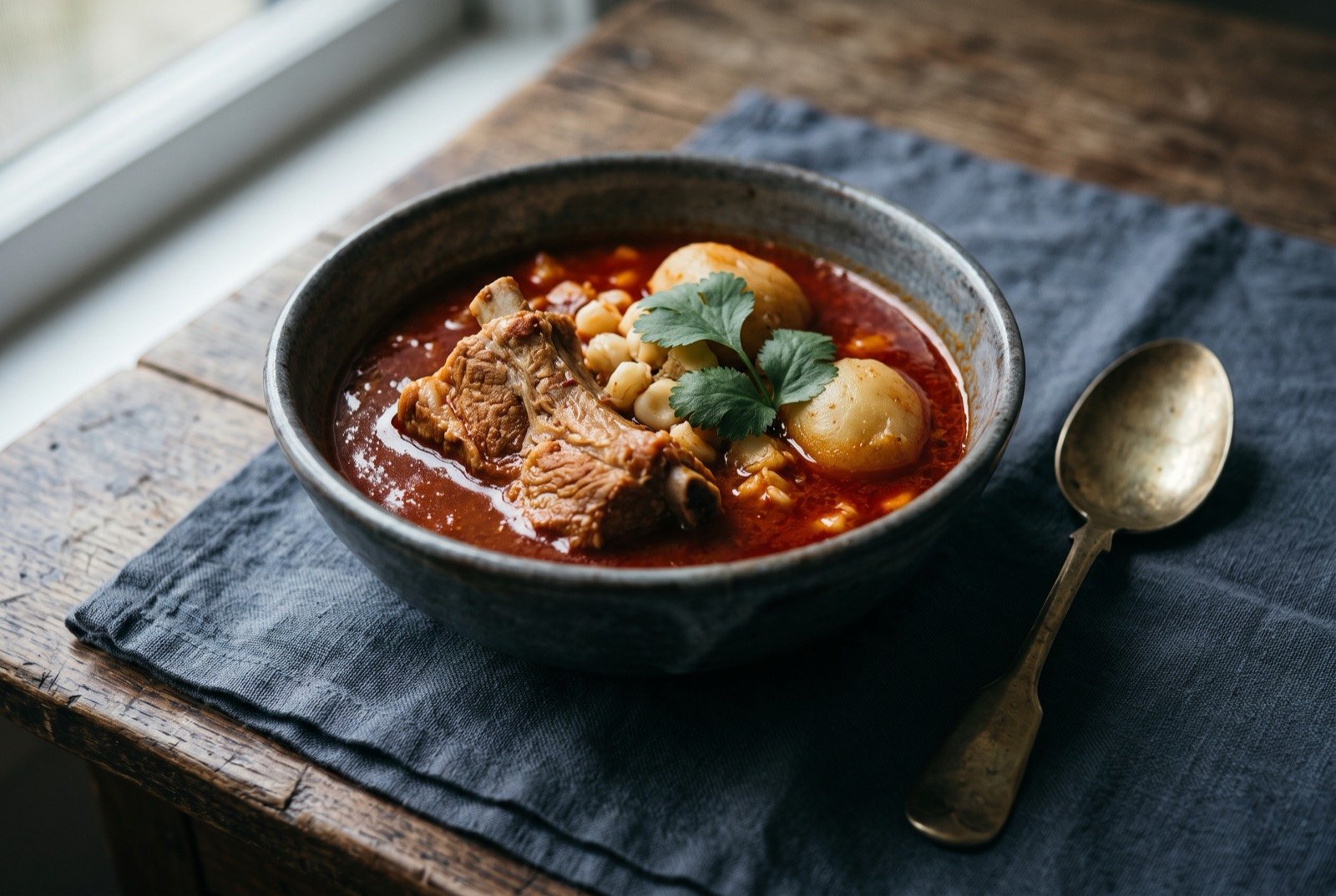
Fricasé paceño
La Paz, Bolivia
Illustration
- Time
- 45 minutes
As tradition built it
Fricasé paceño
Declared Cultural Patrimony by La Paz's municipal government, 2014 · 45 minutes
Ingredients
- ~1kg pork, cut into pieces on the bone
- ½ kg chuño, soaked and peeled whole rather than chopped
- 1kg cooked, peeled white maize
- a handful, to thicken the broth breadcrumbs
- to taste pepper
- to taste cumin
- to taste garlic
- 1 sprig hierba buena
- 3 whole ají amarillo pods
- to serve marraqueta bread
- to taste locotos
- to taste quirquiña
- to taste huacataya
- to taste salt
Method
- Put the pork into cold water with half the hierba buena and the whole ají amarillo pods and bring to a hard boil, skimming off the rising foam as it forms.
- Separately, cook the prepared chuño in water with salt.
- Cook the whole dish around 45 minutes, until the pork is properly tender.
- Season the broth with pepper, cumin, garlic and salt to taste, and stir in a handful of breadcrumbs to thicken it.
- To serve, spread warmed maize across a deep plate, the pork set on top, the chuño alongside, the whole thing bathed generously in the cooking jugo and finished with fresh hierba buena, sliced locoto, quirquiña and huacataya to taste, marraqueta bread served alongside.
What a modern chef changes
Clarified jugo and fresh-ground ají
Method
- Hold the initial hard-boil-and-skim exactly as tradition performs it, since a properly clarified pork broth is already the correct technique a modern stock kitchen would arrive at independently.
- Reduce a portion of that same broth further and pass it through the chinois for a genuinely clarified jugo to finish the plate with, the coarser traditional broth kept alongside rather than replaced.
- Cook the pork sous vide after its initial blanch, for a more even doneness through the joint than a rolling boil alone gives.
- Grind the dried ají amarillo fresh in the spice grinder rather than using it pre-ground, for a brighter top note over the broth's own long-cooked depth.