The Andes · Volume 19, The Freeze, the Mine and the Valley Maize
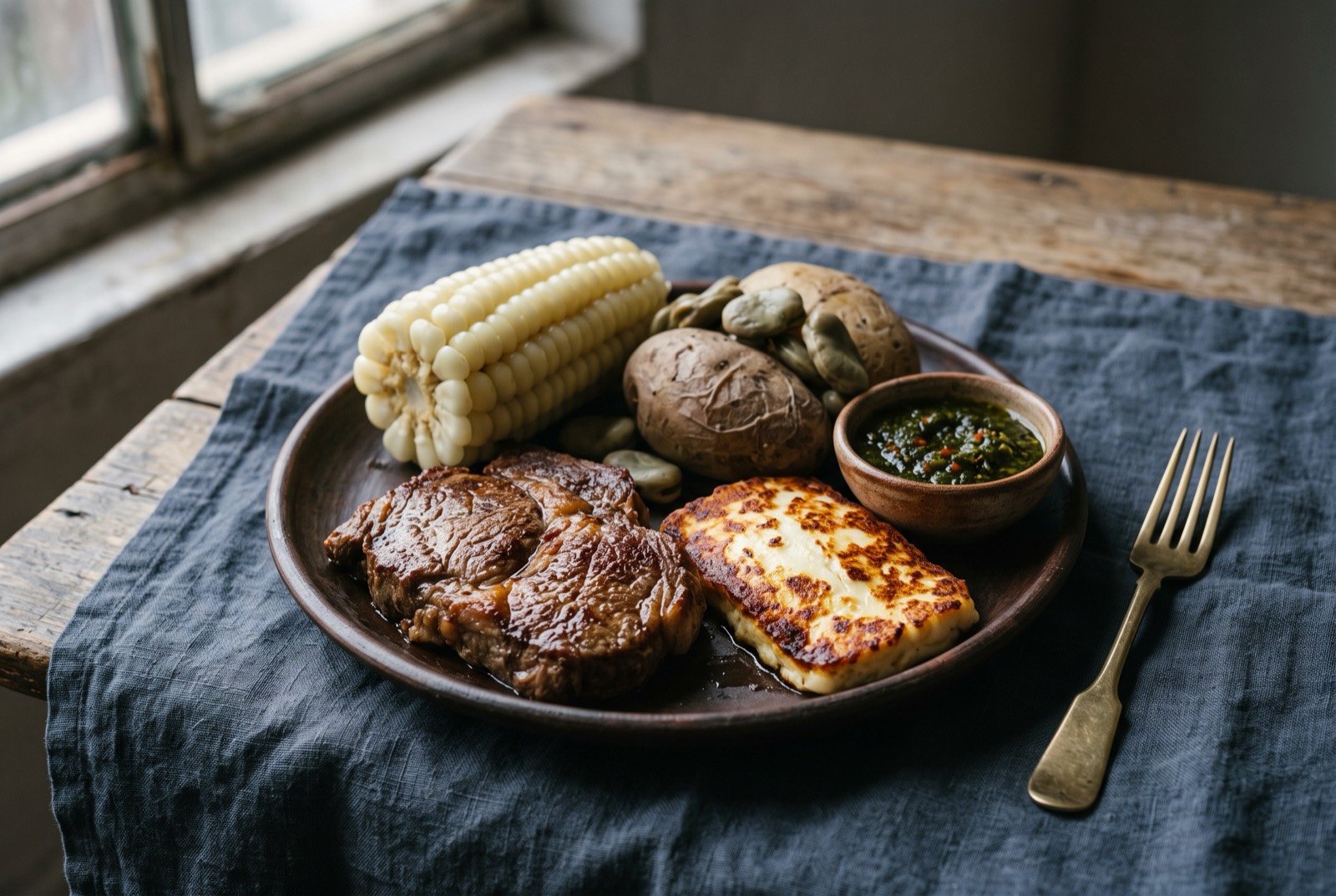
Plato paceño
La Paz, Bolivia
Illustration
As tradition built it
Plato paceño
Traced to the 1781 siege of La Paz; eaten today at the Alasita festival, 24 January
Ingredients
The method as the tradition gives it, with the ingredients named. Quantities follow as we verify them, lead dishes first.
- beef, fried
- cheese, fried
- choclo
- potato, boiled in its skin
- habas, boiled in their pods
- llajwa, to dress
Method
- Boil the potato, habas and choclo until tender in their skin and pods.
- Fry the cheese and beef until coloured.
- Bring the four elements together on one plate, dressed with llajwa.
Notes
No source gives this dish a unified method or a single timing: each element is simply cooked until done on its own terms, so the steps above describe the components rather than a single continuous recipe.
What a modern chef changes
Confit beef, concentrated cheese, charred veg
Method
- Confit the beef in the sous vide bath rather than pan-frying it straight.
- Finish it hard and fast under the Big Green Egg's direct heat for the same browned crust the traditional fry gives, with none of the toughness a hot pan alone risks on a leaner cut.
- Dehydrate a portion of the cheese briefly before frying, concentrating it so the fry produces a firmer, more deeply savoury crust around a still-soft centre.
- Serve the habas and choclo lightly charred over direct heat rather than plain-boiled, a real but modest departure from tradition, stated honestly as a change rather than presented as invisible.