The Andes · Volume 17, Altitude, Chuño and the Picantería Table
Pachamanca
Cusco, Peru
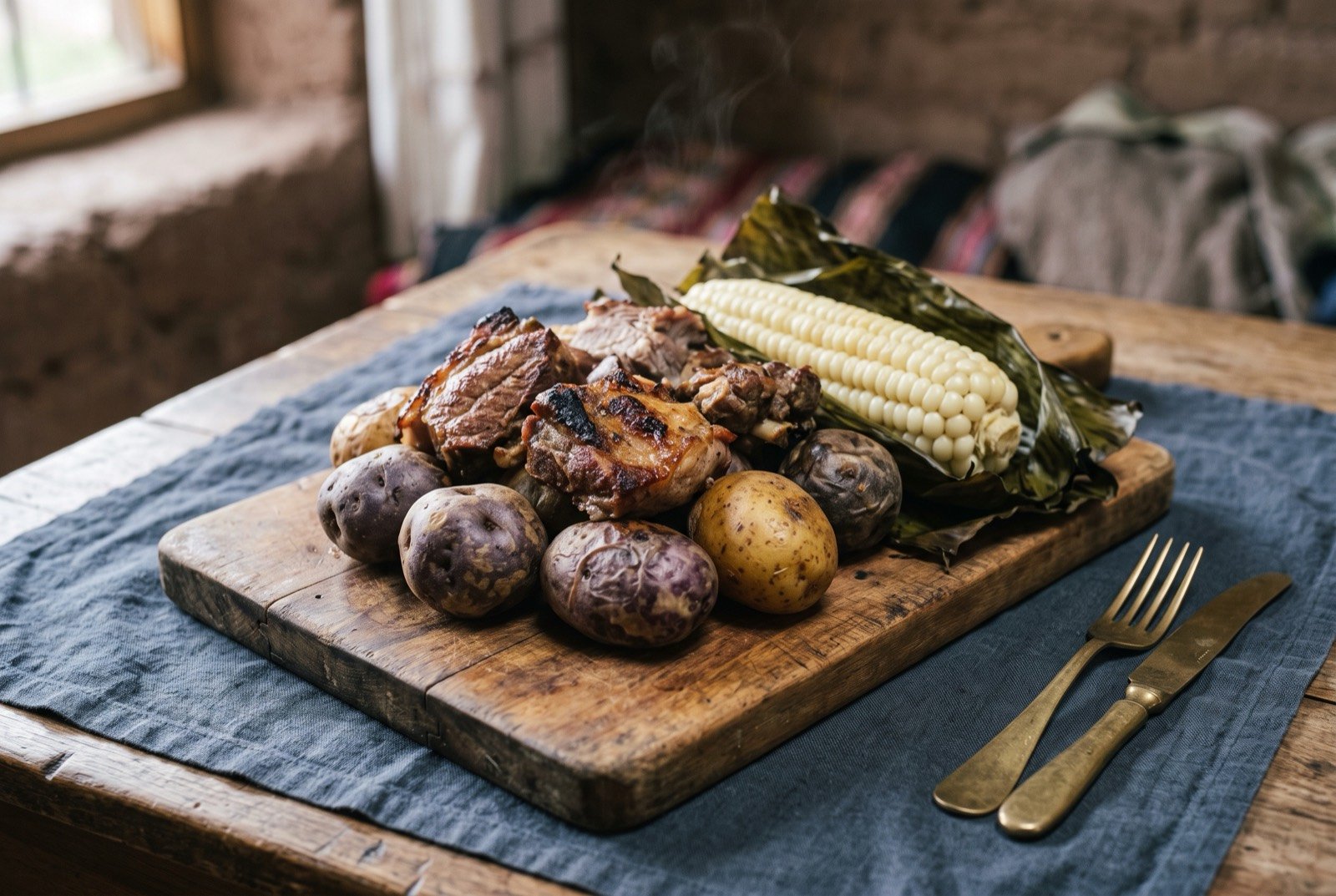
An illustration of the dish, not a photograph of it cooked.
- Time
- Not statedNo source states a time and the atlas has too few comparable dishes to estimate one.
- Researched
- No outside sources linked
- Reviewed
- Not yet reviewed from inside the tradition
- Cooked
- Not yet cooked and reported
As tradition built it
Pachamanca
Pre-Inca origin, refined by the Inca as an offering to the Pachamama
Ingredients
An outline, not yet a recipe: the tradition's method with its ingredients named but not weighed. Quantities are being added from sources inside the tradition, lead dishes first.
- 2kg, cut into pieces pork
- 2kg, cut into pieces mutton
- 4 sprigs huacatay
- 4 sprigs chincho
- 6 tbsp garlic, 2 tbsp oregano, ½ tbsp cumin, salt and pepper local spices
- 10, medium potato
- 10 camote (sweet potato)
- yuca
- 10 choclo
- 500g habas
- as available chincho and marmaquilla leaves, for wrapping
Method
- Dig a pit and line it with volcanic stone, preferred over river-rounded stone for its heat retention; fire the stones until glowing.
- Marinate pork and mutton in huacatay, chincho and local spices.
- Layer the marinated meat into the pit with potato, camote and yuca, plus choclo and habas.
- Wrap the whole arrangement in chincho and marmaquilla leaves, chincho the stronger, marmaquilla milder, chosen depending on how assertive a cook wants the finished aroma; the leaves carry their own flavour into the food, keep it from touching bare earth, and hold in the moisture that would otherwise escape into the surrounding soil.
- Seal the pit and leave until the stones' retained heat has done its work, the meat pulling easily from the bone and the tubers soft through.
Notes
The chapter states the cooking time by outcome, meat pulling easily from the bone and tubers soft through, rather than an invented number of minutes, since no source reached in researching this chapter gave one with real confidence.
What a modern chef changes
Sealed heat, confit tubers
Rung 02
Method
- Replace the sealed earth pit with a sealed Big Green Egg run indirect, the same insulated, sustained-heat principle the traditional pit already uses, with a thermometer probe telling you exactly when the pork and mutton have reached doneness.
- Confit the tubers separately in a sous vide bath at a gentle, controlled temperature before their brief final turn in the Egg's smoke.
- Dry a portion of the chincho and marmaquilla in the dehydrator and grind it in the spice grinder to a fine dust, finished over the plated dish.