The Sinosphere · Volume 33, The Mala Basin
Twice-cooked pork / Huiguorou (回锅肉)
Chengdu, Sichuan
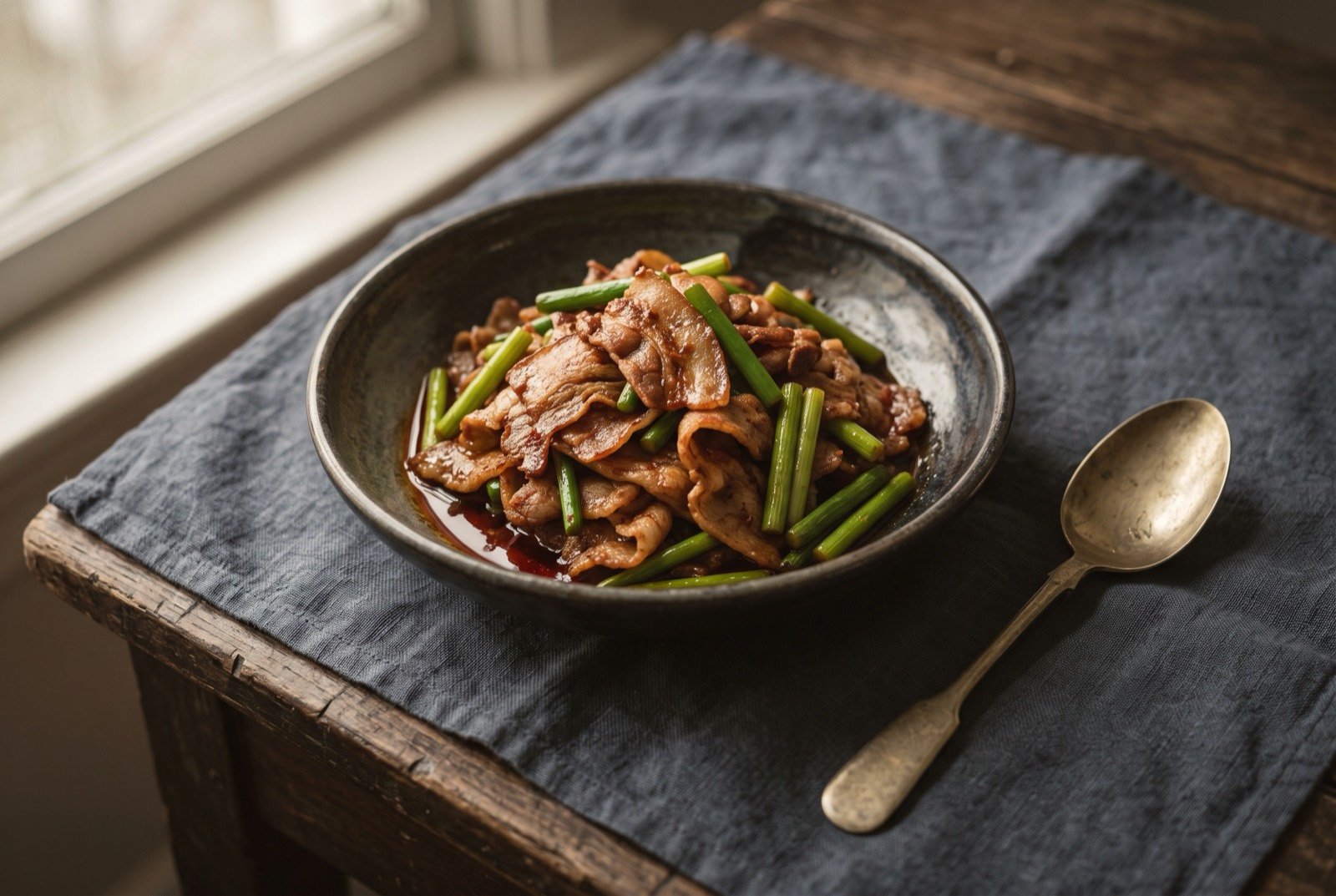
An illustration of the dish, not a photograph of it cooked.
- Time
- 45 minutes
- Reviewed
- Not yet reviewed from inside the tradition
- Cooked
- Not yet cooked and reported
Called by Chinese food writing 川菜第一菜, Sichuan's number-one dish. Its origin is genuinely contested between a folk sacrificial custom, cooled offering pork re-fried with garlic shoots or chilli after ritual use, and a separate legend crediting a late-Qing Chengdu scholar named Ling who steamed then pan-fried pork; neither is adjudicated here. The dish's name is first documented in print in the 1909 Chengdu Overview, and by 1932 it had already reached Sichuanese restaurants as far as Beijing and Tianjin.
As tradition built it
Serves 4. About 45 minutes.
Ingredients
- 500g erdaorou, pork belly's "second cut", taken just after the rump, skin on
- a little ginger, spring onion and cooking wine
- a few a few whole Sichuan peppercorns
- 50g doubanjiang, black beans to taste Pixian doubanjiang and fermented black beans
- 25g sweet bean sauce, 20g sugar a little sweet bean sauce and sugar
- 150g garlic shoots
Method
- Simmer the whole piece of pork in water with the ginger, spring onion, cooking wine and Sichuan peppercorns, high heat then low, 10 to 12 minutes, skimming foam.
- Cool fully, then slice thin, roughly 2mm.
- Fry the slices in oil at about 60 percent heat until the edges curl into little cups and render their fat.
- Add the doubanjiang and fermented black beans and fry until fragrant and red-oiled, then add the sweet bean sauce and sugar.
- Add the garlic shoots last, tossed through quickly off the heat so they stay bright and crisp.
Notes
Chinese cooks say plainly that the skin is the backbone of the dish: without it, this is not huiguorou.
What a modern chef changes
Sous vide belly, blended doubanjiang, and charred garlic shoots
Rung 3
Method
- Poach the pork belly sous vide at 82°C for four hours instead of the traditional 10 to 12 minute simmer, which fully renders the internal fat and collagen without overcooking the lean muscle, then chill the whole piece before slicing, which is what actually lets it be cut cleanly to 2mm rather than falling apart, a genuine improvement on the traditional method rather than a stylistic flourish.
- Blend two ages of doubanjiang as in the mapo tofu (Rung 3).
- Finish the garlic shoots on a very hot dry pan or a hot corner of the Big Green Egg for thirty seconds rather than in the same wok, which chars them slightly at the edges without softening their bite, a texture the traditional single-pan method cannot achieve.