The Sinosphere · Volume 33, The Mala Basin
Fish-fragrant aubergine / Yuxiang qiezi (鱼香茄子)
Sichuan
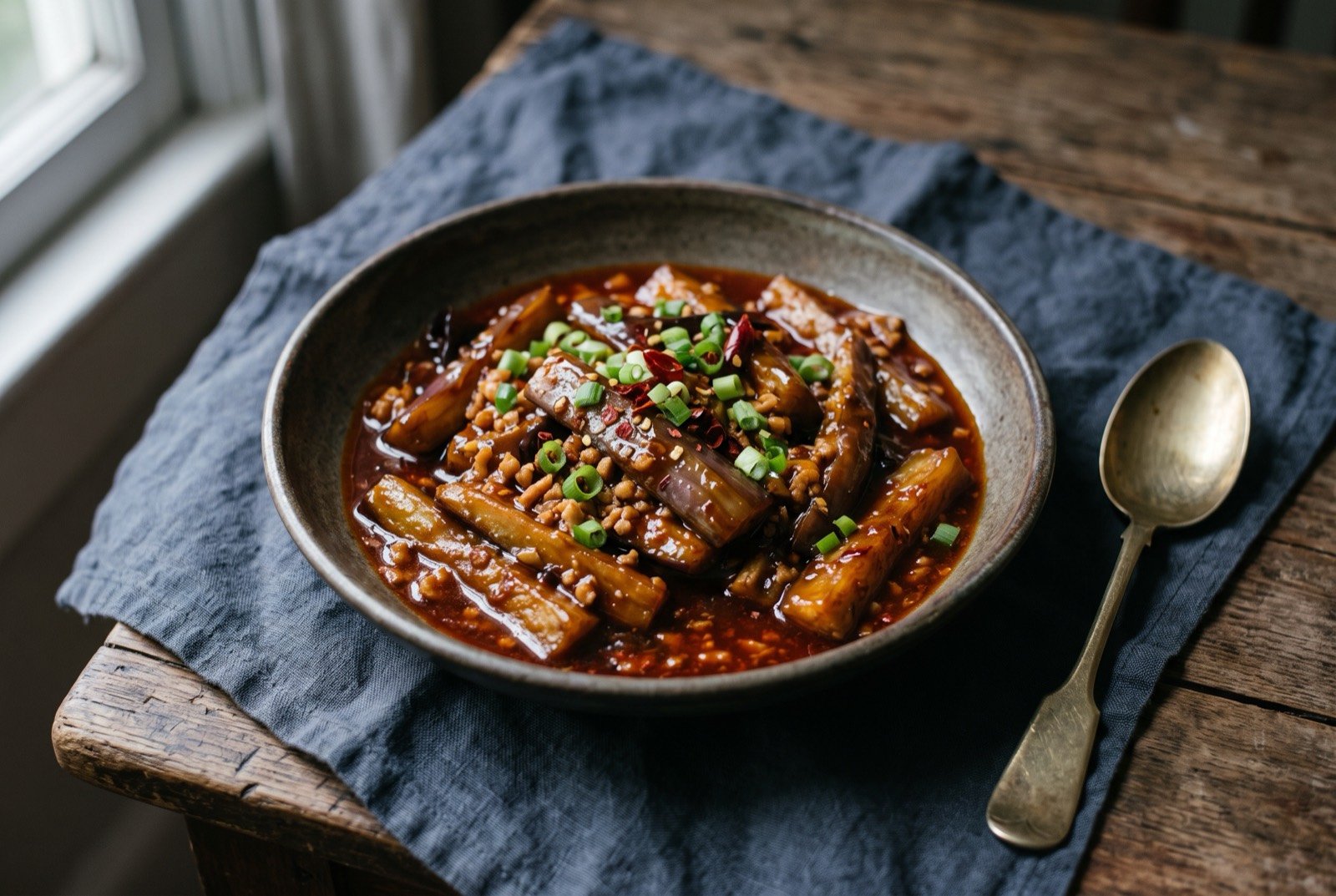
Illustration
- Time
- 25 minutes
- Researched
- Researched from 96 sources in the brief
The yuxiang, "fish-fragrant", flavour family is a twentieth-century, specifically Republican-era invention, and no fish appears in the finished dish. It derives from a Sichuanese household pickling practice, chillies fermented in brine alongside live fish, which produced a lactic-fermented, faintly fishy pickled-chilli brine, prized for its balance of salty-fresh first, sour-sweet next, and a faint chilli finish. The flavour in the dish today comes from replicating that brine's balance with vinegar, ginger and doubanjiang, not from any actual fish.
As tradition built it
Serves 4 as part of a shared meal. About 25 minutes.
Ingredients
For the aubergine
- 3 aubergine, cut into 4 to 5cm batons
- to dust cornstarch, for dusting
For the sauce
- 2 tbsp black vinegar
- 1 tbsp light soy
- a little a little salt, sugar and water
To finish
- as needed pork mince
- a little spring onion, ginger and garlic
- 1 tbsp Pixian doubanjiang
Method
- Dust the aubergine batons in cornstarch and deep-fry at roughly 50 percent oil heat for about two minutes until just cooked through, then drain.
- Combine the black vinegar, light soy, salt, sugar and water for the sauce.
- Fry the pork mince with spring onion, ginger and garlic, add the doubanjiang and fry until the oil reddens.
- Fold in the fried aubergine and the sauce together and finish quickly over high heat so the aubergine does not turn to mush.
What a modern chef changes
A salted, twice-fried aubergine and a concentrated sauce
Rung 1
Method
- Salt the raw aubergine batons for twenty minutes before frying and pat dry, which draws out excess water so the frying oil stays cleaner and the finished texture is denser rather than sodden.
- Fry in two stages rather than one, a first pass at 130°C to cook through gently, rested, then a second flash at 190°C for thirty seconds to colour the surface, a two-temperature approach borrowed directly from the staged-heat logic of Rung 1.
- Reduce the sauce's vinegar separately by a third before combining, as in the kung pao elevation, so the sour-first, sweet-finish architecture of the flavour reads more distinctly rather than blurring into one note.