The Sinosphere · Volume 33, The Mala Basin
Mapo tofu (麻婆豆腐)
Chengdu, Sichuan
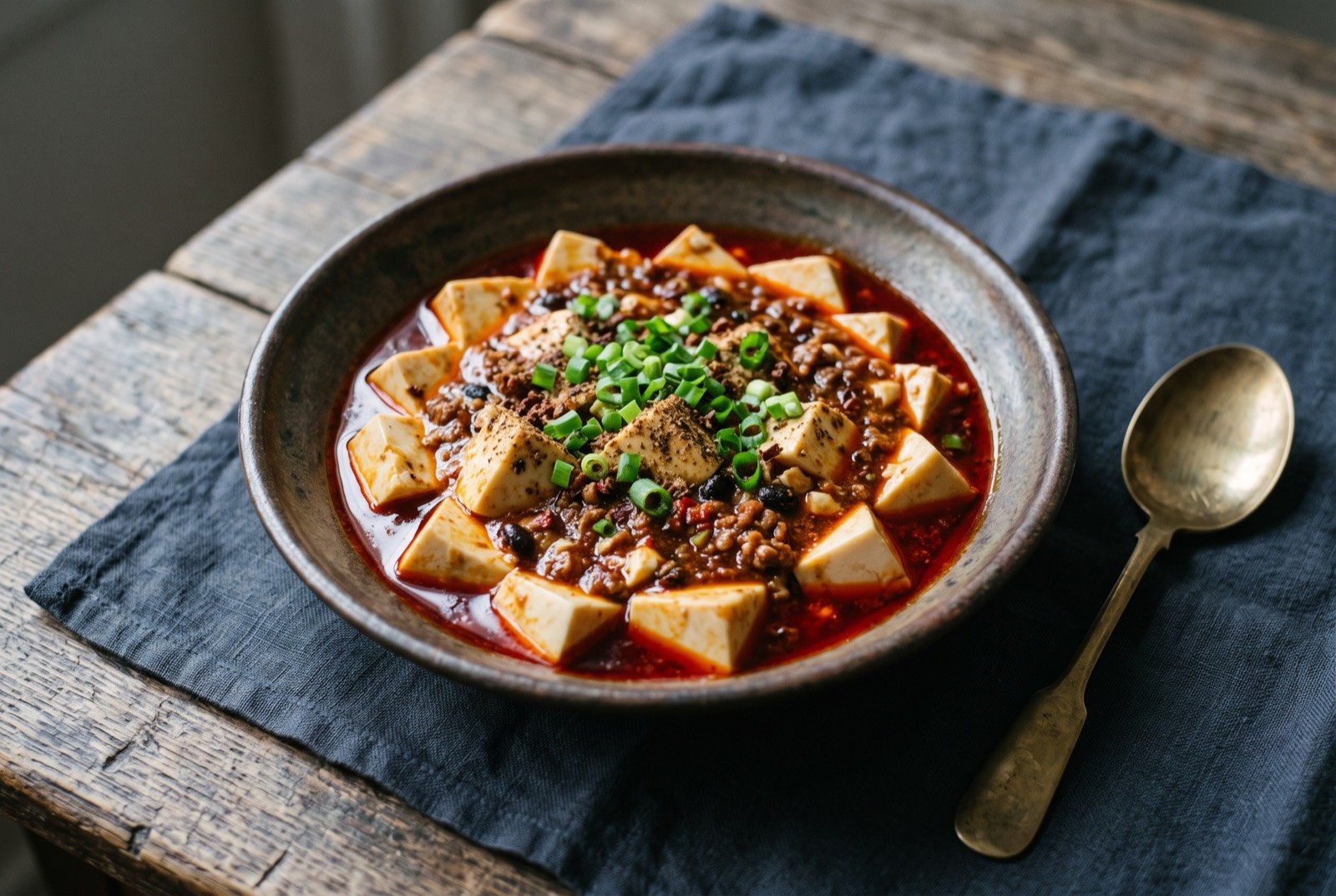
An illustration of the dish, not a photograph of it cooked.
- Time
- 30 minutes
- Reviewed
- Not yet reviewed from inside the tradition
- Cooked
- Not yet cooked and reported
Created in 1862 at a Chengdu restaurant by Wanfu Bridge, originally named Chen Xingsheng. Its founder died young; his pockmarked widow ran the shop and was nicknamed Chen Mapo, "pockmarked grandmother Chen", and her braised tofu took her name. It was already famous enough by the end of the Qing to appear in the 1909 Chengdu Overview. During the Cultural Revolution it was briefly renamed "spicy-numbing tofu" under the campaign against the "four olds", before the name reverted.
As tradition built it
Serves 4 as part of a shared meal. About 30 minutes.
Ingredients
- 400g tofu, silken or firm, cut into 2cm cubes
- 150g minced beef (fat to lean roughly 3:7)
- 20g Pixian doubanjiang
- 10g fermented black beans, finely chopped
- 1g Sichuan pepper
- 3g dried chilli
- 3 cloves garlic
- 1 knob ginger
- 2 spring onions
- 3g salt
- 10ml light soy
- 5ml dark soy
- 10g cornstarch, loosened with water
- 30ml oil
Method
- Soften the tofu cubes in salted water for 15 minutes, which removes the beany taste and firms the cubes so they survive cooking whole.
- Fry the doubanjiang, black beans, Sichuan pepper and dried chilli in the oil on low heat until the oil turns red and fragrant.
- Add the spring onion, ginger, garlic and the minced beef, and fry until the beef browns.
- Add the tofu, a little water, the salt, light soy and dark soy, and from this point never turn the pan with the blade of the spatula, only push the cubes gently, to keep them whole.
- Thicken with the cornstarch slurry in three small additions rather than one, so the sauce clings to each cube rather than sliding off.
What a modern chef changes
Two doubanjiang ages, a separately built chilli oil, and clean rendered beef fat
Rung 3
Method
- Blend two ages of doubanjiang, a young six-month paste for brightness and a one-year paste for depth (Rung 3), rather than a single jar.
- Build the chilli oil component separately as a full three-stage pour (Rung 1) and fold a spoonful through at the very end rather than frying the chilli powder directly in the pan, which keeps its top notes intact instead of cooking them away over the full braise.
- Sous vide the beef mince's fat separately: render a little beef fat at 65°C for an hour to keep it liquid and clean-tasting, and finish the dish with a few drops stirred through at the table rather than rendering it hard in the pan, which sharpens the dish's meatiness without muddying the sauce.