Korea and Japan · Volume 52, The Koikuchi Line, the Kombu Coast and the Kaiseki Counter
Takoyaki
Nishinari, Osaka
Illustration
- Time
- 30 minutes
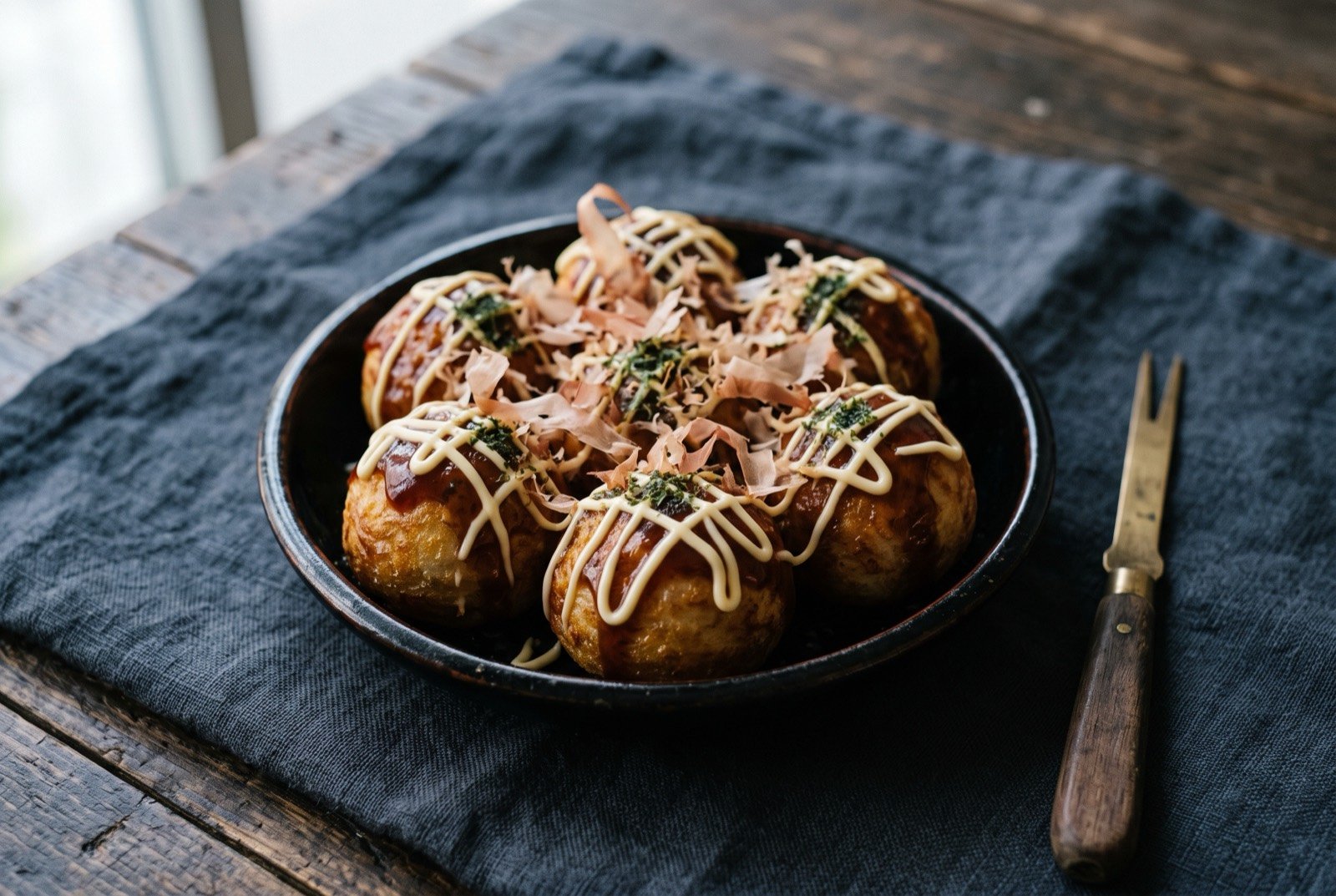
Takoyaki is credited specifically to Endo Tomekichi, founder of Aizuya in Nishinari Ward, in 1935, developed as a variation on Akashi-yaki, a similar octopus and egg dish from nearby Akashi in Hyogo. Its Osaka association is tied partly to a practical fact rather than pure invention: Osaka Bay was, at the time, a significant source of fresh octopus, and takoyaki is, at root, a way to use a locally abundant, otherwise unglamorous ingredient without waste, much as tsukudani was three centuries earlier.
As tradition built it
Makes about 20 balls. About 30 minutes.
Ingredients
- 150 g plain flour
- 600 ml dashi
- 2 eggs
- 200 g octopus, cut into small dice
- 30 g spring onion, finely chopped
- 20 g tenkasu
- about 30 g, chopped pickled red ginger, chopped
- to taste takoyaki sauce, mayonnaise, aonori and bonito flakes, to finish
Method
- Whisk flour, dashi and eggs into a thin, pourable batter.
- Heat a takoyaki pan and oil the moulds well.
- Fill each mould with batter, then drop in a piece of octopus, a scattering of spring onion, tenkasu and ginger.
- As the edges set, use a skewer or pick to turn each ball a quarter turn, letting raw batter flow into the gap, repeating until each ball is round and fully cooked, a few minutes total.
- Finish with sauce, mayonnaise, aonori and bonito flakes.
What a modern chef changes
A better dashi and a genuinely different protein, run as a named, chef documented variant
Rung 1, plus a direct nod to an actual current Osaka kitchen
Method
- Build the batter's dashi to the rung 1 discipline, a real, clean 60°C kombu extraction rather than instant dashi powder, the single change that most separates a serious home version from the everyday street stall original.
- Follow Tamaya's own documented practice and make a lobster shell dashi specifically for the batter, a genuine current Osaka restaurant technique rather than an invented flourish, offered here exactly as that, a real elevation this chapter did not invent.
- Rest the batter for at least an hour before cooking, a step street stalls making batter fresh all day do not bother with, which lets the flour hydrate fully for a more tender interior once the balls are turned.