Korea and Japan · Volume 52, The Koikuchi Line, the Kombu Coast and the Kaiseki Counter
Tempura
Nagasaki, by way of Kansai, elevated in Edo
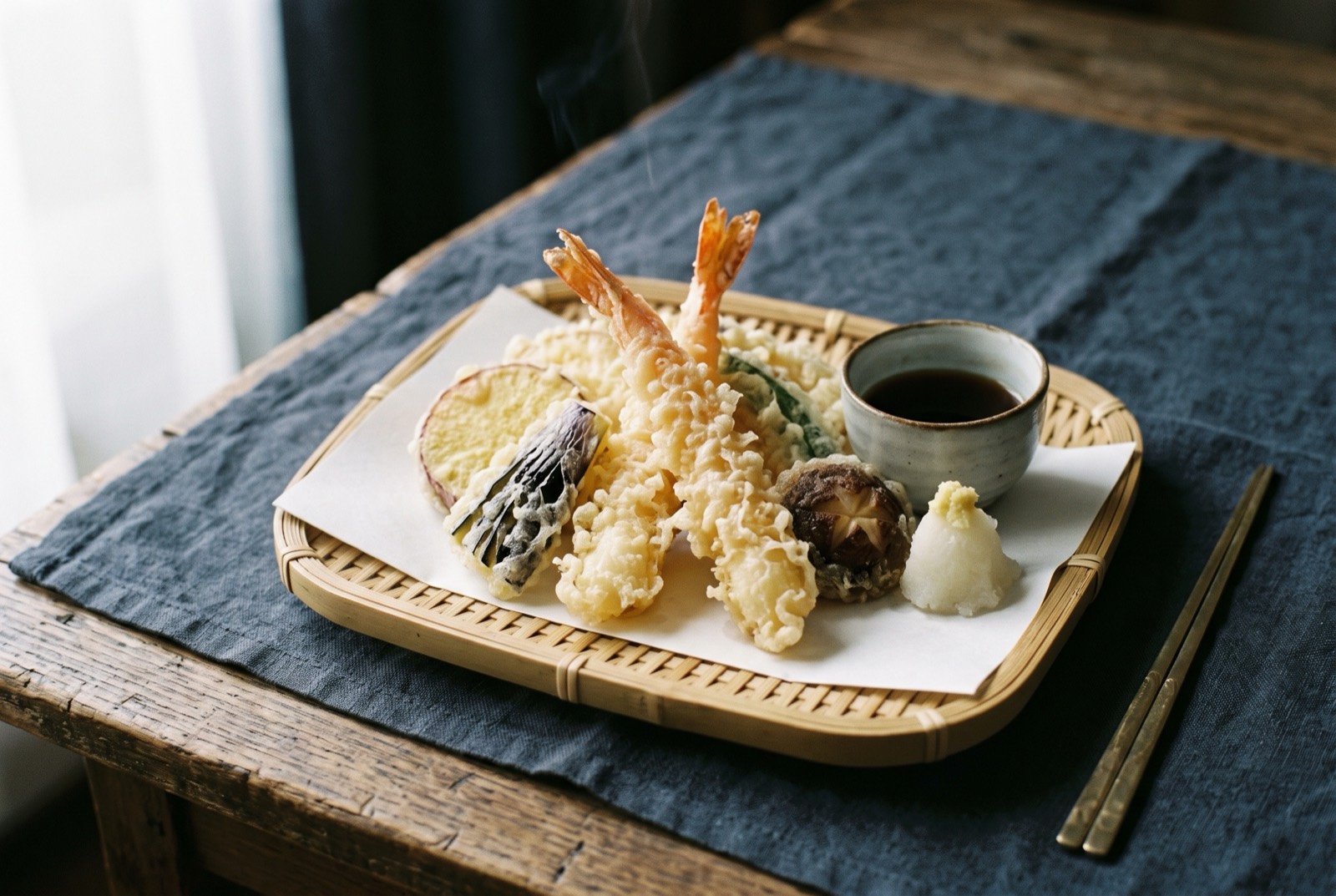
An illustration of the dish, not a photograph of it cooked.
- Time
- 30 minutes
- Researched
- No outside sources linked
- Reviewed
- Not yet reviewed from inside the tradition
- Cooked
- Not yet cooked and reported
Tempura arrived at Nagasaki in the sixteenth century with Portuguese Jesuit traders, its name traced to tempora, the Ember Days of the Catholic fasting calendar, and its earliest Japanese form, Nagasaki tempura, used a thick, egg and sake enriched batter far closer to the Portuguese peixinhos da horta tradition than to today's thin, ice cold batter, a lineage this atlas's Portugal chapter (EU-10) documents from the sending side of the same trade. The technique thinned twice on its way to Edo, first into Kansai's vegetable forward tsuke-age, then into Edo's own street stall version, sold skewered and fried to order alongside soba and sushi as one of "Edo's three flavours."
As tradition built it
Serves 4. About 30 minutes.
Ingredients
- 100 g plain flour, low protein if possible
- 200 ml ice cold water
- 1 egg yolk
- 400 g mixed prawns and vegetables (sweet potato, aubergine, shiso leaf, shiitake)
- about 800 ml, enough for roughly 3cm depth in the pan neutral oil and a little sesame oil, for frying
- to taste grated daikon and tentsuyu dipping sauce, to serve
Method
- Whisk the egg yolk into the ice water.
- Add the flour all at once and mix with chopsticks, four or five strokes only, until just combined; lumps are correct, a smooth batter means overworked gluten (rung 3).
- Heat the oil to 170 to 175°C; test with a dropped fleck of batter, which should sink briefly then rise immediately.
- Dip each piece of prawn and vegetable and fry in small batches, turning once, one to two minutes, until pale gold and crisp; do not crowd the pan.
- Drain briefly and serve immediately with grated daikon stirred into tentsuyu.
What a modern chef changes
The Kanto sesame logic, sharpened, and a controlled dip rather than a splash
Rungs 3, 6 and 1
Method
- Use a genuine sesame oil blend, following Kanto's own historic reasoning that sesame oil's strong aroma was needed to mask and complement Edo Bay's oily, blue backed fish; a 20% sesame oil to 80% neutral oil blend gives real aroma without overwhelming delicate vegetables.
- Build a proper tare-logic tentsuyu rather than a bottled sauce, dashi, mirin and soy reduced to the rung 6 discipline, so the dip itself carries the same deliberate ratio thinking the rest of this chapter's sauces do.
- Extract the accompanying dashi at 60°C, per rung 1, for a clean, un-bittered base to the tentsuyu, tasting it on its own before the mirin and soy go in to confirm the kombu has not been over-extracted.