East Africa and the Islands · Volume 18, The Indian Ocean Islands
Vindaye de poisson
Mauritius
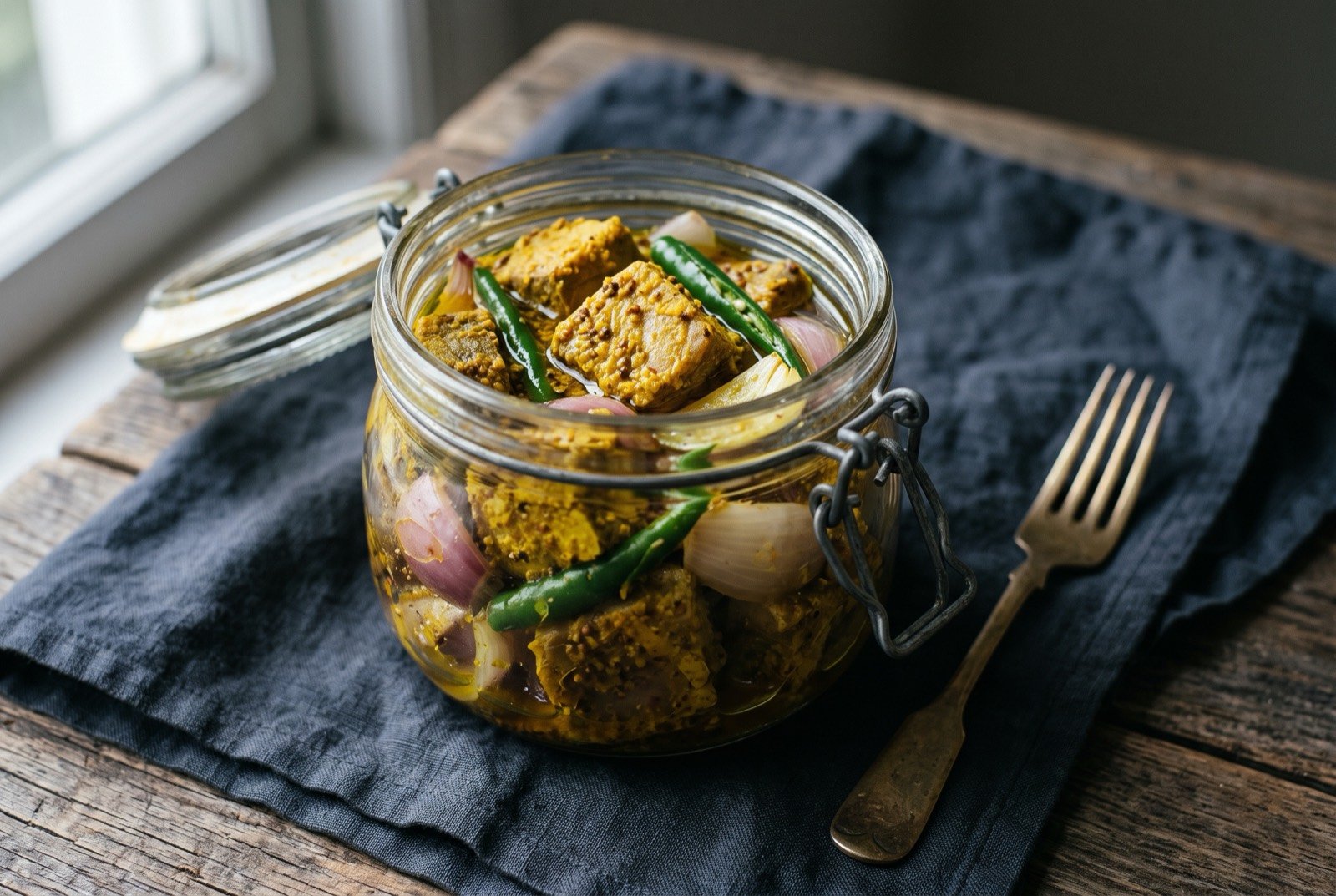
An illustration of the dish, not a photograph of it cooked.
- Time
- 40 minutes
- Reviewed
- Not yet reviewed from inside the tradition
- Cooked
- Not yet cooked and reported
A genuine preserving technique rather than a flavouring, eaten cold with bread as a gadjak, and it keeps. This is the region's one properly cold, acid-led fish preparation.
As tradition built it
Serves 4 to 6. About 40 minutes, then cool completely.
Ingredients
- 800 g tuna, or swordfish, or octopus
- ½ cup vinegar
- 2 tbsp garlic paste
- 2 tbsp mustard seed paste
- 1 tbsp turmeric
- 1 tbsp chilli flakes
- 1 tbsp vindaye spice
- 2 medium onions
- 4 green chillies
- to taste oil, salt, black pepper
Method
- Cut the onions into large chunks and marinate them in the vinegar. Slit the chillies lengthways. An alternative in-tradition detail puts the onion into three tablespoons of vinegar and crushes the garlic and mustard seed in a mortar with coarse salt.
- Salt and pepper the tuna, swordfish or octopus.
- Make the paste: mustard seed, salt, garlic, turmeric, chilli flakes and vindaye spice, let down with water.
- Deep fry the fish until golden. Remove and cut into medium pieces.
- Heat 2 large spoons of oil, add the paste and cook 5 minutes, stirring constantly.
- Add the fried fish off the heat and turn until every piece is coated.
- Fold in the vinegared onion and the chillies.
- Cool completely before serving. Once cold, cover with a film of oil before refrigerating.
Notes
From Le Mauricien, with detail from two other in-tradition sources.
Why it keeps, in three stacked mechanisms. Frying drives out surface water and denatures the exterior. The vinegar drops the pH below the range in which spoilage bacteria operate. The oil cap excludes oxygen. And the mustard is not there for flavour alone: crushed seed in the presence of water liberates allyl isothiocyanate, which is antimicrobial and which also emulsifies, holding the acid and oil phases together on the surface of the fish.
What a modern chef changes
The paste built cold, the fish cooked to temperature, and the mustard protected
Rungs 2 and 6
Method
- Add the fish off the heat and never reheat the dish. The tradition already says this and it is worth knowing why. Allyl isothiocyanate boils at 148 to 154°C. Serve vindaye hot and you have volatilised the entire point of it.
- Crush the mustard seed in a mortar with coarse salt and a little of the vinegar rather than with water. Low pH favours isothiocyanate formation over the milder nitrile route, so the acid should be present at the moment of crushing.
- Bloom the turmeric in the oil for 60 seconds before the rest of the paste goes in. Rung 2. Then the 5 minutes of cooking the paste disperses the curcumin instead of merely heating a slurry.
- Cook the fish to temperature rather than to colour. Deep fry to a genuine crust but take a thick tuna loin out at 45°C in the centre. It carries over, and it then sits in acid for hours, which firms it further. Fish fried to fully cooked and then acidified is dry, and that is the commonest fault in a homemade vindaye.