East Africa and the Islands · Volume 18, The Indian Ocean Islands
Dholl puri
Mauritius
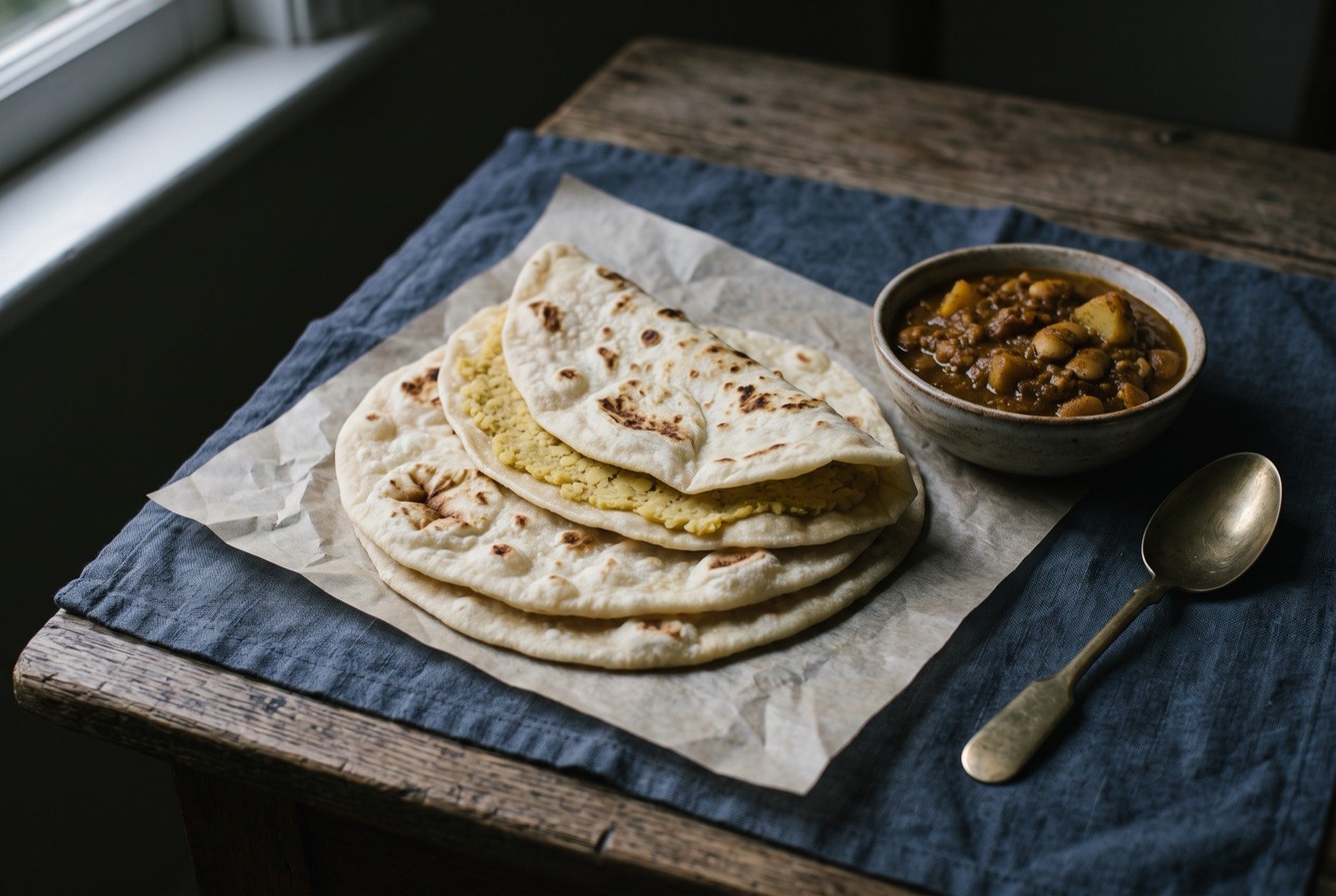
An illustration of the dish, not a photograph of it cooked.
- Time
- 2 hours
- Reviewed
- Not yet reviewed from inside the tradition
- Cooked
- Not yet cooked and reported
Sold from carts and hole-in-the-wall counters, eaten standing, wrapped in pairs around cari gros pois, rougaille, satini coco and giraumon. It descends directly from the north Indian dal puri brought by indentured labourers, and the Mauritian innovation is that it became a street wrap, folded around a wet curry and eaten in the hand, which is not how dal puri is eaten in Bihar.
As tradition built it
Makes about 12. About 2 hours including the soak and the rest.
Ingredients
- 400 g yellow split peas
- 500 g plain flour
- 300 ml of the pea cooking water, approximately
- 1 tsp ground cumin
- 1 tbsp turmeric
- 1 tbsp oil
- 1 tsp salt
Method
- Soak the split peas 1 hour. Cook with the cumin until soft. Grind to a paste, and see the modernist note about how dry that paste must be.
- Mix the flour with the turmeric, cumin and salt. Work in the pea cooking water gradually, knead, and rest 30 minutes.
- Divide into balls. Flatten each, put a spoonful of pea in the centre, seal the edges completely, and re-round.
- Roll out flat and thin.
- Cook both sides on an oiled tawa over medium heat. A smaller domestic formula gives 250 g T65 flour, 200 g dholl, 1 tablespoon oil and 110 ml hot water, with each face cooked in under a minute.
Notes
From Le Mauricien, weighed.
What a modern chef changes
The filling dried and ground, the sheet thinned from a tapered pin, and the water audited
Rungs 6 and 2
Method
- Dry the dal before you grind it, and grind it, do not purée it. Rung 6. Cook until just tender, drain very hard, spread on a tray to let the surface moisture go, or give it 10 minutes at 90°C in the oven. Then grind. A wet paste is an incompressible fluid: it concentrates the rolling stress under the pin and tears the sheet, every time.
- Buy a tapered rolling pin. A belan thins the sheet from the centre outwards without concentrating force where the filling is thickest. A straight British pin bursts dholl puri, and this is the cheapest fix in the chapter.
- Bloom the turmeric into the oil and work that oil into the dough, rather than adding it dry to the flour. Rung 2 applied to a bread: an even gold rather than a speckle, and the curcumin in fat where it can be tasted.
- Cook hotter and faster than feels right, and do not freeze them. The residual filling moisture must flash to steam and separate the two faces while the wheat sets: if the puri does not balloon, the pan is not hot enough. The steam-separated double layer also collapses on freezing and does not come back, which is exactly why the good London Mauritian kitchens advertise theirs as made fresh daily.