The Andes · Volume 18, Peru, the Coastal Creole, Chifa and Nikkei Kitchen
Nigiri acevichado and maki acriollado
Peru (Nikkei)
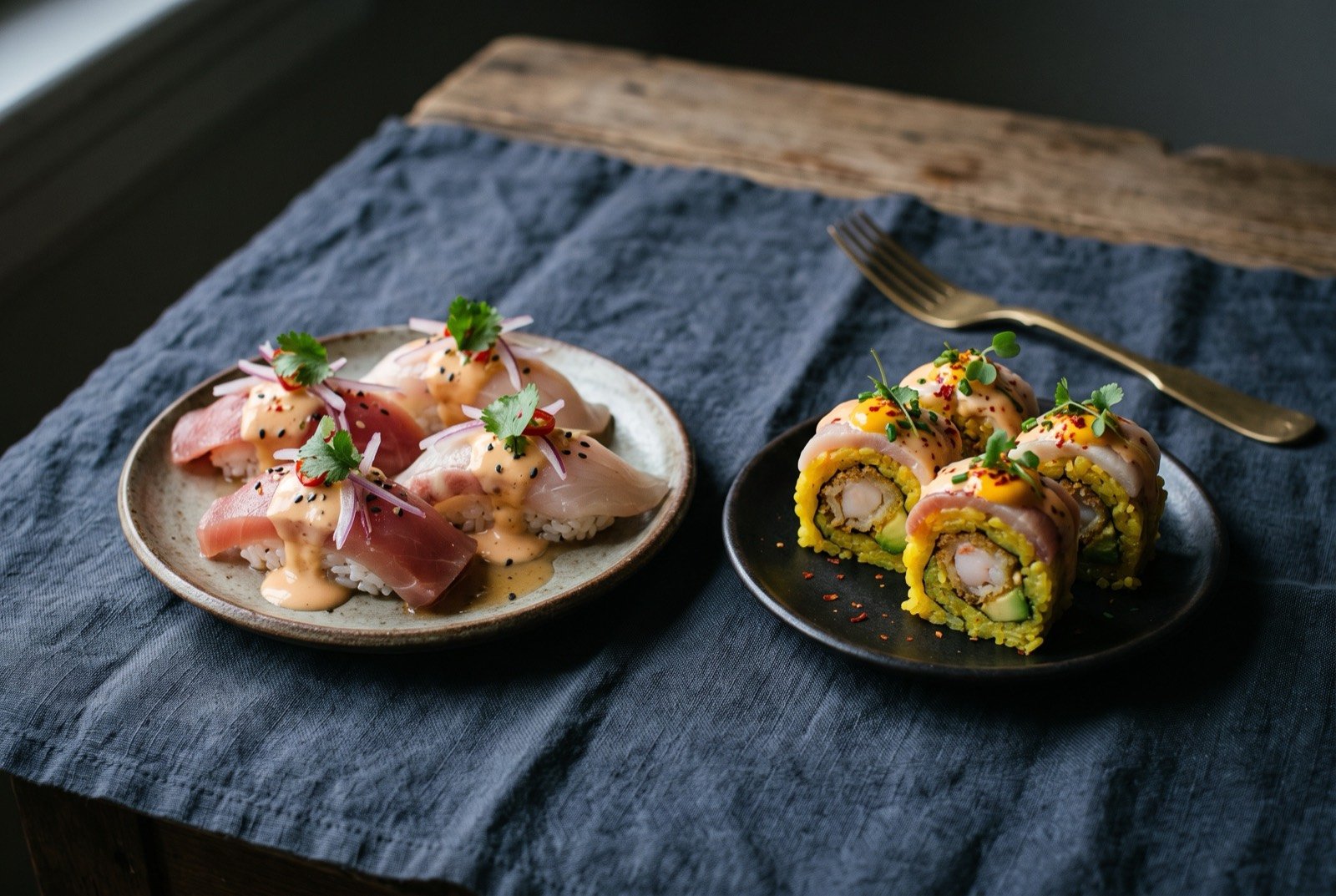
An illustration of the dish, not a photograph of it cooked.
- Time
- Not statedNo source states a time and the atlas has too few comparable dishes to estimate one.
- Reviewed
- Not yet reviewed from inside the tradition
- Cooked
- Not yet cooked and reported
As tradition built it
Nigiri acevichado and maki acriollado
Thinly documented relative to tiradito
Ingredients
An outline, not yet a recipe: the tradition's method with its ingredients named but not weighed. Quantities are being added from sources inside the tradition, lead dishes first.
- fish, dressed in a leche de tigre-adjacent sauce, for nigiri
- ají amarillo and rocoto, worked directly into the seasoning
- sushi rice, for the maki roll
Method
- Top nigiri with fish dressed in a leche de tigre-adjacent sauce, with ají amarillo and rocoto worked directly into the seasoning.
- Build maki acriollado on the same flavour logic, the sushi rice worked into a roll rather than a single piece.
Notes
These two dishes are more thinly documented than tiradito: real and named across Peruvian sources, but without the deep historical or chef-attributed sourcing tiradito itself carries. Treat the technique description here as reliable and the precise origin story as genuinely under-researched.
What a modern chef changes
Leche de tigre through the rice, not only the topping
Method
- Season the sushi rice with a leche de tigre reduction in place of, or alongside, standard rice vinegar, built in the high-power blender and reduced gently.
- Dehydrate a portion of ají amarillo into a fine dust for the final garnish rather than working it only into a wet sauce.
- Use the yanagiba's precision for the fish cut exactly as tiradito calls for it, since this dish inherits the same Japanese knife discipline.