The Indian subcontinent · Volume 23, The Court, the Chilli and the Temple Kitchen
Haleem
Hyderabad, via Barkas
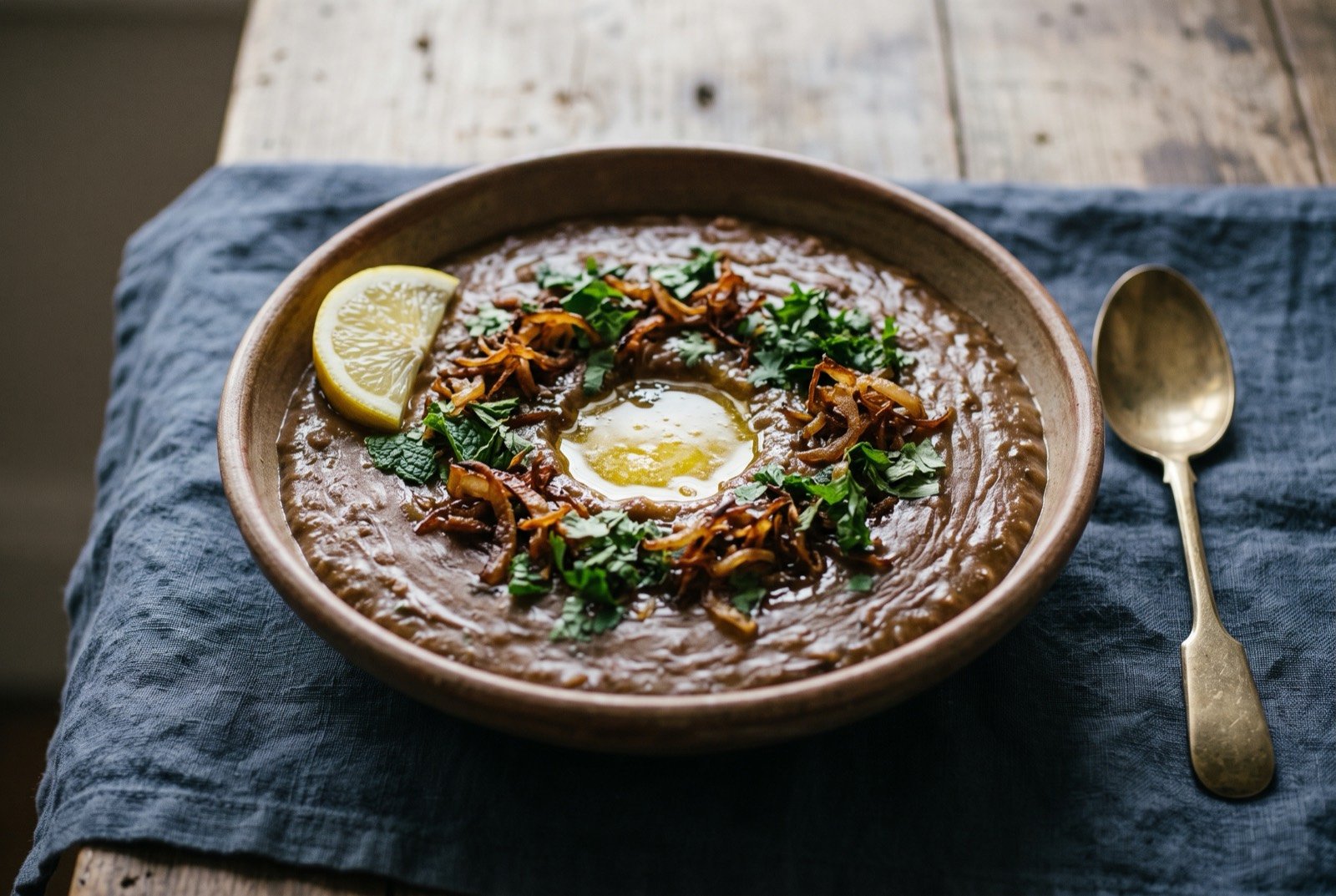
An illustration of the dish, not a photograph of it cooked.
- Time
- 8 hours 40
- Reviewed
- Not yet reviewed from inside the tradition
- Cooked
- Not yet cooked and reported
Hyderabad, via Barkas. An Arab soldier's wheat-and-meat porridge, arrived with the Chaush garrison and pounded, over hours, into something Yemen would no longer entirely recognise.
As tradition built it
Serves 8. About 6 to 8 hours, largely unattended simmering, then 30 to 40 minutes of pounding.
Ingredients
- 500 g mutton, on the bone
- 250 g broken wheat (daliya), soaked overnight
- 100 g split chana dal, soaked overnight
- 50 g split moong dal, soaked overnight
- 2 large onions, sliced and deep-fried until dark golden (birista)
- 3 tbsp ginger-garlic paste
- 2 tsp red chilli powder
- 1 tsp turmeric
- 4 tbsp ghee
- as available fresh mint, coriander, fried onion and lemon wedges, to serve
- to taste salt
Method
- Simmer the mutton with the ginger-garlic paste, chilli powder, turmeric and salt in plenty of water for around 5 hours, until the meat is falling from the bone. Remove any bones once cool enough to handle.
- Add the soaked wheat and both dals to the same pot and continue simmering for a further 4 hours, topping up with hot water as needed, until the grains have broken down completely and the mixture is thick and porridge-like.
- Once fully soft, begin the ghota: pound and mash the mixture with a heavy wooden stick or masher, working continuously, for 30 to 40 minutes, until the meat fibres, wheat and lentils are fully homogenised into a single smooth, sticky, minced-meat-like paste with no distinguishable grains or fibres remaining.
- Stir in the ghee and half the fried onion while still hot.
- Serve topped with the remaining fried onion, fresh mint and coriander, and lemon wedges.
What a modern chef changes
A stand mixer doing the arm's work, without losing the air the arm was putting in.
Rung 2
Method
- Once the wheat, lentils and meat are fully tender, work the mixture in short, deliberate pulses in a stand mixer fitted with the paddle attachment, rather than running it continuously, checking texture by hand between pulses to avoid over-processing into a perfectly smooth purée that loses haleem's characteristic slight fibrous pull.
- Fold the ghee in by hand at the very end, off the machine, rather than blending it through, to keep the same gradual, slightly aerated richness the traditional hand-pounded version has and a hard emulsion does not.
- Finish under a hot grill for 2 to 3 minutes with a final drizzle of ghee, to build the faint crust the very best commercial haleem houses give the top of a served portion, without repeating the whole ghota by hand.