The Indian subcontinent · Volume 23, The Court, the Chilli and the Temple Kitchen
Neer dosa
Tulu Nadu, coastal Karnataka
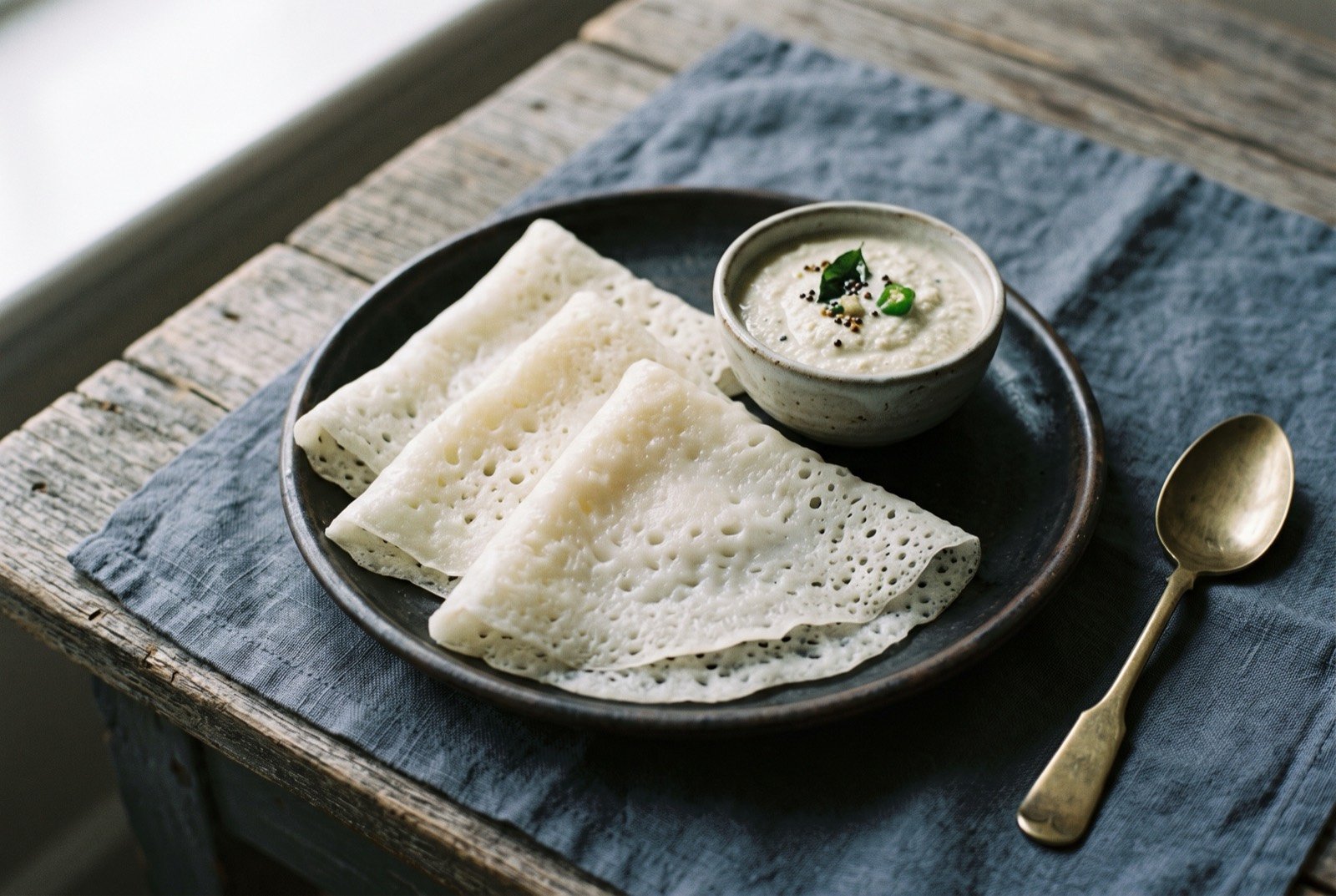
An illustration of the dish, not a photograph of it cooked.
- Time
- 2 hours
- Reviewed
- Not yet reviewed from inside the tradition
- Cooked
- Not yet cooked and reported
Tulu Nadu, coastal Karnataka. A thin, unfermented rice crepe, its whole technical identity built on the absence of the ferment that defines the region's other rice batters.
As tradition built it
Makes about 12. Rice soaks 2 hours minimum; each dosa takes under a minute to cook.
Ingredients
- 250 g raw rice, soaked at least 2 hours
- about 900 ml, added gradually to a thin, pourable batter, closer to single cream water
- to taste salt
- a little, for greasing oil, for the pan
Method
- Drain the soaked rice and grind it very fine in a high-power blender with enough fresh water to make a thin, almost pourable batter, closer to single cream than to a standard dosa batter.
- Season with a little salt.
- Heat a flat or very slightly concave griddle over medium heat and lightly oil it. Pour a thin layer of batter, tilting the pan quickly so it spreads in a lacy, uneven layer across the surface; do not spread it with a ladle the way a fermented dosa is spread.
- Cover briefly and cook for under a minute, until set and just starting to lift at the edges; there is no second side to cook.
- Fold in half or into quarters and serve immediately with a coconut-based curry or chutney.
Notes
No ferment at any stage is the whole point of this dish, distinguishing it clearly from the crisp, fermented restaurant-style dosa the Udupi hotel tradition popularised nationally; a batter left to stand too long before cooking will begin to ferment by accident and toughen, working directly against what neer dosa is trying to be.
What a modern chef changes
A batter ground finer still, for the thinnest, most even lace the technique can give.
Rung 4, applied in reverse, deliberately protecting the unfermented state rather than encouraging one
Method
- Grind the batter in short bursts in a high-power blender and strain it through a chinois before cooking, removing every last coarse particle for a genuinely glassy, even lace with no gritty patches.
- Cook each dosa the moment the batter is poured, timing the whole batch so none of it sits and begins to sour, treating freshness at the point of cooking as itself the technique.
- Serve straight from the pan, one dosa at a time as guests are ready, since neer dosa firms and toughens within minutes of cooking in a way a heartier flatbread does not.