The Indian subcontinent · Volume 25, The Roasted Spice, the Palmyrah Coast and the Coral Atoll
String hoppers (idiyappam)
Pan Sri Lankan
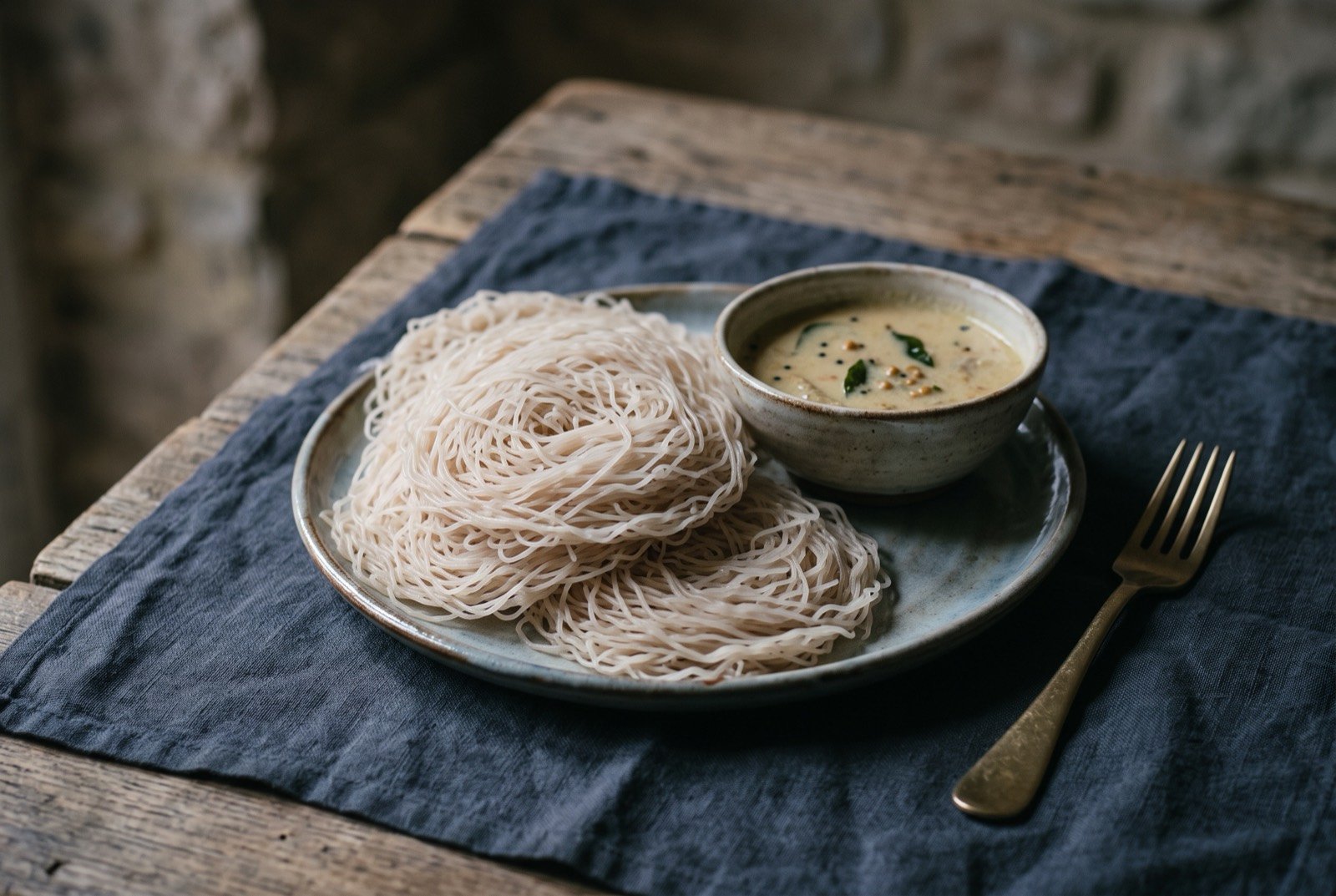
An illustration of the dish, not a photograph of it cooked.
- Time
- 10 minutes
- Researched
- No outside sources linked
- Reviewed
- Not yet reviewed from inside the tradition
- Cooked
- Not yet cooked and reported
Pan Sri Lankan. Pressed nests of steamed rice noodle, the necessary partner to a thin coconut curry.
As tradition built it
Makes about 20 nests. 30 minutes to press, 5 to 10 minutes to steam.
Ingredients
- 250 g red rice string hopper flour, roasted
- As needed boiling water
- A pinch salt
- As needed a little oil, for the press and mat
Method
- Put the flour in a bowl with a pinch of salt. Pour in boiling water gradually, stirring with a spoon then kneading by hand once cool enough, until a soft, smooth, non-sticky dough forms.
- Pack the warm dough into a string hopper press (indiappa wangediya) fitted with its perforated disc.
- Press directly onto small, lightly oiled woven mats or a steamer tray in tight, overlapping circular nests.
- Steam for 5 to 10 minutes, until the strands look translucent and hold together when lifted.
- Serve warm with kiri hodi, a thin coconut milk curry, or alongside any of the curries in this chapter.
What a modern chef changes
An even steam, and a batter roasted properly rather than bought pre-roasted and stale.
Rung 1 (applied to the flour rather than a spice mix)
Method
- Toast the raw rice flour yourself in a dry pan over low heat before hydrating it, watching for the faintest colour change rather than leaving it raw, since pre-roasted commercial flour loses aroma with age on the shelf.
- Steam in a single even layer inside a bamboo or metal steamer with a tightly fitted lid, rather than stacking trays, for consistent cooking through every nest.
- Serve the moment they come off the steamer, since string hoppers firm and toughen quickly as they cool, a real, easily missed difference between a good plate and a merely adequate one.