The Indian subcontinent · Volume 25, The Roasted Spice, the Palmyrah Coast and the Coral Atoll
Ambul thiyal (sour dry fish curry)
Southern Sri Lanka
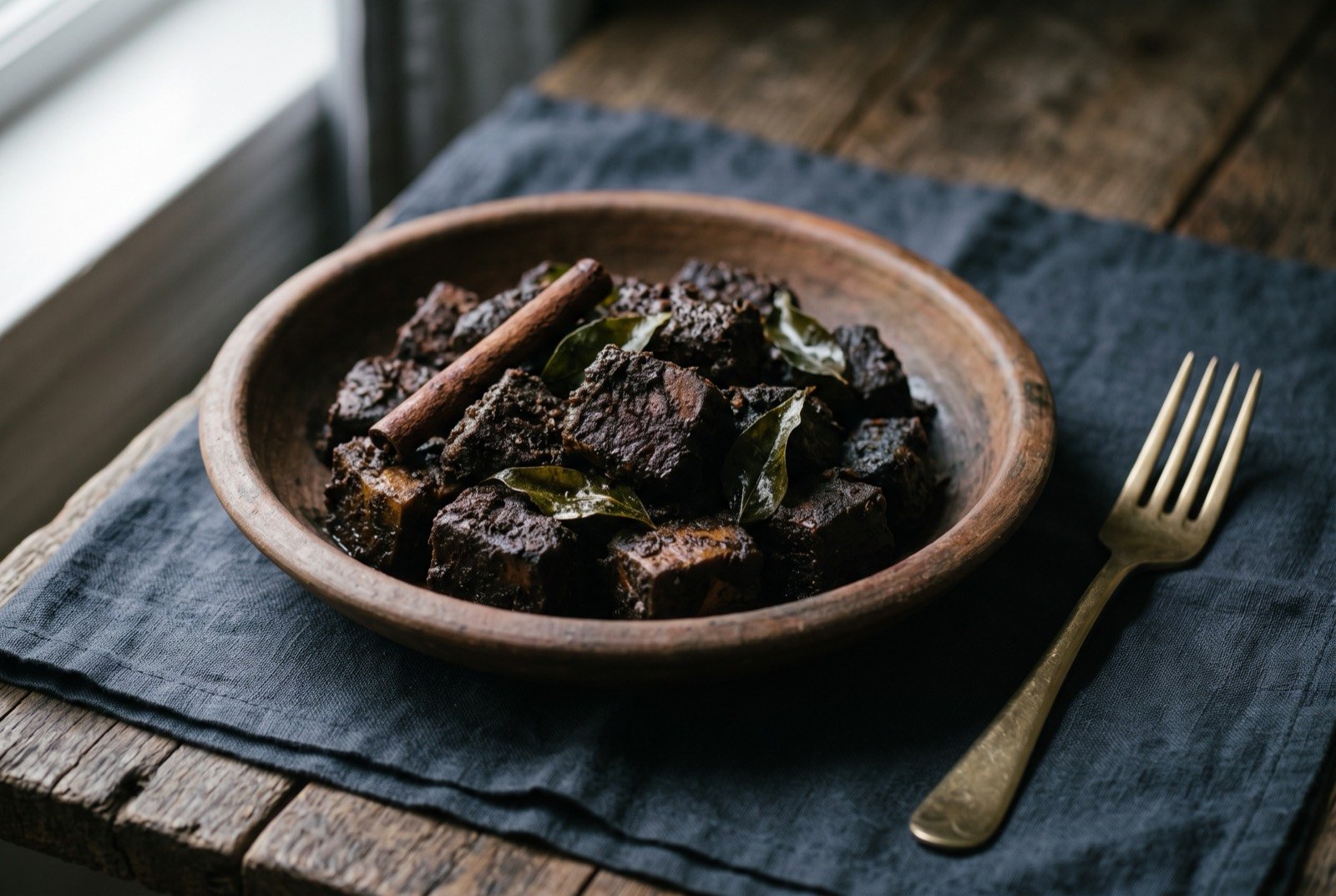
An illustration of the dish, not a photograph of it cooked.
- Time
- 40 minutes
- Researched
- No outside sources linked
- Reviewed
- Not yet reviewed from inside the tradition
- Cooked
- Not yet cooked and reported
Southern Sri Lanka. Black, densely spiced, almost dry fish, goraka-soured and cooked until the sauce has entirely gone, a preservation method as much as a dish.
As tradition built it
Serves 4. About 40 minutes, plus resting.
Ingredients
- 700 g tuna, cut into thick cubes
- 5 to 6 pieces dried goraka, soaked in warm water for 15 minutes
- 2 tbsp roasted curry powder
- 1 tsp black pepper, freshly ground
- 1 cinnamon stick
- A sprig curry leaves
- 4 garlic cloves, crushed
- To taste salt
Method
- Grind the softened goraka to a thick paste, using a little of its soaking water if needed.
- Combine the goraka paste with the curry powder, black pepper, garlic and salt, and massage this thoroughly into the tuna cubes.
- Layer the fish into a clay pot or heavy, wide, uncovered pan with the cinnamon stick and curry leaves.
- Cook over low heat, uncovered, for around 30 minutes, turning the pieces occasionally, until the liquid has essentially evaporated and the fish is dry, dense and dark, coated in a near-black crust rather than sitting in sauce.
- Rest for at least 20 minutes before serving; the flavour deepens further overnight, and the dish is traditionally made a day ahead.
Notes
No source consulted for this chapter gave an exact traditional cooking time in minutes; the figure above is a home-kitchen adaptation of a method traditionally judged by how dry the pot has become, not by a clock.
What a modern chef changes
A controlled reduction, so the crust forms evenly rather than by chance.
Rung 3
Method
- Use a wide, heavy pan rather than a deep pot, maximising the surface area for evaporation so the liquid reduces in the time given rather than needing much longer.
- Do not cover the pan at any point, resisting the instinct to trap steam; the whole technique depends on water leaving the dish, not staying in it.
- In the final 5 minutes, raise the heat slightly and turn the fish constantly, watching closely, to properly crust the spice paste onto the surface rather than merely coating it.