Mainland Brazil · Volume 40, Caatinga, Vaqueiro and the Salt-Cured Table
Bode assado, in the manta de bode tradition
São Francisco Sertão, Brazil
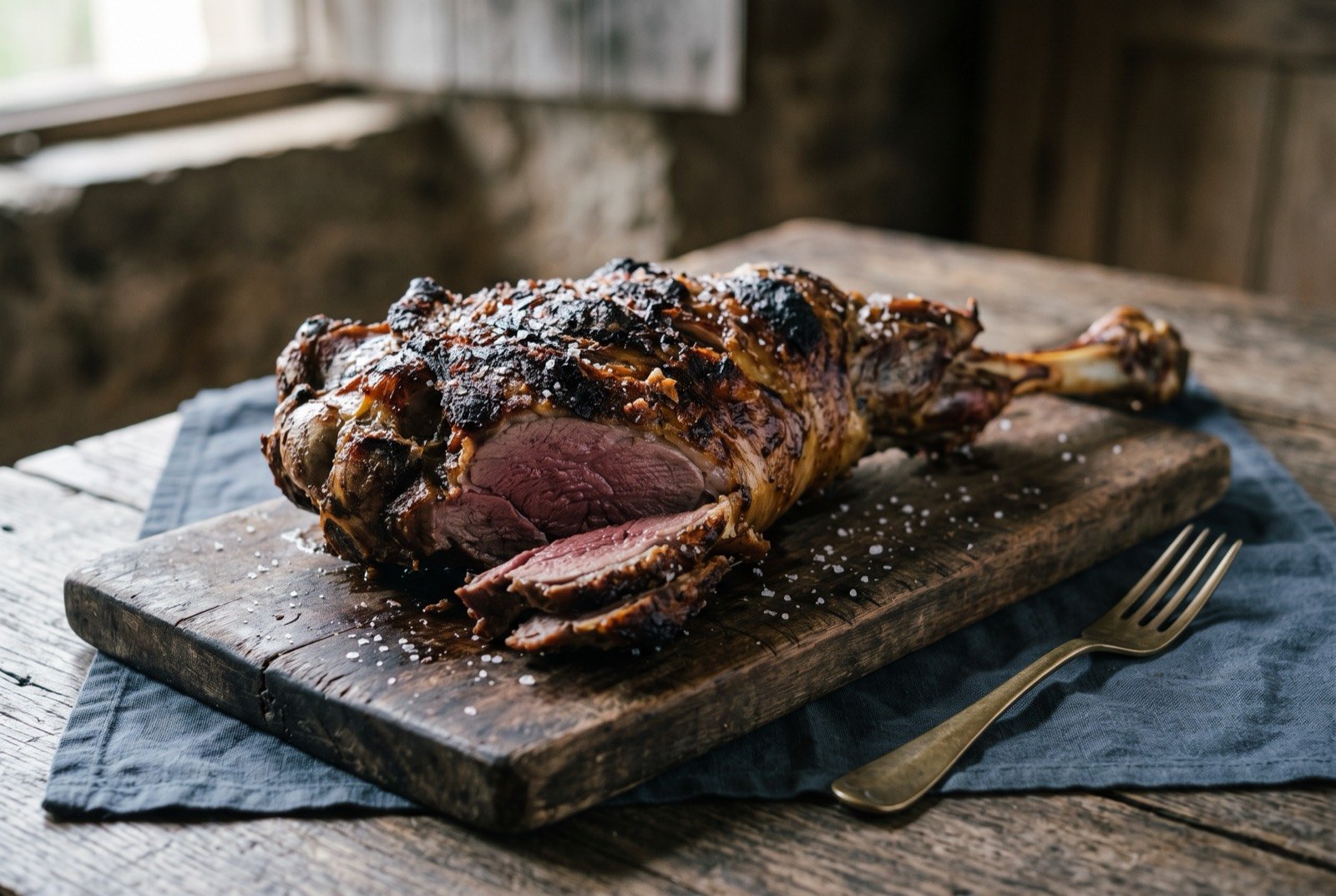
An illustration of the dish, not a photograph of it cooked.
- Time
- Not statedNo source states a time and the atlas has too few comparable dishes to estimate one.
- Reviewed
- Not yet reviewed from inside the tradition
- Cooked
- Not yet cooked and reported
As tradition built it
Manta de bode, and bode assado
Ingredients
An outline, not yet a recipe: the tradition's method with its ingredients named but not weighed. Quantities are being added from sources inside the tradition, lead dishes first.
- whole goat carcass
- to taste salt
- for frying pork lard, for bode à pururuca
- as available rice, for arroz caldoso
Method
- Debone the goat carcass and open it flat like a sheet, in exactly the family of technique carne de sol and charque share.
- Salt and sun-dry the flattened carcass, historically a specialised, apprenticed skill within a family.
- From the preserved base, cook arroz caldoso, rice cooked with the reconstituted dried meat, or bode à pururuca, fried crisp in pork lard.
- Where goat is eaten fresh rather than preserved, simply roast it, at any meal including breakfast.
Notes
Documented specifically among Fundo de Pasto communities of the São Francisco sertão.
What a modern chef changes
Portioned first, preserved or roasted by cut
Method
- Portion the goat first rather than drying a whole flattened carcass over days in open sun, and treat each cut on its own terms.
- Give leaner cuts a light, controlled dry-cure and dehydrator finish to mimic manta's texture and concentration of flavour without its real drying-time risk.
- Give cuts better eaten fresh a straightforward slow roast, finished hard over coals.
Notes
The point of the elevation is not to abandon preservation as a flavour, since the concentrated, slightly mineral character of dried goat is worth keeping, but to get there by a controlled route rather than an open-air one.