Melanesia, Micronesia and Polynesia · Volume 13, One Reef, Two Flags
Kaʻaku
The Marquesas
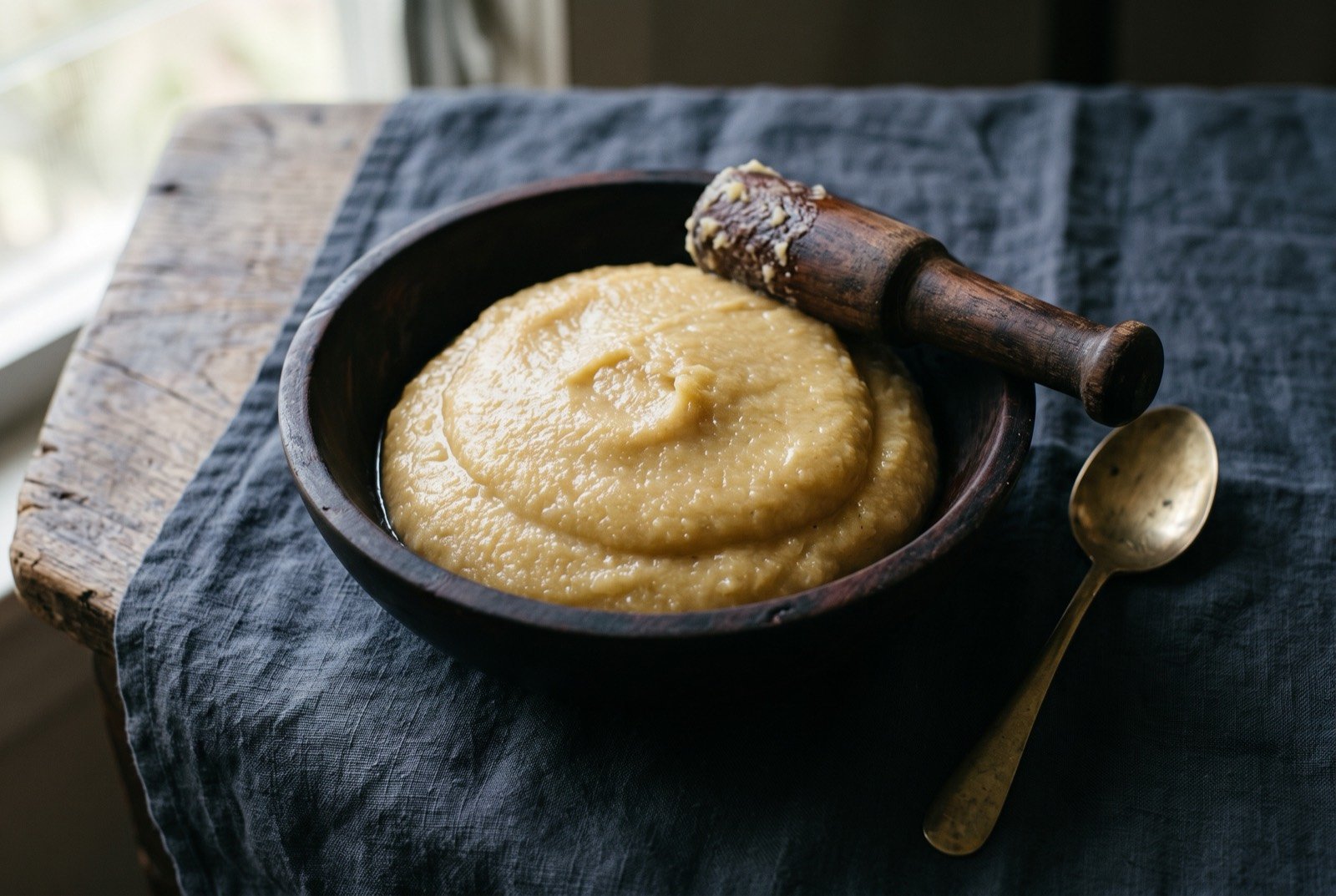
An illustration of the dish, not a photograph of it cooked.
- Time
- About 40 minutes to 3 hoursNo source states a time. Comparable dishes in this atlas take this long.
- Researched
- 17 sources cited
- Reviewed
- Not yet reviewed from inside the tradition
- Cooked
- Not yet cooked and reported
Cooked breadfruit is pounded warm with a wooden pestle, penu, in a large wooden bowl, ʻumete, called hoana in Marquesan, while gradually adding coconut cream, to a smooth rich paste. Not itself a fermented dish, though it can be made from popoi, the fermented breadfruit paste described in the Ferment Bench above. This is the volume's clearest illustration of Rung 4, mechanical starch work as a real, learnable skill rather than a rustic approximation of what a blender does. [destinationmarquises.com; yummy-tahiti.com]
As tradition built it
No source gives a precise time; cooked until tender, then pounded and enriched with coconut cream until smooth.
Ingredients
- 1 whole breadfruit
- as needed coconut cream
Method
- Cook a whole breadfruit until tender.
- Pound the warm flesh with a wooden pestle in a wooden bowl, working continuously.
- Add coconut cream gradually as you pound, incorporating it fully before adding more, until the paste is smooth and rich.
Notes
Not itself a fermented dish, though it can be made from popoi, the fermented breadfruit paste described in the Ferment Bench above.
What a modern chef changes
The hand-pounding technique itself respected rather than shortcut, with the blender used only for a genuine second product, not a replacement.
Rung 4
Method
- Pound the breadfruit by hand for the primary dish, since the technique's own point is the specific texture continuous mechanical pounding gives, distinct from a blender's shearing action; this is one dish in the volume this chapter does not recommend mechanising.
- Reserve a small portion and purée it separately in a high-power blender with extra coconut cream, to make a second, pourable version as a sauce for the plated dish, giving two textures from one preparation rather than compromising the primary one.
- Warm the wooden bowl itself before pounding, keeping the breadfruit at working temperature throughout rather than letting it cool and stiffen partway through.