Melanesia, Micronesia and Polynesia · Volume 10, The Atoll, the Pit and the Palm · Cooked by cue
Bwiro
Marshall Islands
Illustration
- Researched
- 36 sources cited
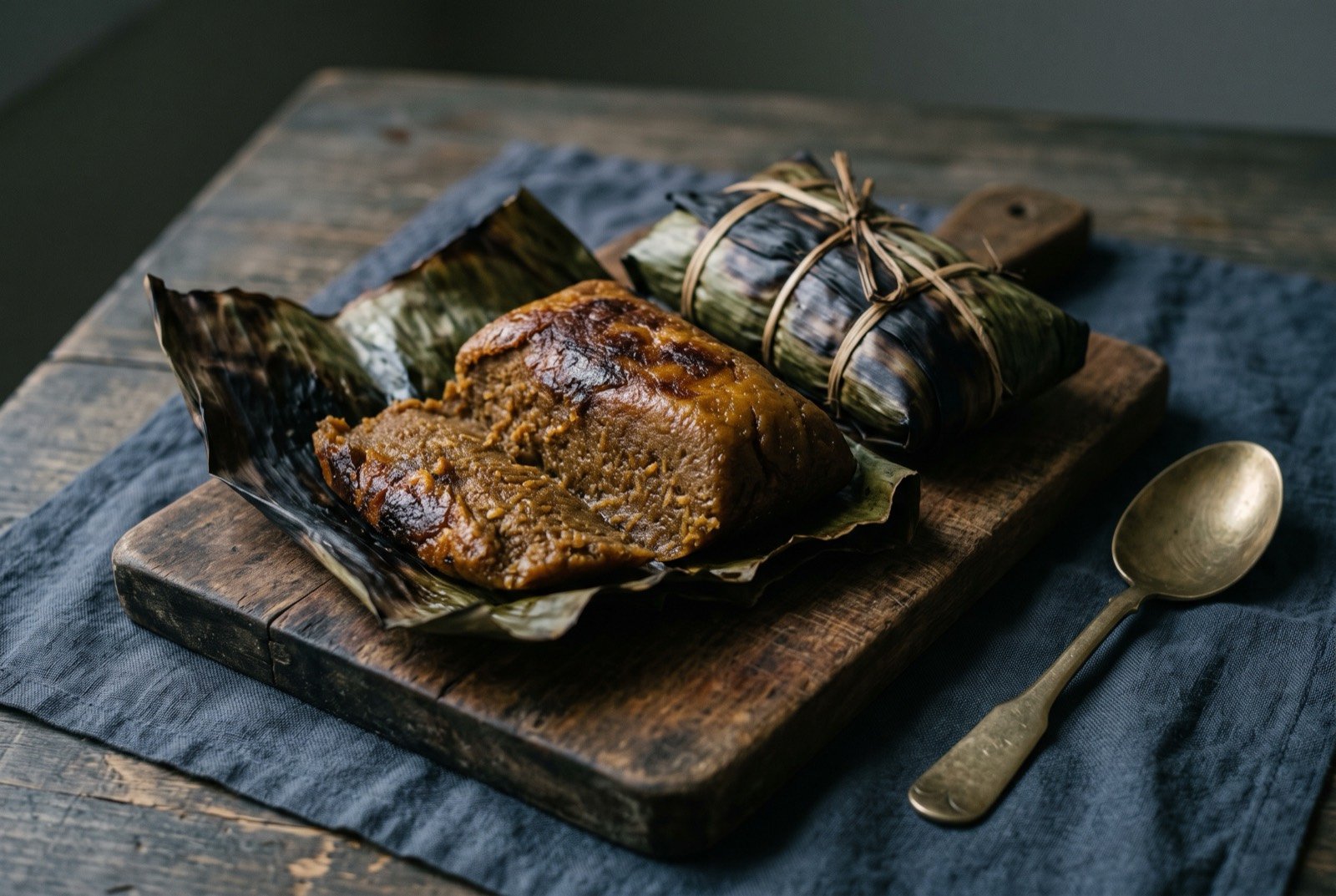
Breadfruit is peeled, cored and cut into pieces, packed into a porous bag, traditionally woven or cloth, and buried, or otherwise stored with drainage so that liquid can escape as the fruit ferments. It can be used after as little as three days but is more usually left substantially longer; properly made and stored, bwiro keeps twelve months or more without spoiling. To eat it, a portion of the fermented pulp is worked by hand on a board until soft and pliable, then either wrapped in leaves and cooked in the um until the parcel caramelises outside and turns dense within, or broken into pieces and dropped into coconut milk that has been brought to the boil, forming a kind of dumpling. Mejit Atoll is named across sources as the acknowledged best producer, its bwiro sought after both within the Marshall Islands and by overseas Marshallese communities. Marshall Islands Journal, Mejit promotes bwiro plan No source this chapter could reach gives an exact fermentation time with laboratory or agricultural-extension authority; the ranges above rest on convergent, independently reported accounts rather than one canonical citation, and any timing more precise than this should be treated as unverified.
As tradition built it
Historically the household's insurance against the gap between one breadfruit harvest and the next.
Ingredients
No written recipe exists for bwiro: the fermentation runs for months in the pit and the paste is judged by smell and feel, and the chapter gives the method as it is told on the atolls.
- as available ripe breadfruit, peeled, cored and cut into pieces
- as available a porous bag, traditionally woven or cloth
- as available leaves, for wrapping to cook
- as available coconut milk, for the dumpling version, optionally sweetened
Method
- Peel, core and cut breadfruit into manageable pieces.
- Pack the pieces into a porous bag with room for liquid to drain away.
- Bury the bag, or otherwise store it with drainage maintained, for a minimum of three days and, for long storage, considerably longer.
- To serve, work a portion of the fermented pulp by hand on a board until soft and pliable.
- Either wrap in leaves and bake in the um until the outside caramelises and the inside turns dense, or break into small pieces and drop into boiling, optionally sweetened, coconut milk, where it cooks into a dumpling.
What a modern chef changes
The fermentation staged with real control, and the um reproduced on a Big Green Egg
Rungs 1 and 2
Method
- Build a small, controlled lactic ferment rather than a buried bag: peeled breadfruit pieces packed under weight with a modest salt brine, at a set temperature, monitored to a target acidity rather than judged by the calendar. This is offered plainly as this chapter's own staging of the traditional mechanism, since no professional kitchen anywhere was found already doing this. Rung 2.
- Fully stabilise a Big Green Egg in indirect mode, deflector plate in, before loading the wrapped, fermented pulp, reproducing the um's even, stored heat rather than a live-flame char. Rung 1.
- Finish the coconut-milk dumpling version in a chinois-strained, stovetop-reduced milk rather than a rolling open boil, for a cleaner, grit-free result.