Melanesia, Micronesia and Polynesia · Volume 10, The Atoll, the Pit and the Palm · Cooked by cue
Jāānkun
Marshall Islands
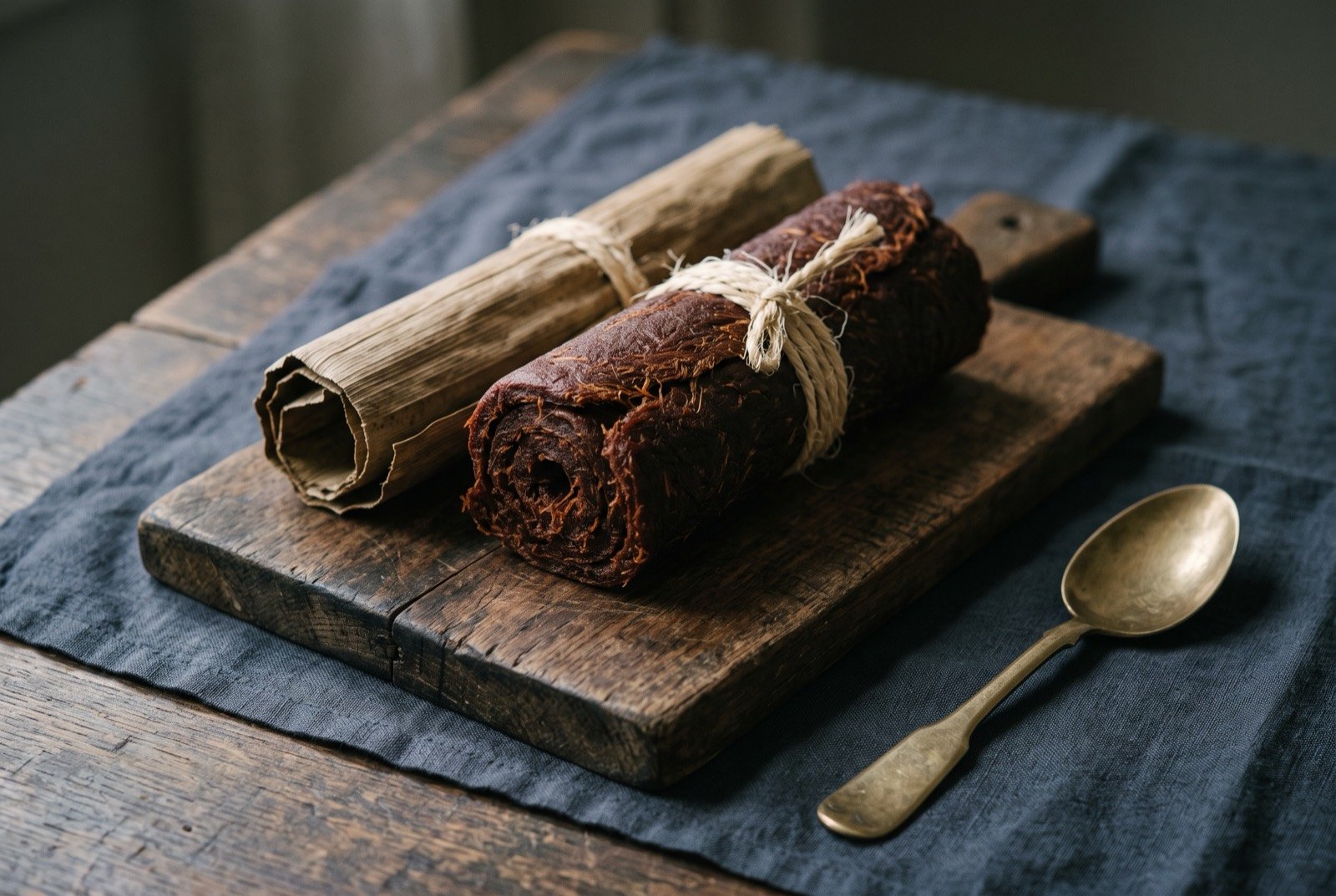
An illustration of the dish, not a photograph of it cooked.
- Researched
- 36 sources cited
- Reviewed
- Not yet reviewed from inside the tradition
- Cooked
- Not yet cooked and reported
Ripe pandanus fruit is cooked for an extended period in the um. The cooked fruit is crushed and scraped to separate the fibrous core and extract the pulp, which is spread thinly on leaves and left to dry in direct sun over several days, turned periodically for even drying. Once dry, the paste is cut into sections, rolled, and tightly wrapped in the plant's own dried leaves, tied with coconut fibre cordage, and correctly prepared it keeps for years without any manufactured preservative. Ione Heine deBrum, Mokwan ak Jāānkun: Dried Pandanus Paste, Institute of Pacific Studies, 2004, summarised via Wikipedia, Pandanus paste A secondary product, the dried paste pounded into a flour and mixed with water into a drink, exists across the wider pandanus-growing belt of Micronesia under related names, edongo in Nauru, te kabubu in Kiribati, though no distinct Marshallese name for this flour form was found. The paste carries more beta-carotene, and by extension vitamin A, than raw or freshly cooked pandanus fruit, a genuinely useful fact for an atoll diet that has always been short of that nutrient.
This is not only a subsistence relic. The Marshall Islands Journal profiled businessman Ramsey Reimers in December 2022, who calls pandanus "the divine tree of the Marshall Islands." His company, Robert Reimers Enterprises, now sells commercial bōb juice, marketed for its vitamin A content, serves bōb shakes at the Tide Table restaurant, has planted around 150 pandanus trees on Eneko Island specifically for supply, and has begun distilling a pandanus spirit called Atoll Hooch, a deliberate revival of a small still his father once ran on Likiep Atoll. Marshall Islands Journal, Pandanus is 'divine' This is a genuine, named, dated, locally reported example of exactly the kind of elevation without imported method this atlas is built to find, and it is named here with real weight because it comes from the single best local press source this chapter located for the whole country.
As tradition built it
The best documented single dish in this whole volume.
Ingredients
No written recipe exists for jāānkun: the pandanus is baked overnight and sun dried by cue, and the chapter gives the method as it is told on the atolls.
- ripe pandanus fruit
- as available leaves, for drying the pulp on
- as available dried pandanus leaves and coconut fibre cordage, for wrapping and tying
Method
- Cook ripe pandanus fruit for an extended period in the um.
- Crush and scrape the cooked fruit to separate out the fibrous core, extracting the pulp.
- Spread the pulp thinly on leaves and dry in direct sun over several days, turning periodically.
- Cut the dried paste into sections, roll, and wrap tightly in dried pandanus leaves, tying with coconut fibre cordage.
What a modern chef changes
The drying and the flour stage both given real control
Rungs 2 and 3
Method
- **Dry the pandanus pulp in a dehydrator at a low, controlled temperature** rather than an open-air sun dry, for a more even result achievable regardless of British weather. Rung 2.
- **Reduce a portion of the dried paste to a fine flour in a high-power blender, finished in a spice grinder**, reproducing the te kabubu-style flour stage with far more consistency than hand pounding. Rung 3.
- **Serve the flour mixed with water as a gruel alongside the whole rolled paste**, giving both stages of this genuinely two-part preservation technology on one plate, in a way the tradition, made for storage rather than presentation, never needed to.