The Sinosphere · Volume 36, The Millet Before the Rice, the Noodle a Retreat Invented, and the Tea the Whole World Copied
Zhenzhu naicha, bubble tea
Taichung or Tainan, depending who is telling it, and the courts would not decide
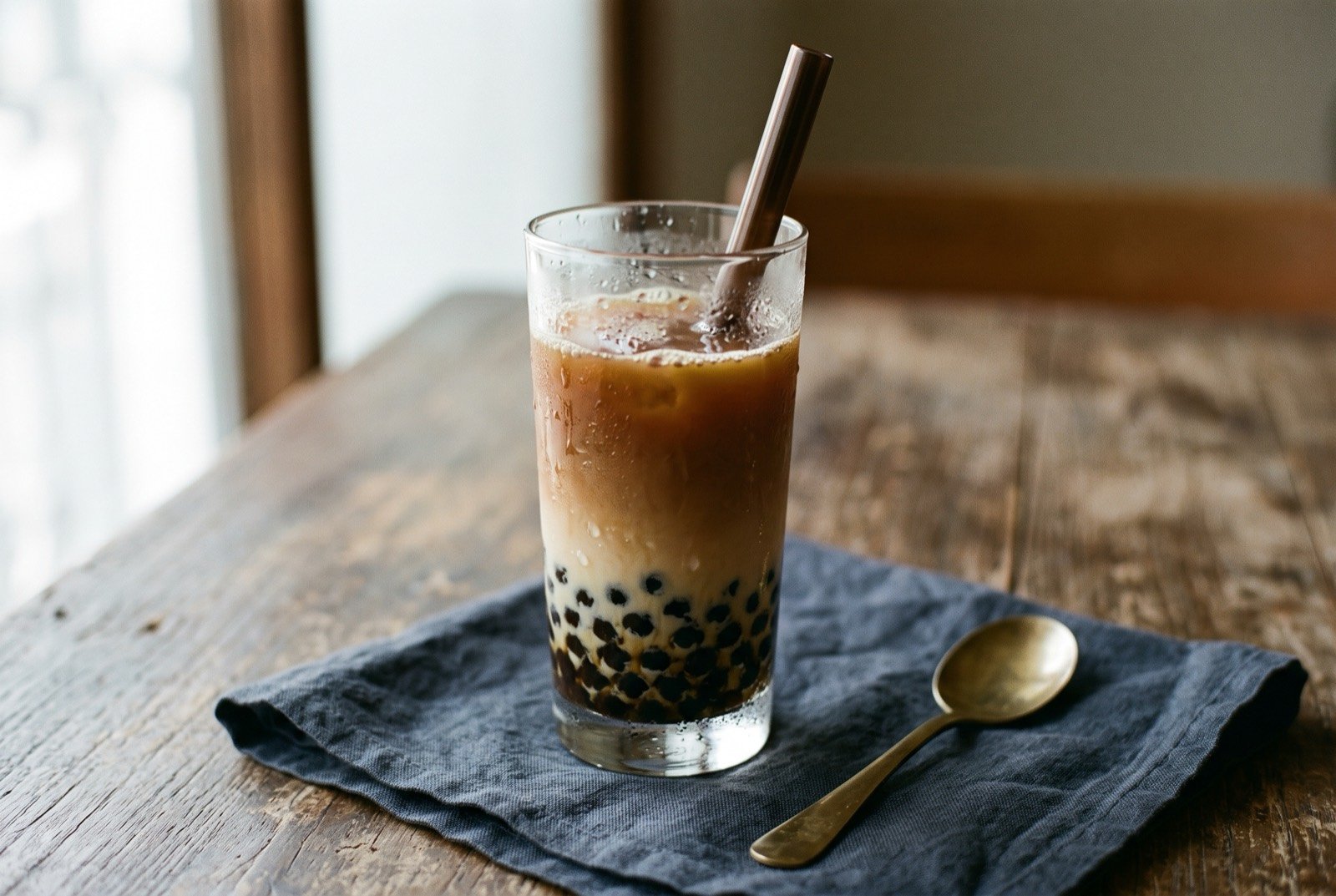
An illustration of the dish, not a photograph of it cooked.
- Time
- 45 minutes
- Reviewed
- Not yet reviewed from inside the tradition
- Cooked
- Not yet cooked and reported
As tradition built it
Makes 2 large drinks. 45 minutes.
Ingredients
- 25 to 30g black or oolong tea leaves
- 1 litre water
- 120 to 160g, or to taste dried tapioca pearls, a generous handful
- 60g, or to taste brown sugar, for the pearl syrup
- 420ml, or to taste milk, real dairy
- to taste sugar, to taste
Method
- Brew the base tea at roughly 1 part tea leaves to 35 to 40 parts water: water at around 85°C for green or lighter oolong, around 95°C for black tea; steep 8 to 10 minutes, then strain.
- Let the strained tea rest 10 to 30 minutes before chilling or diluting; this "waking" step lets the aroma and body develop fully.
- Boil the tapioca pearls at a low rolling boil for around 30 minutes, then take off the heat, cover, and let stand a further 20 to 30 minutes.
- Coat the cooked pearls in a hot brown sugar syrup, reduced until glossy, to flavour them and keep them from sticking.
- Combine the chilled tea, milk and sugar to taste in a cocktail shaker with ice, and shake hard by hand for a fine, light aeration.
- Pour over the pearls to serve. Cooked pearls hold their chew for only around 3 to 6 hours at room temperature, so cook in small batches through the day rather than once in the morning.
Notes
On the invention dispute. Chun Shui Tang, in Taichung, credits its then-manager Lin Hsiu-hui with adding cooked tapioca pearls to sweetened iced tea between 1985 and 1986, formally menued in March 1987. Hanlin Tea Room, in Tainan, founded in 1986, credits its founder Tu Zong-he with the same idea, inspired by tapioca pearls he bought from a street vendor at a Tainan market. Both companies sued each other over the claim across roughly ten years of litigation, and the court ruled that because the drink is not a patented product and anyone is free to mix one, it was unnecessary to decide who invented it first. This chapter reports both accounts and follows the court's own lead: attributed, not adjudicated. The "bo ba" name for the larger pearl variety is a separate, later story again, coined by a Tainan vendor around 1990 and 1991, reportedly inspired by a Hong Kong actress's figure, and should not be confused with the invention dispute above.
What a modern chef changes
The discipline most shops abroad skip
Rung 6
Method
- Brew to the exact ratio, temperature and time by leaf type, with a thermometer and a timer rather than by habit, and observe the resting "waking" step properly: this alone closes most of the gap between a good bowl at home and a mediocre one bought abroad.
- Cook pearls in small batches timed to when they will actually be drunk, never holding a large batch for hours, since their usable window is genuinely only 3 to 6 hours.
- Hand-shake with real dairy milk, never a non-dairy creamer, for the light, aerated mouthfeel that machine-dispensed or pre-batched versions cannot replicate.