The Sinosphere · Volume 36, The Millet Before the Rice, the Noodle a Retreat Invented, and the Tea the Whole World Copied
Cinavu, Paiwan wrapped millet and pork
Paiwan
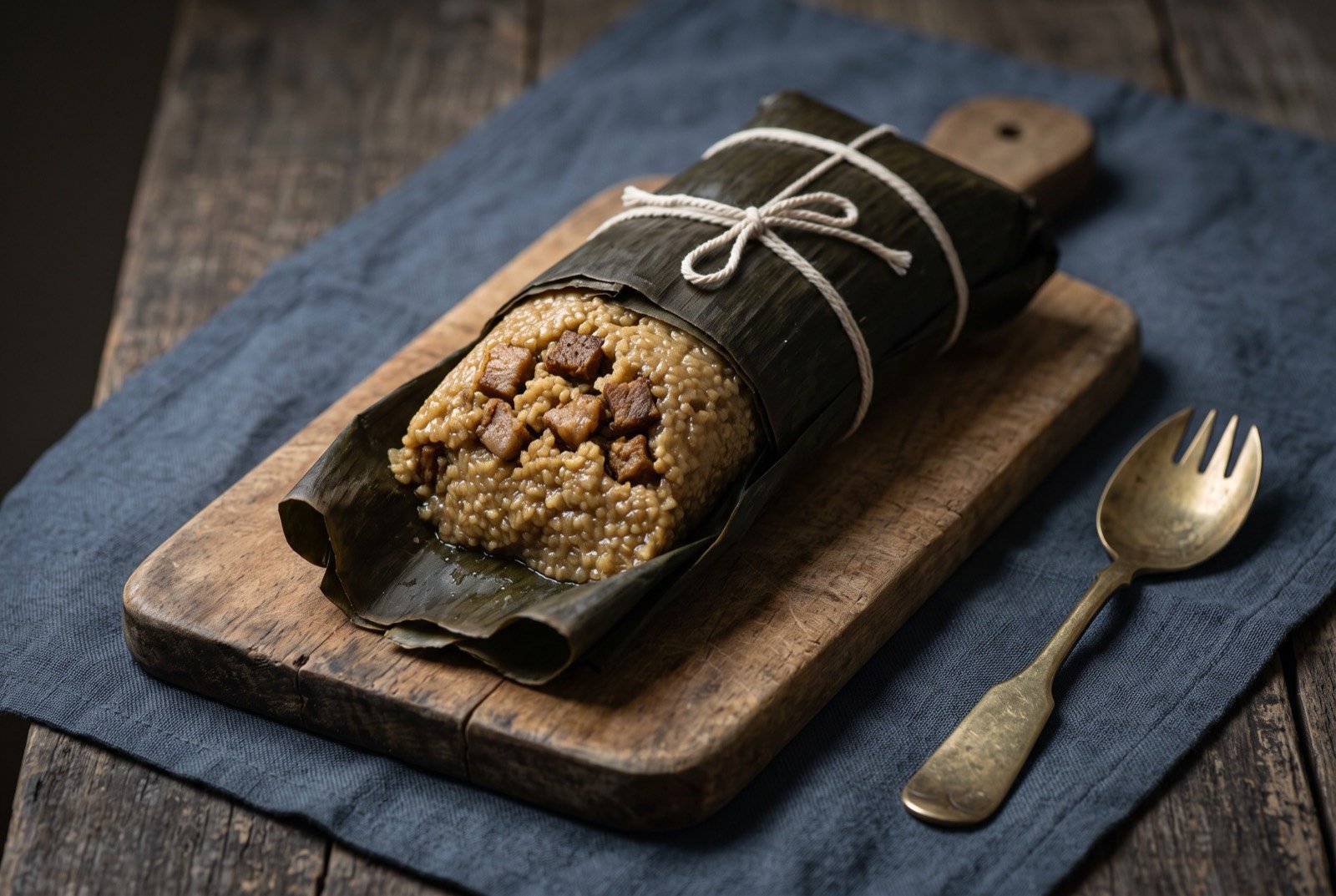
An illustration of the dish, not a photograph of it cooked.
- Time
- 2 hours
- Reviewed
- Not yet reviewed from inside the tradition
- Cooked
- Not yet cooked and reported
As tradition built it
Makes 6 to 8 parcels. About 2 hours.
Ingredients
- 400g millet, or a mix of millet and glutinous rice, pounded to a coarse, sticky paste
- 400g well-marbled pork shoulder, diced small
- 6 to 8 sheets banana leaf, as the honest UK substitute for false comfrey and shell ginger leaf (see note)
- 6 to 8 lengths kitchen string
Method
- Pound the millet, or millet-and-glutinous-rice mix, to a coarse but cohesive paste.
- Season the diced pork lightly and mix through, or layer, with the millet paste.
- Wrap a portion of the mixture in banana leaf, folding into a tight cylindrical parcel, and tie securely with string.
- Steam the parcels for around 1.5 to 2 hours, until the millet is fully cooked through and the pork is tender.
- Serve warm, unwrapped at the table.
Notes
On the leaves, honestly. The traditional inner wrapping leaf, false comfrey, gives cinavu a specific, mild bitterness that this chapter cannot reproduce with any leaf sold in Britain; banana leaf, widely available here, is offered as the workable substitute for the outer binding leaf, shell ginger, and this chapter says plainly that the flavour this produces is not identical to the original, only the closest achievable one. Where false comfrey can genuinely not be sourced, this dish's character changes, and pretending otherwise would be dishonest.
On the naming dispute. Cinavu's name and origin are consistently attributed to Paiwan tradition across the majority of sources this chapter drew on; a parallel, related dish in Rukai cuisine, called abai, is mashed smooth with no visible grain and wrapped without an inner leaf, a real, distinguishing difference in both texture and construction. At least one piece of otherwise reasonable Taiwanese food journalism reverses this attribution in its own headline while its body text confirms the majority position above; this chapter names both traditions and does not adjudicate between them.
What a modern chef changes
Precision steaming, nothing else changed
Rung 5
Method
- Steam at a controlled, held temperature rather than over an open fire's variable heat, for fully even doneness through the parcel, especially at its dense, packed centre.
- Lightly toast the millet in a dehydrator before pounding, for a nuttier depth that a raw pound does not develop.
- Grind the pork through a coarse plate rather than dicing by hand, for a more even distribution of fat through the filling.
Notes
This is the one dish in this chapter with no restaurant reference point at all, elevated or otherwise, and that absence is itself worth naming. The elevation offered here changes technique, not the dish's meaning: cinavu is an act of gratitude and provision before it is anything else, and this chapter asks the reader to cook it in that spirit rather than as a novelty.