The Sinosphere · Volume 36, The Millet Before the Rice, the Noodle a Retreat Invented, and the Tea the Whole World Copied
Niurou mian, red-braised beef noodle soup
Kangshan, and everywhere the retreat of 1949 went afterwards
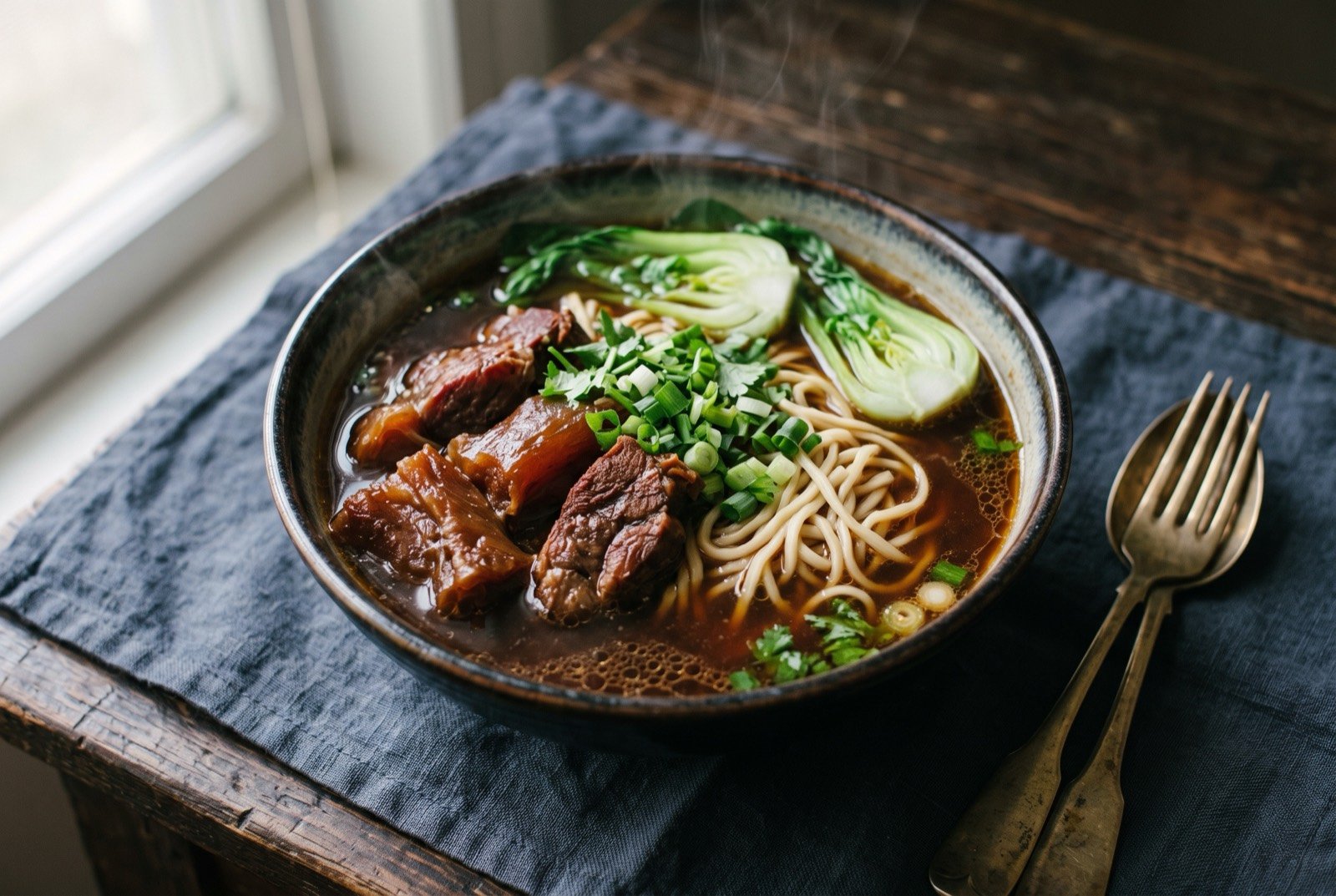
An illustration of the dish, not a photograph of it cooked.
- Time
- 1 hour 15
- Reviewed
- Not yet reviewed from inside the tradition
- Cooked
- Not yet cooked and reported
As tradition built it
Serves 4. About 1 hour 15 minutes.
Ingredients
- 1.2kg beef shank, cut into large pieces
- 2 tomatoes, quartered
- 1 carrot, chunked
- 1 daikon, chunked
- 1 onion, chunked
- 5 spring onions, plus more to finish
- 20g ginger, sliced
- 45g doubanjiang
- 80ml soy sauce
- 10g sugar
- 5g Sichuan peppercorn
- 600g fresh noodles
- 2 stalks baby bok choy, blanched
Method
- Dry-sear the beef in a dry, hot pan on all sides until well browned, then remove.
- In the same pan, fry the doubanjiang briefly until fragrant.
- Toast the Sichuan peppercorn and wrap it in a spice bag or muslin.
- In a separate pot, fry the spring onion, ginger and onion in a little oil, then stir in the fried doubanjiang and the sugar until fragrant.
- Add the tomatoes, carrot, daikon, the seared beef and the spice bag, then 4 litres of water. Bring to the boil, then simmer 30 minutes on low heat.
- Add the soy sauce, remove the spice bag, and simmer a further 30 minutes, until the beef is tender.
- Cook the noodles separately. Serve the broth and beef over the noodles, with the blanched bok choy and a scattering of spring onion.
Notes
A note on authenticity. Not every serious shop follows this doubanjiang-based template. Lin Dong Fang, a three-generation, Michelin Bib Gourmand-listed Taipei institution, builds its broth from vegetables, beef bones and offal alone, with no doubanjiang at all, using the central beef shank muscle for its prized ratio of lean meat to sinew. Treat the doubanjiang version above as the dominant, Kangshan-descended convention, not the only correct bowl of beef noodle soup in Taiwan.
What a modern chef changes
The double-stock logic, and the tendon rendered properly
Rung 1, Rung 2
Method
- Build two stocks, not one. Simmer beef bones, oxtail and trim with aromatics for 2 to 3 hours for a clean base stock, entirely separately from the braise above.
- Cook the beef shank sous vide at a low, precise temperature for several hours, fully rendering its collagen without overcooking the lean muscle around it, then finish it briefly in the reduced braising liquid for colour and glaze.
- Combine the base stock and the braising liquid only at the end, tasting and adjusting rather than trusting one long simmer to do both jobs at once, for a broth with genuinely layered depth.