The Sinosphere · Volume 36, The Millet Before the Rice, the Noodle a Retreat Invented, and the Tea the Whole World Copied
Danzai mian, Tainan noodles
Tainan
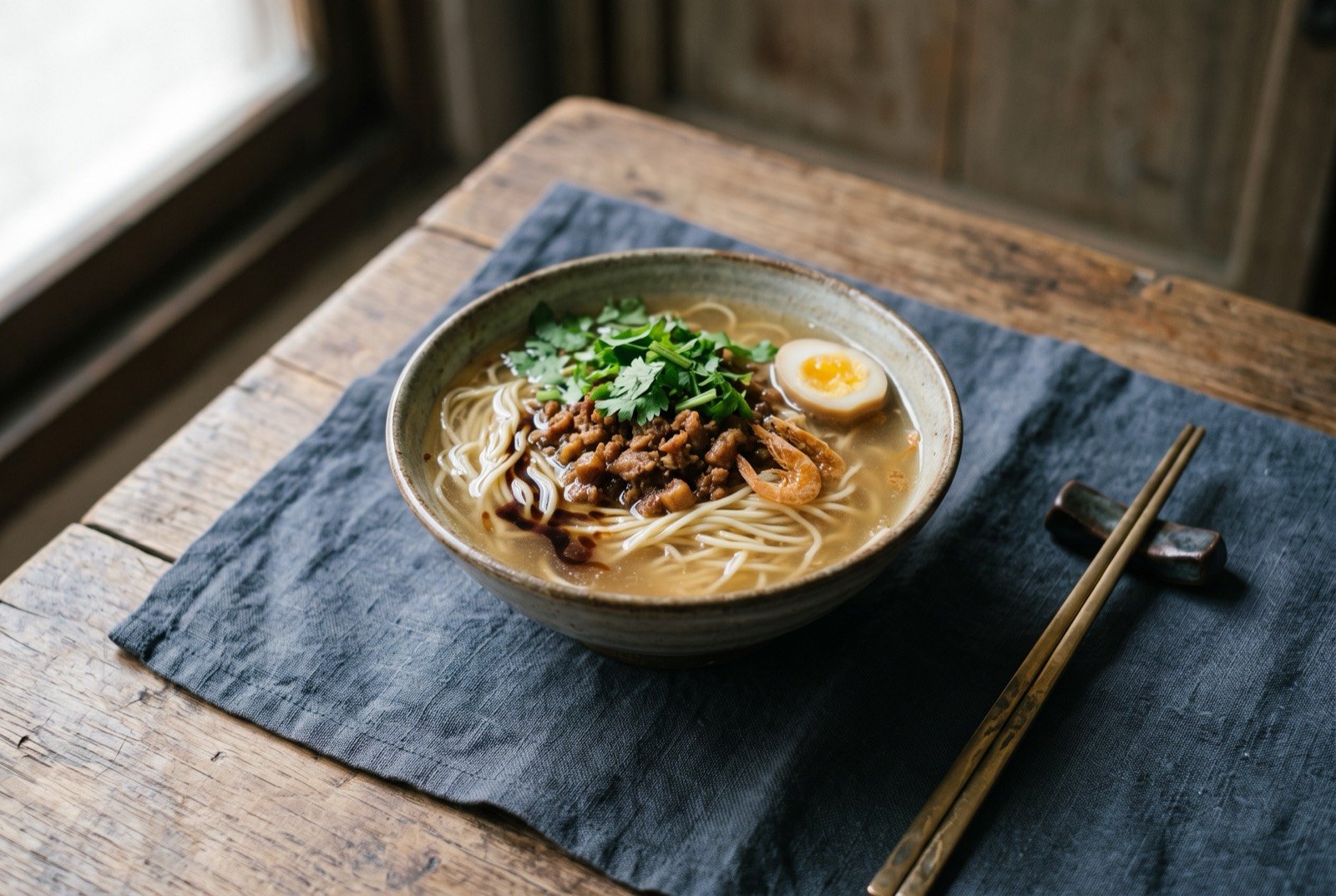
An illustration of the dish, not a photograph of it cooked.
- Time
- 1 hour
- Reviewed
- Not yet reviewed from inside the tradition
- Cooked
- Not yet cooked and reported
As tradition built it
Serves 4. About 1 hour.
Ingredients
- 300g minced pork
- 1 tbsp soy sauce
- 1 tsp white pepper
- 1 tbsp fried shallots
- 1 tsp rock sugar
- to taste dried shrimp or shrimp shells
- 1.6 litres pork bone stock
- 240g thin noodles
- to taste coriander, black vinegar (烏醋), garlic paste, to finish
Method
- Fry the minced pork until browned, then add the soy sauce, pepper, fried shallots, sugar and 1 tablespoon of water. Simmer on low heat for 30 minutes to make the meat sauce.
- Pan-fry the dried shrimp or shrimp shells in a little oil until fragrant, then add them to a pot of pork bone stock and simmer a further 10 minutes.
- Cook the noodles, then top with a spoonful of the meat sauce and a ladle of the shrimp-infused broth.
- Finish with coriander, a dash of black vinegar and a little garlic paste. The shop that gave the dish its name serves it as exactly this five-element balance, meat sauce, broth, coriander, vinegar and garlic, and treats none of them as optional.
Notes
On the name. Danzai means "carrying pole": in 1895, a Zhangzhou-born fisherman named Hong Yu-tou, unable to put to sea through the typhoon season's lean month (小月), carried a portable noodle stall through Tainan's streets on a shoulder pole, using a Zhangzhou meat-sauce noodle technique, before settling permanently outside the Shui Xian Gong temple under a lantern reading "getting through the lean month." His descendants' shop, Du Hsiao Yueh, still trades under that name.
What a modern chef changes
The shrimp stock, taken as seriously as the beef stock elsewhere in this chapter
Rung 1
Method
- Build the shrimp-shell reduction entirely separately from the pork bone stock, reducing it hard for concentrated flavour, then blend the two only at the point of serving rather than simmering shells and bones together throughout.
- Strain the combined broth through a chinois for a clean, clear finish, since this dish's whole appeal depends on a broth that reads as light even though it carries real depth.
- Dry shrimp shells in the dehydrator and grind them to a fine powder in the spice grinder, dusting a little over the finished bowl for a concentrated last note of umami without clouding the broth itself.