The Sinosphere · Volume 36, The Millet Before the Rice, the Noodle a Retreat Invented, and the Tea the Whole World Copied
Kejia xiaochao, Hakka stir-fry
Hakka
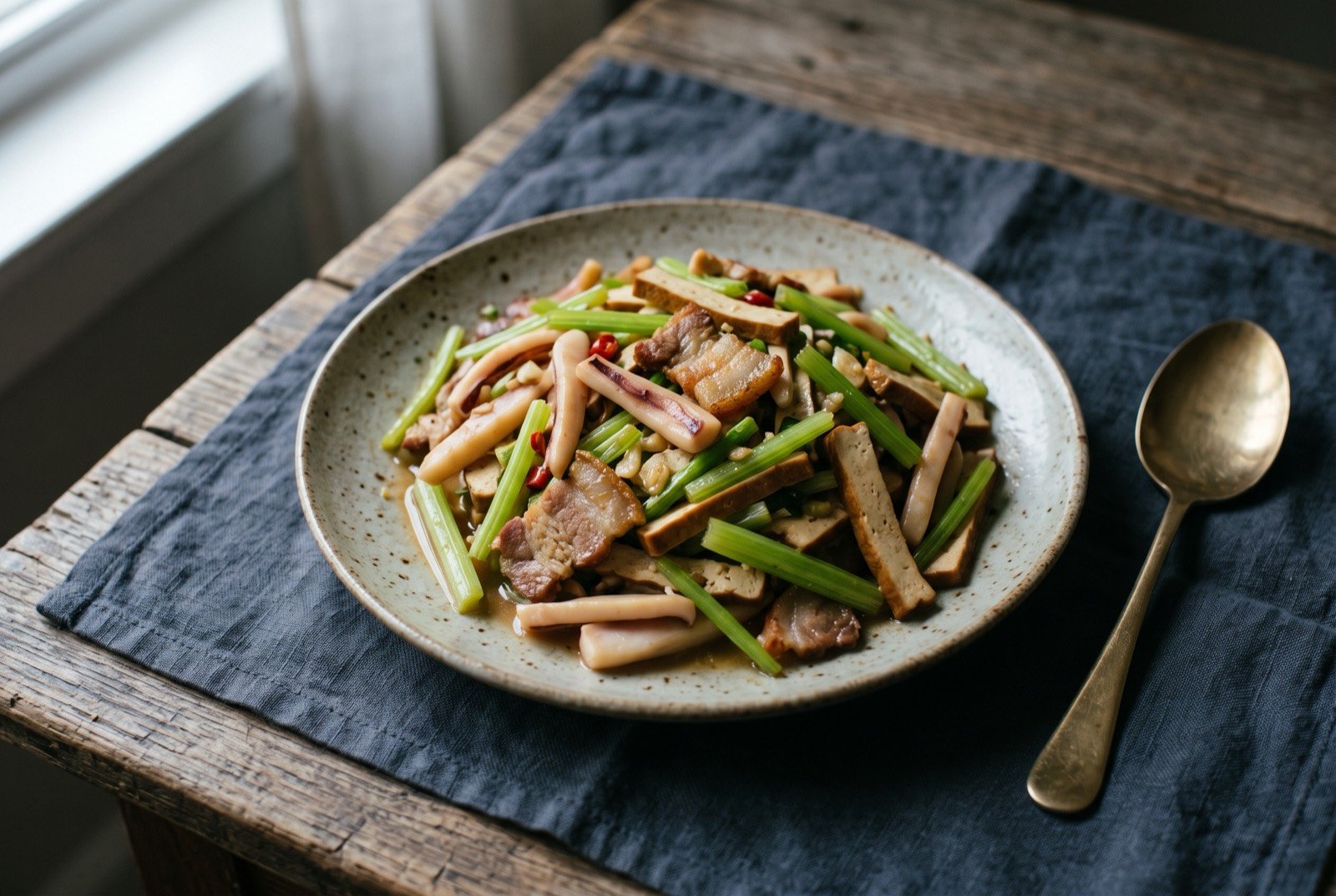
An illustration of the dish, not a photograph of it cooked.
- Time
- 20 minutes
- Reviewed
- Not yet reviewed from inside the tradition
- Cooked
- Not yet cooked and reported
As tradition built it
Serves 4. 20 minutes, plus soaking the squid.
Ingredients
- 200g dried squid, soaked and sliced
- 300g pork belly, sliced thin
- 150g pressed tofu (豆干), sliced
- 2 stalks celery, sliced
- to taste spring onion, soy sauce, chilli, to taste
Method
- Soak the dried squid until pliable, then slice thinly.
- Fry the pork belly over medium-high heat until its fat renders and the edges crisp.
- Add the squid and pressed tofu, stir-frying to pick up colour and the rendered pork fat.
- Finish with the celery, spring onion, chilli and soy sauce, stir-frying only briefly so the celery stays crisp rather than softening through.
Notes
On the origin. Hakka households in the hill country of southern China rarely ate meat outside major ritual occasions; when pork, chicken and fish, or dried squid where fresh fish was unavailable, were slaughtered as a "three sacred offerings" presentation to ancestors or the earth god, thrifty housewives sliced the leftover offerings thin and stir-fried them together rather than let any of it go to waste, producing a dish salty and rich enough to keep, and to make a small amount of meat stretch across a family meal. This history is well attested by Taiwan's own National Cultural Memory Bank; whether "Hakka stir-fry" as a single named dish, rather than the underlying ritual-leftover logic, is itself a Taiwan-era codification of an older practice is a genuinely open question this chapter does not resolve, since no scholar or date was found to settle it either way.
A note on this dish's home. This atlas's own culinary-region skeleton places Hakka cuisine's home volume in Guangdong and Hainan, its historic heartland, not in Taiwan. That volume has not yet been written. This chapter treats the dish in full because it is a genuine, well-documented part of Taiwan's own settler history, not because it is claiming the dish away from its mainland home; a future Guangdong and Hainan volume should treat the continental Hakka tradition directly, and this chapter's treatment should be read as this island's own expression of it.
What a modern chef changes
Real heat, and even rehydration
Rung 2
Method
- Rehydrate the dried squid sous vide, low and slow, for an evenly tender bite through the whole piece rather than the toughened edge and soft centre a quick soak can leave.
- Cook over the highest heat available, a wok ring on a Big Green Egg again suits this, so the pork fat renders and the aromatics catch in seconds rather than minutes, the genuine wok hei this dish depends on.
- Slice the celery on a sharp bias, at the last possible moment, for maximum crunch against the rich, salty stir-fry around it.