The Sinosphere · Volume 29, The Delta, the Salt Road and the Mountain Behind It
Yipin Guo, the one-pot banquet hotpot
Huizhou
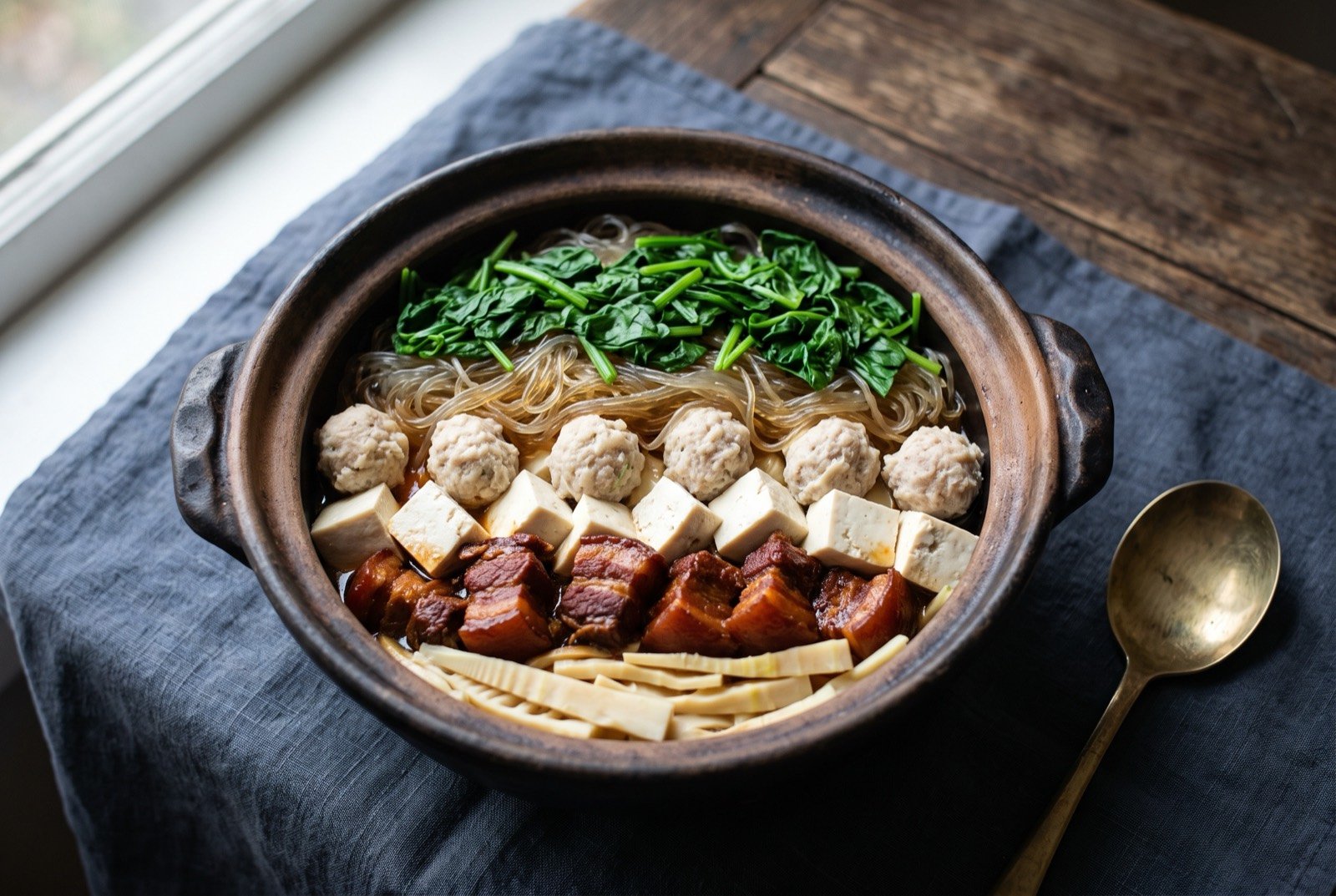
An illustration of the dish, not a photograph of it cooked.
- Time
- 3 hours
- Reviewed
- Not yet reviewed from inside the tradition
- Cooked
- Not yet cooked and reported
Huizhou. Humble, long-keeping mountain ingredients dressed in an elaborate, layered presentation. The single dish that most cleanly shows Anhui's wealth-versus-rusticity duality on one table.
As tradition built it
Serves 6 to 8. 2 to 3 hours, mostly unattended simmering.
Ingredients
An outline, not yet a recipe: the tradition's method with its ingredients named but not weighed. Quantities are being added from sources inside the tradition, lead dishes first.
Bottom layer
- 100 g dried, soaked and sliced dried bamboo shoots, soaked and sliced
Second layer
- 500 g pork belly or shoulder chunks, red-braised
Third layer
- 200 g tofu, white or lightly fried
Fourth layer
- pork meatballs
Top layer
- glass noodles, topped with blanched spinach or daylily buds
- 2 tbsp soy sauce, 2 tbsp Shaoxing wine, 1 tbsp sugar, a few slices ginger, stock enough to come most of the way up the layers stock, soy sauce, Shaoxing wine, sugar, ginger, to season throughout
Method
- Soak the dried bamboo shoots until tender, then slice and lay as the bottom layer of a large, heavy pot.
- Red-braise the pork chunks separately first, using the hongshao method from Rung 1, then lay as the second layer.
- Add a layer of tofu, white or lightly fried, over the pork.
- Add a layer of pork meatballs, formed and lightly seared beforehand.
- Top with glass noodles and blanched spinach or daylily buds.
- Pour over enough seasoned stock to come most of the way up the layers, cover, and simmer very gently for 1.5 to 2 hours, without stirring, so each layer keeps its own character rather than dissolving into a single stew.
- Bring the whole pot to the table to serve, spooning down through the layers.
What a modern chef changes
Each layer cooked to its own precise doneness, then reassembled.
Method
- Cook each layer separately to its own optimal point, sous vide the meatballs, braise the pork properly with the self-forming glaze technique from Rung 1, blanch the greens at the last moment, rather than simmering everything together for two hours where the first-cooked layers overcook while the last-added ones catch up.
- Reassemble the layers in a clear glass or enamelled cast-iron pot just before serving, pouring over a freshly reduced, properly seasoned stock rather than the pot's own long-simmered liquid, for a dish where every layer is judged individually rather than surrendered to a single long cook.
- Keep the communal, many-layered presentation intact at the table: this dish's real elevation is precision in each component, not a change to how it is served or shared.