The Sinosphere · Volume 36, The Millet Before the Rice, the Noodle a Retreat Invented, and the Tea the Whole World Copied
San bei ji, three-cup chicken
Jiangxi Hakka in ancestry, transformed in Taiwan
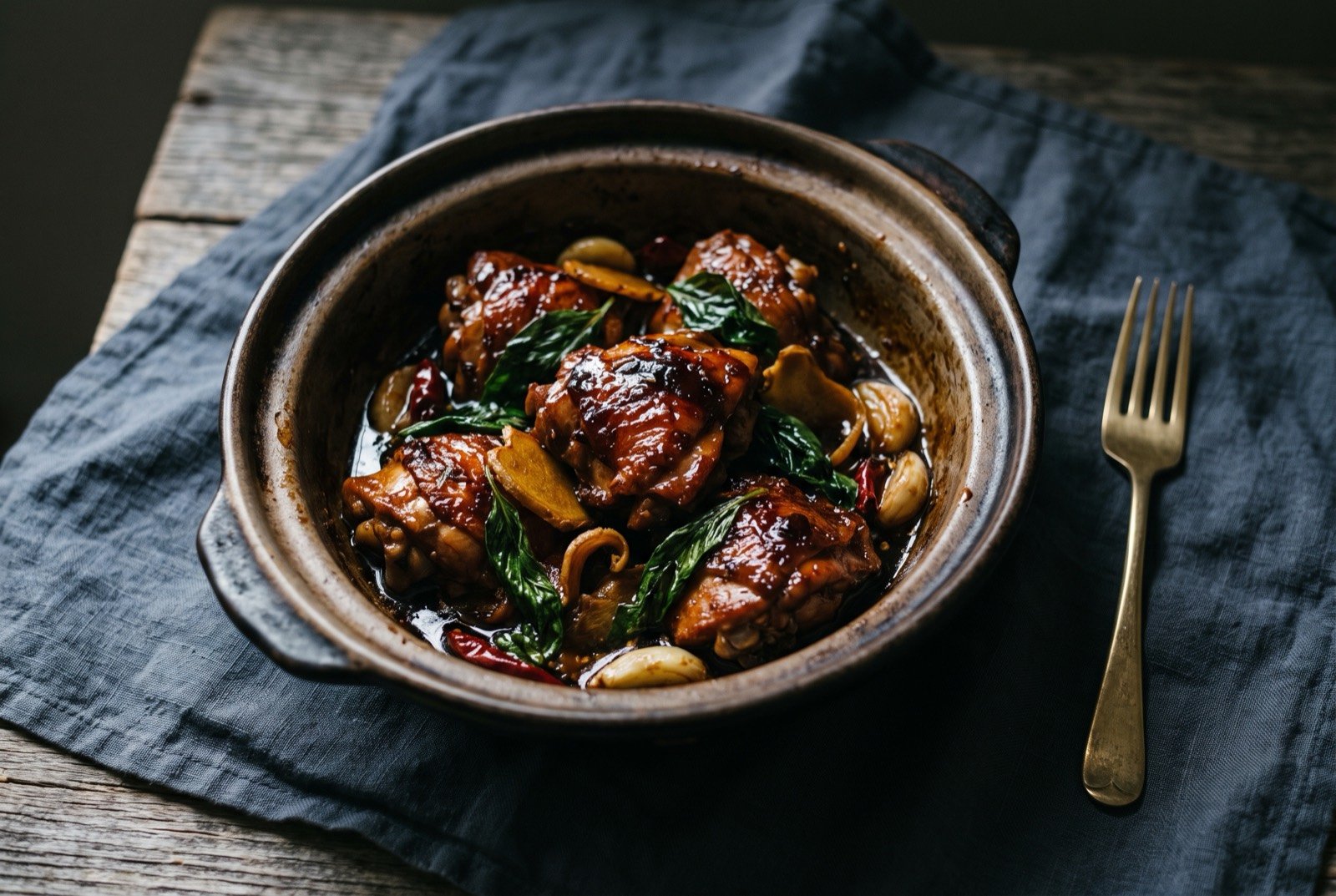
An illustration of the dish, not a photograph of it cooked.
- Time
- 30 minutes
- Reviewed
- Not yet reviewed from inside the tradition
- Cooked
- Not yet cooked and reported
As tradition built it
Serves 4. 30 minutes.
Ingredients
- 1kg chicken thigh, bone-in, chopped
- 10 slices old ginger, sliced thickly
- 10 to 15 cloves garlic cloves, whole
- 2 stalks spring onion, cut into lengths
- 4 parts Taiwanese rice wine (mijiu)
- 2 parts soy sauce
- 1 part rock sugar
- 2 tbsp, divided sesame oil
- a generous handful Taiwanese basil (jiu ceng ta), a generous handful
Method
- Fry the ginger slices in sesame oil until dry and curled at the edges.
- Add the garlic and the blanched chicken thigh, frying until the chicken picks up colour.
- Add the spring onion, then the rice wine, soy sauce and rock sugar in a 4:2:1 ratio, scaled to the amount of chicken.
- Cook hard and fast, uncovered, until the sauce reduces to a thick, dark glaze coating the chicken.
- Take the pan off the heat and stir through the basil last, so it wilts in the residual heat rather than cooking through and turning bitter.
Notes
On the name. Despite the marketing, "three cups" was never a literal 1:1:1 ratio of rice wine, soy sauce and sesame oil; a named contemporary Taiwanese chef, writing under the name Chef Chang, argues explicitly against cooking it that way, using rock sugar rather than a full cup of sesame oil as the third measure and reserving the oil for frying the ginger and finishing the dish. The dish itself traces to Jiangxi Hakka cooking, told through two competing legends neither of which is documented before a 1958 Jiangxi recipe book; Taiwan's own contribution was to swap in Taiwanese rice wine, sesame oil in place of lard, and the basil that is now considered essential.
What a modern chef changes
The flavour method, moved onto a different protein entirely
Rung 4
Method
- Cook the same 4:2:1 rice-wine-soy-sugar base with a different protein, king oyster mushroom or monkfish cheek both take the treatment well, exactly as André Chiang describes his own generation moving "three-cup" from chicken onto squid.
- Sear hard and fast in a wok over the highest heat the kitchen can produce, since the method depends on rapid reduction rather than a long braise; a Big Green Egg run very hot with a wok ring gets closer to Taiwanese restaurant heat than most domestic hobs manage.
- Finish with the same basil, off the heat, unchanged. The point of this elevation is that the grammar survives the swap. The chicken was never the inheritance.