The Sinosphere · Volume 36, The Millet Before the Rice, the Noodle a Retreat Invented, and the Tea the Whole World Copied
O-a-jian, oyster omelette
Coastal Taiwan, Hoklo
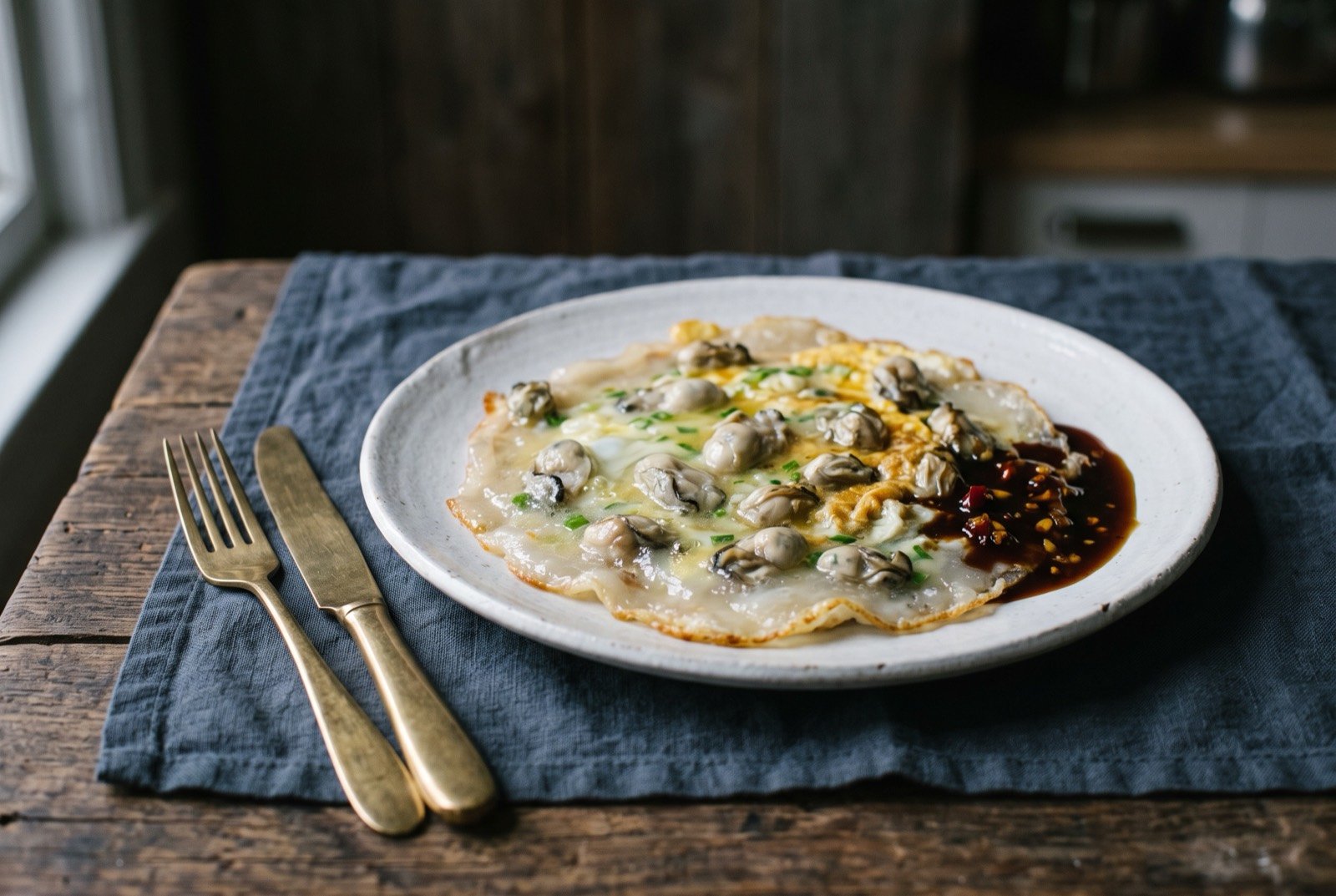
An illustration of the dish, not a photograph of it cooked.
- Time
- 20 minutes
- Reviewed
- Not yet reviewed from inside the tradition
- Cooked
- Not yet cooked and reported
As tradition built it
Serves 5 to 6 (halve for 2 to 3). 20 minutes.
Ingredients
- 150g sweet potato starch
- 75g tapioca starch
- 35g in-laimi rice flour
- 550g water
- 1.5 tsp salt
- 1 tsp white pepper
- 1 tbsp sesame oil
- 15 to 20 per portion small oysters, shucked
- as available fried shallots, or bean sprouts (south) or water spinach (centre)
- 1 per portion egg, beaten, one per portion
- to taste soy paste (north) or a ketchup-and-miso sauce with peanut powder (south), to dress
Method
- Whisk the sweet potato starch, tapioca starch, rice flour, water, salt, pepper and sesame oil into a smooth batter.
- Just before cooking, fold in the oysters and shallots or vegetable of choice.
- Pan-fry gently in a modest amount of oil, pressing the batter into a thin layer, until both sides are set and lightly golden.
- Pour over the beaten egg to finish the top, then flip briefly to set it.
- Dress with soy paste for a browner, saltier finish, or the sweeter ketchup-miso-peanut sauce favoured in Tainan and the south.
Notes
On regional variation. The chewier-versus-crisper argument runs on the starch ratio: 1:1 sweet potato to tapioca gives a "normal" texture, 2:1 in favour of sweet potato starch gives a chewier (Q) result, 1:2 in favour of tapioca gives a crisper one. Choose deliberately rather than by habit.
What a modern chef changes
Starch chemistry, taken seriously
Rung 3
Method
- Hold the batter at a controlled, moderate pan temperature rather than a high one, giving the starches time to gelatinise fully into a properly springy set before the surface catches, which a domestic hob's usual high heat tends to rush.
- Dehydrate a portion of the fried shallots separately to a shatteringly crisp garnish, rather than folding all of them into the batter, for textural contrast against the soft interior.
- Make both regional sauces and serve them side by side, letting a reader taste the north-south argument directly rather than defaulting to one.