The Sinosphere · Volume 31, The Wok’s Breath, the Tea Trolley and the Coconut Coast
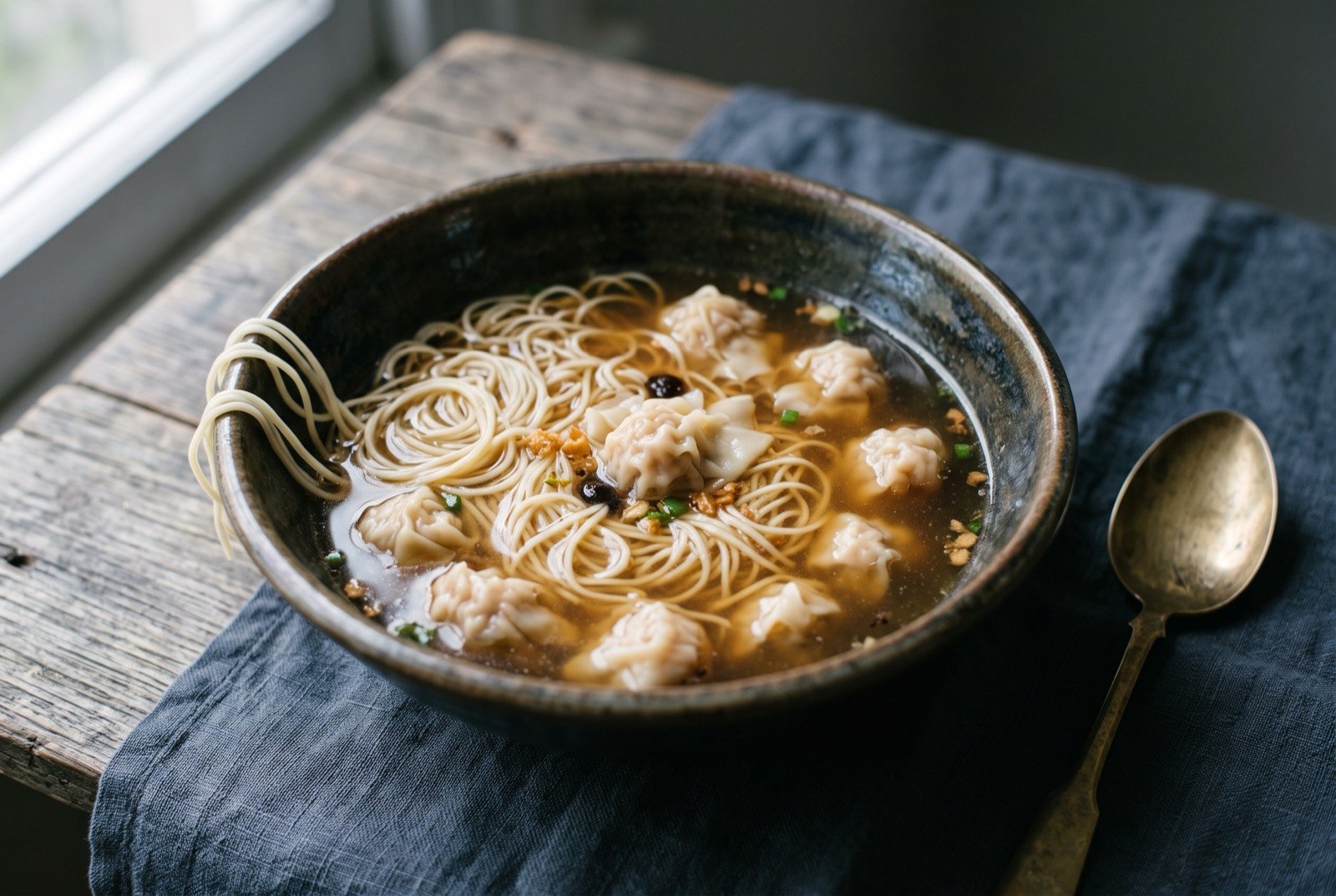
Wantan min, wonton noodle soup
Guangzhou, 1920s
Illustration
- Time
- 2 hours
- Researched
- Researched from 118 sources in the brief
Guangzhou, 1920s, travelling to Hong Kong with Cantonese emigrants over the following two decades. The noodle is bounced into being.
As tradition built it
Serves 4. 2 hours, including noodle-making.
Ingredients
The method as the tradition gives it, ingredients named but not yet weighed. Quantities follow as we verify them, lead dishes first.
For the noodles
- 300 g strong bread flour
- 2 whole eggs
- as needed, only if the dough is too dry a little water, only as needed
For the wontons
- 200 g raw prawns, roughly chopped
- 150 g fatty-lean pork mince
- to taste sesame oil, shrimp roe, dried plaice powder, salt, white pepper
- 24 thin wonton wrappers
For the broth
Method
- For bamboo-pole noodles, work the flour and eggs into a very firm, low-hydration dough, adding the water only if needed to bring it together, then press and fold it repeatedly under a length of bamboo pole or a very heavy rolling pin, applying real bodyweight, until the gluten develops without any added water beyond what the dough genuinely needs. Rest, then roll thin and cut into fine noodles.
- Combine the prawn and pork mince with sesame oil, shrimp roe, dried plaice powder, salt and white pepper. Wrap small parcels in the wonton wrappers, pleating loosely at the top.
- For the broth, simmer pork bones with dried plaice, dried shrimp roe, shrimp shells, soybean sprout and a little rock sugar for at least 2 hours, skimming regularly, then strain to a clear broth.
- Boil the noodles briefly, just under a minute, then the wontons separately until they float, about 3 to 4 minutes.
- Assemble noodles and wontons in bowls, ladle over the hot clear broth, and serve immediately.
What a modern chef changes
The bamboo-pole discipline, kept exactly as it is.
Method
- Do not add water beyond the eggs to the noodle dough, and use real, repeated bodyweight pressure rather than a pasta machine's rollers alone, which cannot replicate the specific gluten development the bamboo-pole method produces.
- Reduce the broth further than tradition, then adjust back to the correct strength with hot water at the end, giving a deeper base flavour while keeping the final broth genuinely clear and light rather than heavy.
- Serve noodles and broth separately at the table, combining only at the point of eating, so the noodles never sit in hot broth longer than the time it takes to eat them.